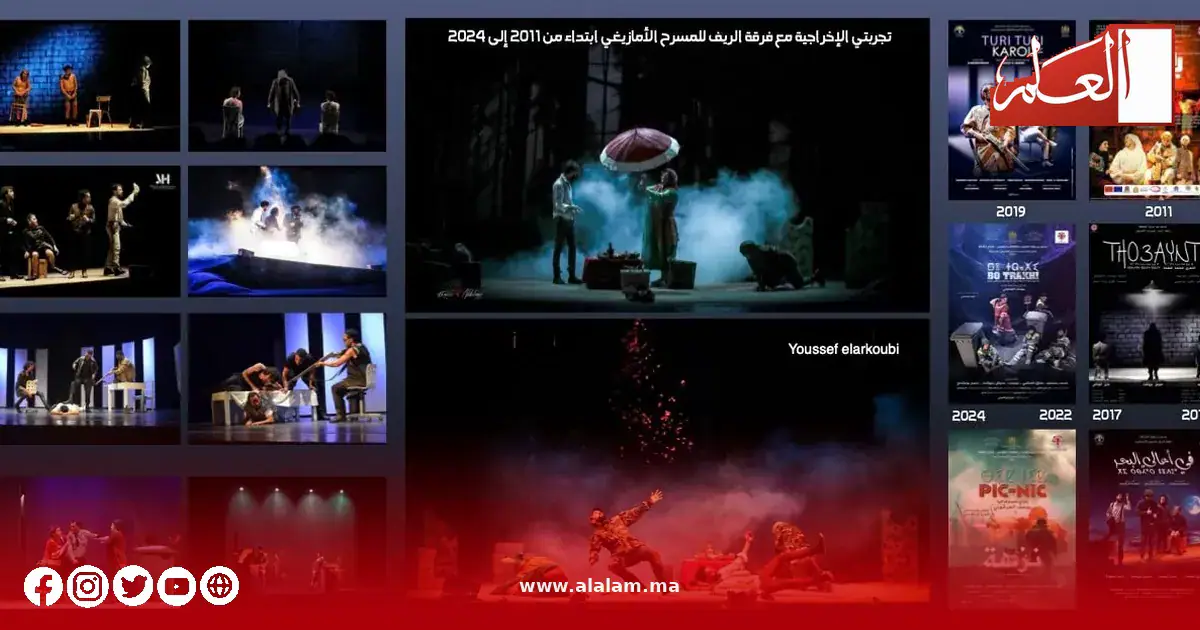
The city of Al-Hoceima in Morocco has a rich and diverse theater scene that has been shaped by various groups and individuals over the years. One of the key figures in this scene is Fekri Ould Ali, who has been involved in several theater projects, including the Amazigh Theater Group of Rif. In an interview, Ould Ali shared his experiences and insights into the development of theater in Al-Hoceima, highlighting the contributions of various groups and individuals.
Ould Ali's involvement with the Amazigh Theater Group of Rif began in 2007, when he was invited to lead a workshop on scenography as part of a project titled "Raising Awareness of Equality through Theater." The project was a collaboration between the Belgian Embassy in Morocco, the Badis Association for Economic and Social Development, and the Amazigh Theater Group of Rif. This experience marked the beginning of Ould Ali's engagement with the group, which would later lead to him working on several productions, including "Tadart Mma Fatima" and "Baw."
In addition to his work with the Amazigh Theater Group of Rif, Ould Ali also highlighted the contributions of other groups and individuals who have helped shape the theater scene in Al-Hoceima. One such group is the Tafsouin Theater Group, which has worked with several directors and artists, including Hafez Al-Badri, Amin Gawada, and Latifa Aherrar. The group's diverse collaborations have resulted in a range of productions that showcase the city's vibrant cultural scene.
Another key player in Al-Hoceima's theater scene is the Arif Theater Group, which has worked with a range of directors and artists, including Khalid Jenabi, Bouslehman Al-Daif, and Abdelmajid Al-Hawas. The group's diverse collaborations have enabled it to explore different styles and themes, contributing to the city's rich cultural landscape.
The Al-Hoceima Theater Club is another important part of the city's theater scene, having worked with several directors, including Abdeljabar Khamran, Khalid Jenabi, and Said Darif. One notable collaboration was between Khamran and the club, which resulted in three productions: "Al-Aqada" (2019), "Tamakhafn/Takhreef Thunay" (2022), and "Abhath 'An Abi" (2024). These productions showcased the club's commitment to promoting theater in the city.
The theater scene in Al-Hoceima is characterized by its diversity and vitality, with various groups and individuals contributing to its development over the years. The city's theater scene has not only provided a platform for artistic expression but also played a significant role in promoting cultural exchange and understanding. As Ould Ali noted, the scene is a testament to the power of theater to bring people together and foster a sense of community.
The impact of Al-Hoceima's theater scene extends beyond the city itself, with many productions showcasing the region's rich cultural heritage. The scene has also provided opportunities for local artists to develop their skills and showcase their talents. As the city's theater scene continues to evolve, it is likely to remain an important part of the region's cultural landscape.
Key points
- The city's theater scene has been shaped by various groups and individuals over the years, contributing to its diversity and vitality.
Reporting sources
- الحسيمة.. حين صنعت الخشبة ذاكرة المدينة · Al-Alam