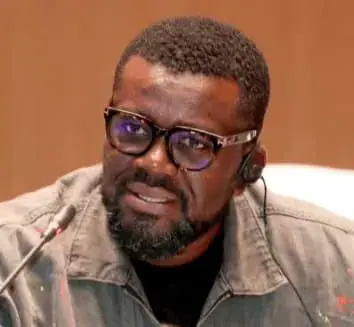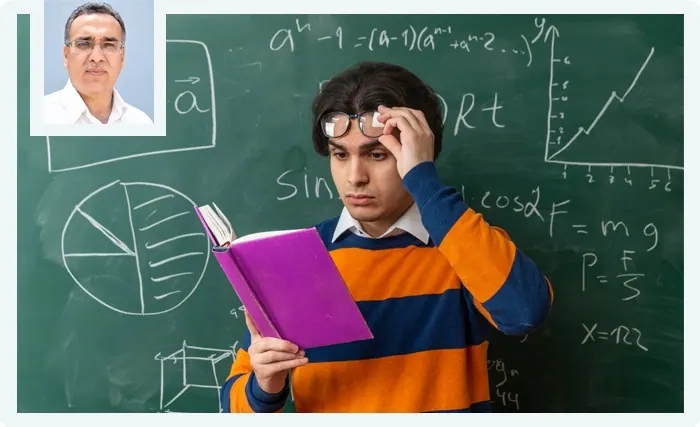
In an era where artificial intelligence can solve complex equations, formalize demonstrations, and tackle problems previously reserved for humans, the relevance of teaching mathematics is being questioned. Mohamed Ali Mahjoub, an academic at the National Engineering School of Sousse (ENISo) at the University of Sousse in Tunisia, ponders whether it's time to reassess the importance of mathematics education. As AI assumes tasks once performed by humans, the role of mathematics in building intellectual autonomy is being reevaluated.
Mahjoub argues that mathematics serves not only to produce results but also to construct the mind capable of understanding these results. He warns of a scenario where future generations rely entirely on machines to solve problems, leading to a loss of intellectual autonomy. In such a society, when technology fails or provides incorrect answers, individuals would be left without the critical thinking skills to address the issue. This raises concerns about the potential risks of over-reliance on technology.
The role of mathematics education extends beyond mere calculations and equations. It teaches critical thinking, problem-solving, and analytical skills that are transferable to various fields, including physics, computer science, engineering, economics, and medicine. By learning mathematics, individuals develop a systematic approach to problem-solving, which involves understanding the problem, identifying relevant data, formulating hypotheses, and verifying results.
Recent advancements in AI have led to significant breakthroughs in mathematics, including the formalization of the proof of Fermat's Last Theorem and progress on the Navier-Stokes equations. While these achievements demonstrate the power of machines, Mahjoub argues that they do not render mathematics education obsolete. Instead, they highlight the need for humans to understand and verify the results produced by AI.
The goal of mathematics education is not to compete with machines but to enable humans to use technology intelligently. Mahjoub advocates for a rethink of mathematics education, focusing on reasoning, comprehension, and critical thinking rather than mere memorization and mechanical application. This approach would allow individuals to effectively utilize AI and other technologies.
The future of education should prioritize forming individuals who can pose the right questions, understand models, verify results, detect inconsistencies, and reason in the face of uncertainty. Mathematics plays a vital role in this endeavor, as it is a powerful tool for developing abstract reasoning, rigor, and logical verification. By emphasizing these skills, education can empower individuals to navigate a world increasingly reliant on technology.
Ultimately, the question is whether we want to continue forming generations capable of understanding and critically evaluating the output of machines. If we abandon the teaching of mathematical reasoning, we risk sacrificing intellectual autonomy for convenience. As AI continues to advance, it is essential to recognize the enduring value of mathematics education in preparing individuals for a future where technology and human intelligence coexist.
Key points
- The role of mathematics education is not only to produce results but also to construct the mind capable of understanding these results.
- Recent advancements in AI have led to significant breakthroughs in mathematics, highlighting the need for humans to understand and verify the results produced by AI.
- The goal of mathematics education is not to compete with machines but to enable humans to use technology intelligently.