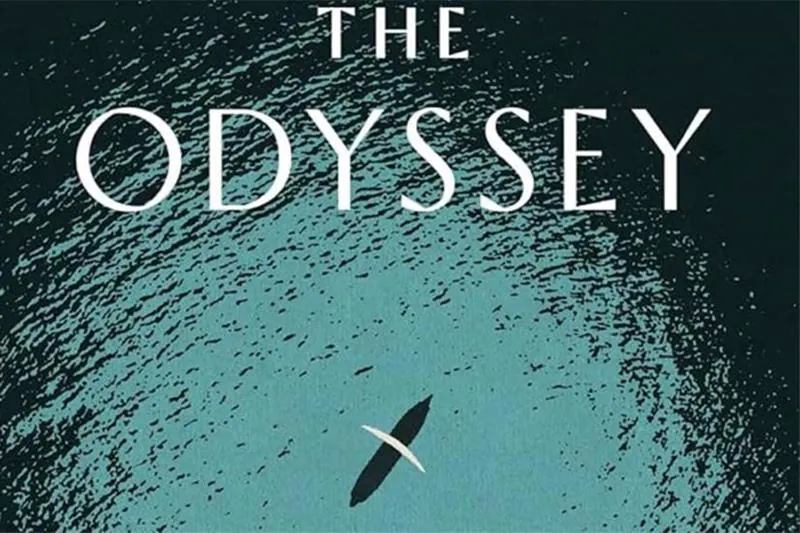
A new translation of Homer's The Odyssey by classicist Daniel Mendelsohn has been released, offering a fresh perspective on the ancient Greek epic poem. The translation deliberately moves away from shorter English lines, instead rendering the Greek on a line-by-line basis to preserve the poetic qualities of the original. This approach allows the density of the Greek to remain audible in English, particularly in the lines that connect Odysseus to different iterations of himself across the poem.
The Odyssey's exploration of promises is a key aspect of its enduring relevance. The poem's protagonist, Odysseus, is constantly separated from his past self by time, experience, and circumstance, and his journey home is not just physical but also a movement between different versions of himself. Each iteration of Odysseus must answer for the choices made by the one before it, highlighting the tension between the present and future selves. This tension is at the heart of the concept of promises, which asks us to consider what it means to make an obligation to a future self.
The idea of promising has long been understood as flowing from personal virtue, an outgrowth of honesty and justice. Philosophers such as Aristotle and David Hume have grappled with the nature of promises, with Hume famously calling it "mysterious and incomprehensible" that a phrase alone can create a new moral obligation. In The Odyssey, this strange power of words becomes almost literal when Odysseus approaches the Sirens, instructing his men to bind him to the mast to resist their song.
Odysseus's decision to bind himself is an attempt to give authority to his present self over his future self, acknowledging that he may not trust his future self to make the same decisions. This deliberate act of self-control is mirrored in his journey home, which is also a question of whether identity and fidelity can survive the passage of time. Odysseus is trying to return to a life in which promises and relationships have endured in his absence.
Penelope, Odysseus's wife, waiting in Ithaca, occupies the other side of this problem, her faithfulness expressed through action and sustained across years of uncertainty. Her fidelity is an act of trust, as she continues to make room for someone whose return is never certain. Both Odysseus and Penelope live by promises they make to each other and to themselves, and it is these ropes of mutual trust that keep them together until the end.
The breaking of an oath in The Odyssey has significant consequences, as seen in the story of Odysseus's crew, who swear not to harm the sacred cattle of the god Helios but ultimately succumb to hunger and kill the cattle while Odysseus sleeps. The violation of their oath takes on a sacred dimension, and their desperate act is answered by consequences far beyond the immediate breaking of their word.
Ultimately, promises derive their moral force from the freedom that makes breaking them possible. A promise is a voluntary constraint upon oneself, and trusting in that promise becomes an act of vulnerability on both sides. As the philosopher Heraclitus noted, no one enters the same river twice, and it is the trust that the roots of the promises we make today will still be there, holding fast beneath our skin and waiting for us to recognise the place where we once promised to come home.
Key points
- The Odyssey's exploration of promises highlights the tension between freedom and obligation.
- Odysseus's journey home is a movement between different versions of himself, each having to answer for choices made by the one before it.
- The breaking of an oath in The Odyssey has significant consequences, taking on a sacred dimension and leading to far-reaching repercussions.