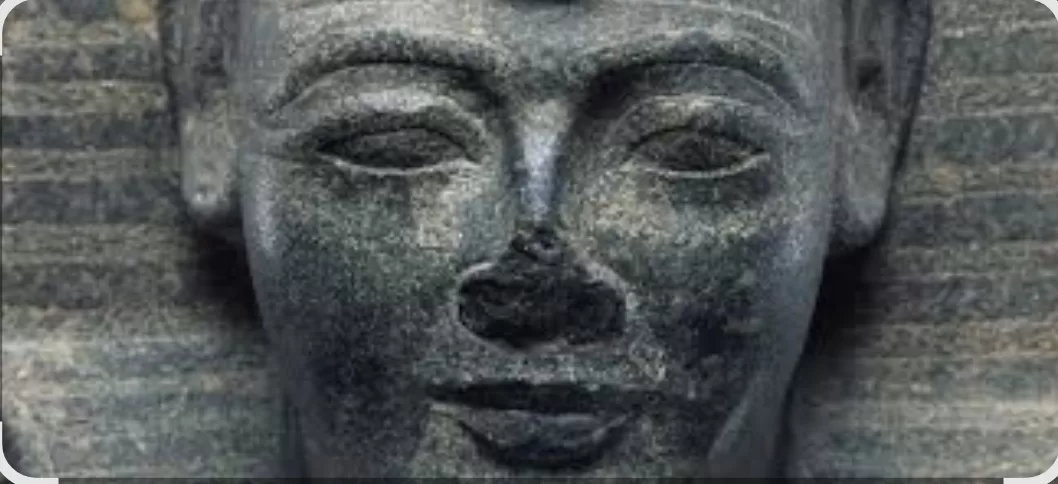
Born in the Nile delta, Ramses II was the son of Pharaoh Seti I and Queen Tuya. At just 14 years old, he embarked on his initiatory journey, destined to become the third ruler of the 19th Ramesside dynasty. Under his father's guidance, Ramses II underwent rigorous physical and philosophical training, preparing him for the sacred duties of royalty. This spiritual formation would shape his exceptional destiny, marked by a dazzling 67-year reign from 1279 to 1213 BCE.
Ramses II's presence is ubiquitous in Egypt, with his legacy visible in iconic structures such as the hypostyle hall of Karnak and the colossal statues of Abu Simbel, where he reigns alongside his Great Royal Wife, Nefertari. The temple of Luxor, an ancient site known as Ipet-resyt, holds special significance as a sanctuary for the renewal of creation and the source of the royal Ka – a divine vital energy.
At Luxor, the mortal Ramses II would unite with his immortal principle to legitimize his power and regenerate the Cosmos. This mystical site, steeped in tradition, reinforced the pharaoh's divine connection and ensured the continuity of the cosmic order. The imposing colossi at Luxor, including the recently restored "Beautiful Face" of the third eastern colossus, now radiate an aura of eternity.
The restored "Beautiful Face" of the colossus, standing over 14 meters tall, showcases an extraordinary symmetry, crafted according to the principles of the Golden Ratio. Engineer Christopher Dunn's study highlights the precision of the sculpture. Positioned at the entrance of the sanctuary, this monumental head now presides over the temple, exuding an air of serenity.
In ancient Egyptian culture, the concept of Ma'at represented the cosmic order, justice, truth, and perfect balance. The gods and transfigured pharaohs were referred to as "Nefer," signifying beauty, perfection, and completion. Those who attained absolute peace entered the eternal cycle of Neheh. Nefertari, the Great Royal Wife, was also revered as Ma'at-Neferou-Rê, embodying the perfection of light.
The sacred texts of the underworld, such as the Amdouat and the Book of the Night, reveal the 12th hour of the night as a pivotal moment in the cosmic cycle. This instant of transition, where the exhausted sun is reborn, was considered sacred. It is in this context that Ramses II's connection to the divine and his role in maintaining the cosmic balance are understood.
The pharaoh's enduring legacy, reflected in his impressive architectural achievements and spiritual leadership, continues to inspire wonder. As a champion of Ma'at, Ramses II ensured the stability and prosperity of Egypt, solidifying his place in history as one of the most remarkable rulers of ancient times.
Key points
- The nearly 67-year reign of Ramses II
- The significance of Ma'at in ancient Egyptian culture
- The architectural and spiritual achievements of Ramses II