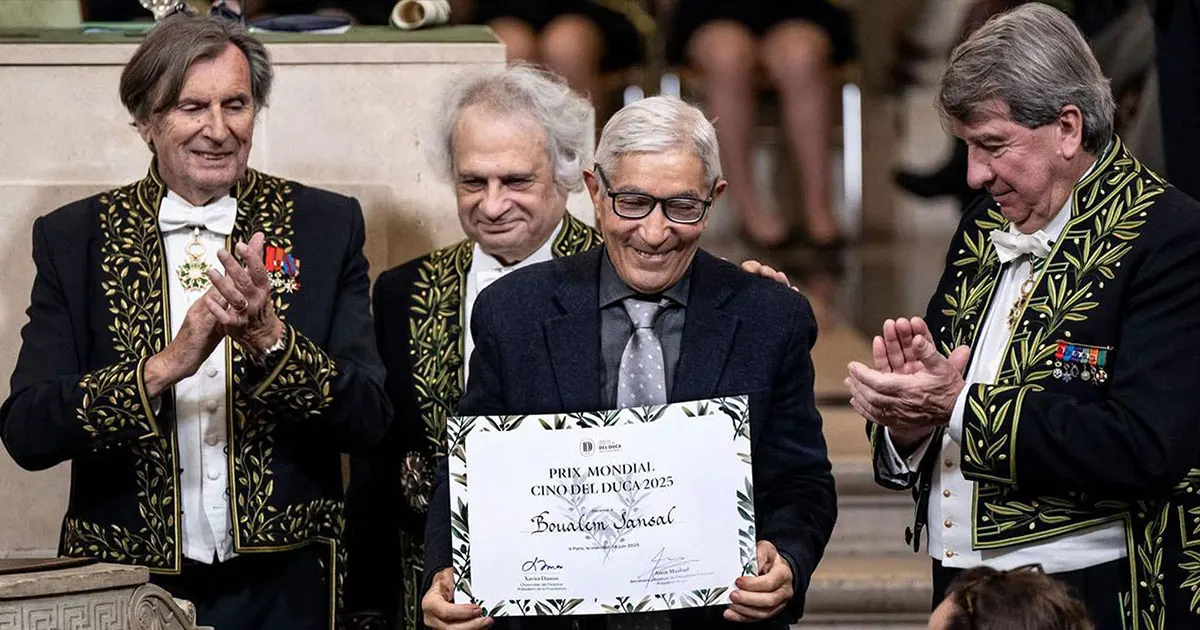
The trajectory of Boualem Sansal, an Algerian-French writer, has raised questions about the intersection of literature, politics, and intellectual exploitation. His recent statements have sparked controversy, with some labeling him an ingrate and a traitor. This shift in public perception is a far cry from his previous status as a celebrated author, highlighting the complexities of his relationships with his homeland and his adopted country.
Sansal's rise to fame can be attributed, in part, to his alignment with France's far-right ideology. He has been a vocal advocate for extreme right-wing views, often using his platform to express anti-immigration sentiments. In a televised interview in May 2024, he described migration as an "invasion" and a "colonization in reverse." Such statements have made him a darling of the far-right, but have also drawn criticism from those who view his views as divisive and xenophobic.
The writer's relationship with the French media has been mutually beneficial, with Sansal providing a literary voice to the far-right and, in return, receiving widespread media attention. His appearances on television shows and in prominent publications have cemented his status as a public intellectual. However, this increased visibility has come at a cost, with some accusing him of sacrificing his artistic integrity for the sake of fame.
The dynamics of intellectual fame in France have undergone significant changes, with media presence and visibility often taking precedence over literary merit. Sansal's success is a testament to this shift, as he has become a fixture on television screens and in newspaper headlines. This new paradigm has led to concerns about the role of intellectuals in shaping public discourse and the potential consequences of their increased visibility.
The changing landscape of intellectual discourse in France has led to a reevaluation of the role of writers and thinkers in shaping public opinion. Sansal's trajectory serves as a case study for the complexities of this new landscape, where literary figures are often expected to take on a more public role. As a result, the boundaries between literature, politics, and journalism have become increasingly blurred.
Critics argue that Sansal's alignment with far-right ideology has come at the expense of his artistic integrity and his ability to engage with complex social issues in a nuanced and thoughtful manner. His silence on pressing global issues, such as the Israeli-Palestinian conflict and the situation in Sudan, has been particularly notable. This silence has led some to question the value of his contributions to public discourse.
As Sansal navigates the fallout from his recent statements, his journey serves as a reminder of the complexities of literary fame and the challenges of maintaining artistic integrity in the face of public pressure. His story highlights the need for a more nuanced understanding of the intersections between literature, politics, and intellectual exploitation, and the importance of critically evaluating the role of public intellectuals in shaping our understanding of the world.
Key points
- Boualem Sansal's alignment with France's far-right ideology has sparked controversy and raised questions about intellectual exploitation.
- The writer's relationship with the French media has been mutually beneficial, but has also led to accusations of sacrificing artistic integrity for fame.
- Sansal's trajectory serves as a case study for the complexities of the changing landscape of intellectual discourse in France.