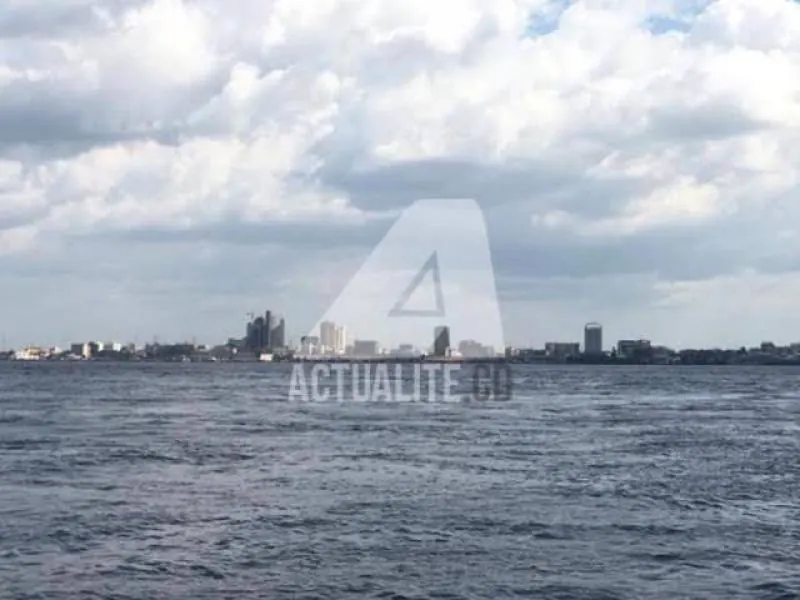
The Democratic Republic of Congo is endowed with an immense network of rivers and lakes, including the Congo River, which traverses the country. However, despite its hydraulic wealth, the nation remains poorly visible in international systems for sharing hydrological observations. This is particularly concerning given the increasing frequency of floods in the country. According to the World Meteorological Organization (WMO), the DRC was classified among countries severely hit by floods for three consecutive years.
In its 2025 report on the state of global water resources, the WMO highlighted that the DRC experienced severe flooding, with at least 165 deaths recorded in Kinshasa in April 2025 due to sudden floods, overflow of the Ndjili River, and landslides. The disaster displaced over 7,000 people and affected more than 60,000 others. However, the DRC was not among the countries whose national hydrological advisors or focal points contributed to the report by providing observations or information on 2025 events.
The absence of the DRC from the list of contributing countries does not imply that it lacks hydrological data. Instead, it suggests that national Congolese data were not included among the contributions presented by the WMO for this edition. To monitor areas with rare or non-existent ground observations, the WMO relies on global hydrological models, satellites, and databases from international partners. These tools allow for the observation of large basins, lakes, soil moisture, and water reserves.
Despite these efforts, the WMO acknowledges that Africa and Asia remain underrepresented in its hydrological observation system, despite significant progress in the number of countries and stations covered over the past five years. This deficit is striking, given that Africa and Asia accounted for nearly half of the extreme water-related events and over 80% of associated deaths recorded between 2021 and 2025.
The WMO emphasizes the need for enhanced sharing of open and up-to-date data, which it considers essential for risk monitoring, forecasting, and early warning systems. However, the report does not provide a clear picture of the state of the hydrological station network in the DRC or the quantity of data collected by Congolese services. A national evaluation is necessary to determine whether the main issue lies in the lack of measurements, data quality, or limited sharing.
The DRC's underrepresentation in global water observation systems is particularly concerning, given the country's vulnerability to water-related disasters. Neighboring Rwanda, for instance, is among the countries that contributed to the WMO report. The DRC's hydraulic wealth and extensive network of rivers and lakes make it an important player in regional and global water management.
The WMO's report highlights the need for improved data sharing and collaboration to address the growing threat of water-related disasters in Africa and Asia. The organization's efforts to enhance its hydrological observation system and promote data sharing are crucial steps towards mitigating the impact of floods and other water-related events in vulnerable countries like the DRC.
Key points
- The Democratic Republic of Congo faces recurrent floods and severe water-related disasters despite its vast hydraulic resources.
- The country's underrepresentation in global water observation systems hampers effective risk monitoring and early warning systems.
- Enhanced data sharing and collaboration are essential for addressing the growing threat of water-related disasters in Africa and Asia.