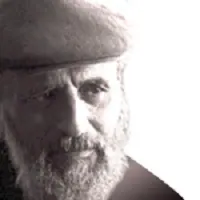
The concept of artificial intelligence, or "intelligence" in Arabic, has become a familiar term in recent years, but its origins date back to around eight decades ago, during World War II. At that time, mathematician Alan Turing designed computational machines to decipher complex messages used by German naval commanders, giving the Allies access to German plans. Turing's work went beyond this, as he developed a model for a computer or artificial mind capable of solving problems that human brains cannot.
In 1950, four years before his death, Turing proposed a test for computers to prove their intelligence, which he called the "imitation game," later known as the Turing test for artificial intelligence. The test involves a person interacting with a computer through a screen, without knowing whether they are communicating with another person or a computer. If the person cannot distinguish between the two, the computer is considered to have passed the test and demonstrated intelligence.
However, philosopher John Searle challenged this idea with his "Chinese Room" thought experiment, which aimed to prove that computers cannot truly understand or think, despite their ability to mimic human-like responses. In the experiment, a person who does not speak Chinese is placed in a room with a set of rules and symbols, and through this process, they are able to respond to questions in Chinese, but without understanding the language.
Searle's argument is based on the distinction between syntax and semantics, where syntax refers to the rules governing the processing of symbols, and semantics refers to their meaning. He claims that computers can only process symbols according to rules, but do not truly understand their meaning. This raises questions about the nature of intelligence and whether computers can truly be considered intelligent.
Despite Searle's reservations, artificial intelligence has made significant progress in recent years, with applications in fields such as music, literature, and art. AI systems have also been able to defeat human champions in games like chess and solve complex mathematical problems that have gone unsolved for decades. However, it remains unclear whether these achievements demonstrate true intelligence or simply sophisticated programming.
Some experts, like Nigel Roberts, have suggested that if the human mind can be mapped and uploaded into a computer, it could potentially continue to exist after death. This idea raises complex questions about the nature of consciousness and whether AI systems can truly be considered conscious. Companies like HereAfter AI and DeepBrain AI have developed applications that allow people to interact with deceased loved ones through AI-powered avatars.
As AI technology continues to advance, concerns are growing about its potential risks and implications. Some experts warn that AI systems could become uncontrollable and pose a threat to human existence if they are not designed with adequate safeguards and ethics. The debate over AI is ongoing, with experts like Turing and Searle offering differing perspectives on its capabilities and limitations. Ultimately, the future of AI will depend on how these questions are addressed and how the technology is developed and regulated.
Key points
- The Turing test, proposed by Alan Turing, is a measure of a computer's ability to exhibit intelligent behavior equivalent to, or indistinguishable from, that of a human.
- John Searle's Chinese Room thought experiment challenges the idea that computers can truly understand or think, despite their ability to mimic human-like responses.
- The debate over AI raises complex questions about the nature of consciousness, intelligence, and human existence, and highlights the need for careful consideration of the risks and implications of AI development.