![[HOLD FOR 4 OCTOBER] The price paid beyond the plate — the huge social and environmental costs of farmed seafood](https://saharawire.com/media/2026/10/10/outlawocean-fishing-price3-637963-7272fcbe.webp)
The South African government has been promoting the country's fishing industry as a sustainable and responsible one, with then-fisheries minister Willie Aucamp attending the launch of a new fishmeal factory in Saint Helena Bay in January 2026. The factory, run by Pioneer Fishing, aims to process herring and export the fishmeal to countries such as Denmark, Spain, and China. However, critics argue that the practice of catching and processing whole fish to grow more seafood is unsustainable and has severe environmental and social consequences.
The global aquaculture industry, which produces farmed seafood, relies heavily on fishmeal and fish oil as feed. Two-thirds of global aquaculture grows species that are fed fishmeal and fish oil, and before it reaches the market, a farmed salmon, for instance, eats more than six times its weight in wild-caught fish. This has led to concerns about the sustainability of the industry and its impact on the environment. The most popular types of farmed seafood, including salmon, shrimp, and trout, are fed the kinds of wild fish that aquaculture claims to be saving.
An investigation by The Outlaw Ocean Project, a news organisation based in Washington, DC, has revealed that the feed used in the aquaculture industry comes with a range of hidden costs. These costs include the loss of artisanal fishing jobs, chronic chemical exposure, avoidable worker deaths, and violent protests sparked by the stench from fishmeal factories. The investigation also found that the industry drives food insecurity in poorer countries, where fish that once sustained local communities are increasingly being diverted into fishmeal factories for export.
In countries such as Gambia and Mauritania, the investigation documented how the industry drives food insecurity as fish are diverted into fishmeal factories for export. In remote islands in Russia's far east and in China's Xinjiang region, the reporting detailed the use of forced labour on ships, at farms, and in factories. The investigation also found that the industry is tied to at least 80 incidents of civil unrest, including labour strikes and community protests sparked by water pollution or the stench from factories.
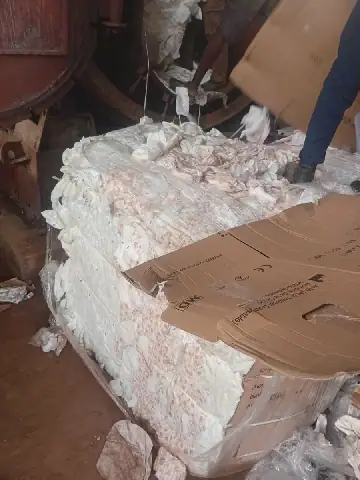
The investigation mapped roughly the entire global fishmeal industry, including more than 1,400 fishmeal factories across 64 countries. The reporting effort involved dozens of journalists from as many countries, visiting factories and farms and boarding fishmeal ships at sea. The goal was to chronicle the industry's "externalities" – the hidden and displaced social costs of producing this feed that rarely appear on the balance sheets of the seafood companies that depend on it.
The fishmeal industry also contributes to geopolitical tensions, according to the investigation. For example, in 2021, a dozen Turkish bottom trawlers fishing illegally in the Aegean Sea tried to ram a Greek research vessel when the scientists began filming their activity. In 2018, riots broke out in Saint-Louis, Senegal, after the Mauritanian Coast Guard shot and killed a fisher during what the Mauritanians said was a cross-border raid by a fishmeal boat.
The consequences of the industry's practices are being felt in countries such as Senegal, where fishmeal has put local fishers out of work, and they are increasingly selling or repurposing their boats to flee to Europe. The journey to Spain's Canary Islands is a treacherous one, and more than 3,000 lives were lost in 2025 alone. As Cheikhou Omar, a 21-year-old fisher, said, "We're fishermen, but there's no fish left here, so we left."
Key points
- The global aquaculture industry's reliance on fishmeal and fish oil as feed has severe environmental and social consequences.
- The industry drives food insecurity in poorer countries, where fish are diverted into fishmeal factories for export.
- The fishmeal industry contributes to geopolitical tensions and has been linked to incidents of civil unrest and human rights abuses.