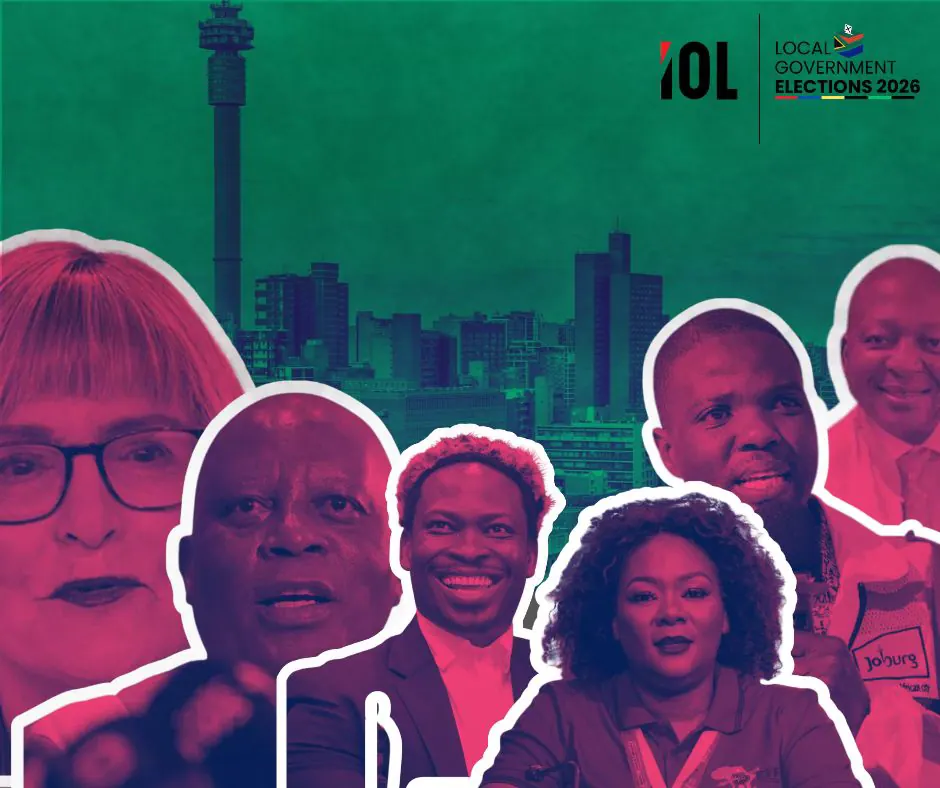
Johannesburg is entering the November 4 Local Government Elections after a decade marked by unstable coalition politics and deteriorating services. Since 2016, the city has had nine mayors and eight coalition administrations, with no mayor completing a full five-year term. This period of coalition governance has led to significant challenges in service delivery, with residents facing issues such as broken traffic lights, dry taps, potholes, and electricity outages. The city's experience serves as a warning to South Africa ahead of the upcoming elections.
Prior to 2016, the African National Congress (ANC) governed Joburg with an outright majority. However, the local government election that followed changed the landscape, with no party winning 50% of the vote. A Democratic Alliance (DA)-led administration, with Herman Mashaba at the helm, took office with support from smaller parties and the Economic Freedom Fighters (EFF). This marked the beginning of the coalition era in Joburg, characterized by instability and challenges in delivering services to residents.
The city's infrastructure has suffered significantly under coalition governance. The Centre for Development and Enterprise estimates that Joburg's electricity infrastructure backlog stands at R44 billion, with 54,132 power outages recorded in just six months between July and December 2025. Joburg Water has identified an infrastructure renewal backlog of R26.6 billion. Gross unpaid bills owed to the city have increased from about R15 billion in 2014/15 to more than R71 billion in 2024/25. These numbers highlight the need for stable and effective governance in the city.
The decline in infrastructure investment has been significant, with inflation-adjusted terms showing a roughly 50% decline over a decade and about 70% per resident. The city's own 2023/24 annual report recorded electricity losses worth R4.9 billion, while physical water losses increased from R1.5 billion in 2022 to R2 billion in 2024. While various factors contribute to these challenges, including population growth and corruption, the need for political stability and competent appointments is clear.
Research into Joburg's coalition experience has linked disputes over political positions and coalition arrangements to motions of no confidence and instability. The constant changes in administration have created uncertainty over political leadership, priorities, and senior appointments. This instability has hindered the city's ability to address long-term challenges, such as the R26.6 billion water infrastructure backlog, which requires decisions that may only yield benefits years later.
Voters have a role to play in addressing these challenges. In 2021, voters gave the ANC 33.6%, the DA 26.5%, and the EFF 16.1%, with no party receiving a clear mandate to govern alone. Electoral fragmentation has consequences, and in Joburg, politicians have repeatedly failed to construct a durable coalition. The question remains as to who will be held accountable for these failures at the ballot box. As South Africa's major metros face similar challenges, Joburg serves as a warning.
As the country heads into the Local Government Elections, voters must consider the implications of their choices. Coalition politics may give more parties a seat at the table, but the danger arises when everyone is fighting over those seats while the city outside that council room falls apart. Joburg residents have spent a decade discovering what happens when nobody receives a clear mandate and politicians cannot construct a durable alternative.
Key points
- Joburg's unstable coalition politics has led to deteriorating services, including electricity outages, water shortages, and infrastructure backlogs.
- The city's experience serves as a warning to South Africa ahead of the November 4 Local Government Elections.
- Voters have a role to play in addressing these challenges by considering the implications of their choices and holding politicians accountable for their failures.