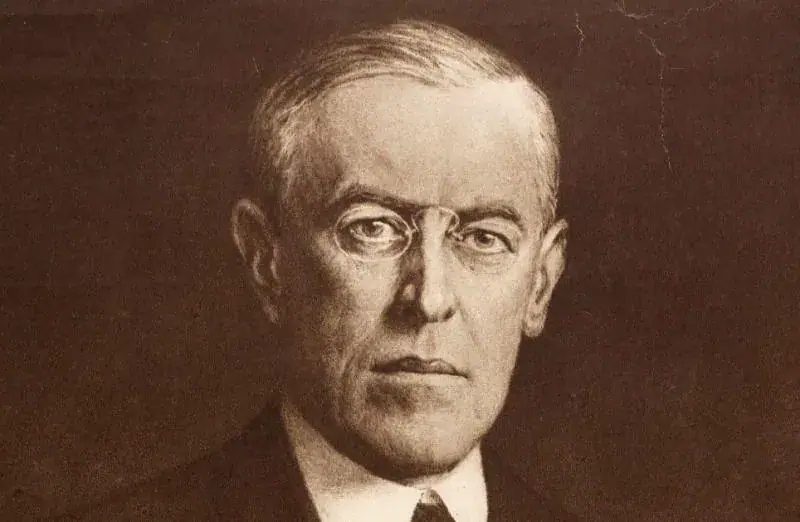
Woodrow Wilson, the 28th president of the United States, left a lasting impact on the world stage. Elected in 1912 and re-elected in 1916, Wilson's presidency was marked by contradictions. He was a promoter of peace, yet participated in the Treaty of Versailles, which led to the downfall of defeated empires. Wilson created the League of Nations, but failed to secure US participation. His commitment to liberty, democracy, and self-determination was at odds with his support for racial segregation in the US.
In 1918, Wilson outlined his "Fourteen Points" for post-war reconstruction, emphasizing the importance of justice, fairness, and self-determination. The points, which included the creation of a League of Nations, were widely publicized and generated immense hope worldwide, particularly in African and Asian colonies. Wilson's vision for a post-war world was one of democracy, disarmament, and free trade. His speech was seen as a beacon of hope, and the French press hailed it as a significant step towards a lasting peace.
Wilson's visit to Europe in December 1918 was a historic event, marking the first time a sitting US president had traveled to a foreign country. He was greeted as a hero in France, with many hailing him as a champion of peace and idealism. The French press was effusive in its praise, with Le Journal describing him as the "defender of rights" and "Christopher Columbus of a new world." Even socialist newspaper L'Humanité praised Wilson, calling him the "true creator of peace in the world."
However, Wilson's idealism was soon tested by the harsh realities of the Paris Peace Conference. Despite his commitment to a fair and equitable peace, Wilson was forced to compromise with Allied leaders, including Georges Clemenceau and David Lloyd George. The resulting Treaty of Versailles imposed harsh penalties on defeated nations, far removed from Wilson's vision of a just peace. This outcome would have far-reaching consequences, fueling resentment and a desire for revenge.
On February 14, 1919, Wilson presented the League of Nations charter to the Paris Peace Conference, his speech met with enthusiastic applause. He expressed optimism about the future, stating that the war had shown the power of law and the possibility of nations working together. However, the League of Nations ultimately failed to prevent the outbreak of World War II, and Wilson's legacy has been subject to reevaluation.
The psychoanalyst Sigmund Freud wrote a critical book about Wilson, portraying him as a fanatical idealist whose attempts to deliver the world from evil ultimately did more harm than good. This assessment highlights the complexities of Wilson's personality and legacy. Anatole France described Wilson as a "citizen of the world," while Viviani saw him as a "citizen of humanity." These characterizations reflect the diverse perspectives on Wilson's presidency and its impact.
Today, Wilson's legacy is viewed as complex and multifaceted. While he was hailed as a champion of peace and idealism in his time, his presidency was also marked by contradictions and compromises. The consequences of his actions continue to shape international relations and global politics. As historians continue to reevaluate his presidency, Wilson remains a significant figure in modern history, offering insights into the challenges of idealism and pragmatism in international relations.
Key points
- Wilson's "Fourteen Points" were widely publicized and generated immense hope worldwide for a lasting peace.
- The Treaty of Versailles imposed harsh penalties on defeated nations, deviating from Wilson's vision of a just peace.
- Wilson's legacy is complex and multifaceted, marked by both idealism and compromise.