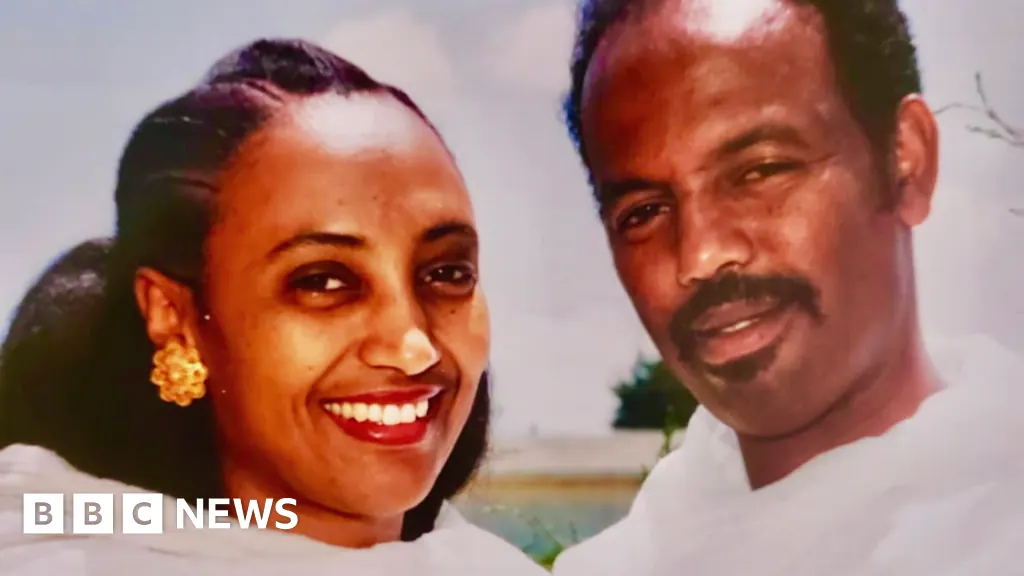
Hanna Petros Solomon, now 35, breaks down in tears recalling her father's arrest 25 years ago. Petros Solomon, a senior leader during Eritrea's liberation war, was detained in 2001 along with 14 other high-profile politicians who signed an open letter calling for the implementation of a constitution and national elections. They became known as the G-15. Hanna and her siblings effectively became orphans, with their mother Aster Yohannes also detained, and no one has heard from either of them since.
Petros Solomon had been a national hero for his critical role in the liberation war that saw Eritrea gain independence from Ethiopia in 1993. After independence, he served as defence minister, then foreign minister, and headed the fisheries ministry before his troubles began. His daughter Hanna remembers the happy times before his arrest, including family gatherings and birthday parties. She also recalls her father's love of music and his favourite songs.
The arrests took place on September 18, 2001, when security forces positioned themselves outside the homes of 11 senior government officials in the capital, Asmara, on President Isaias Afewerki's orders. Petros was picked up by security agents as he left his home in his tracksuit. The family had no idea what had happened to him, and it was only days later that they understood the situation was serious. Hanna's classmates told her that her father had "sold out his country," which hurt her deeply.
Aster Yohannes, Hanna's mother, was studying in the US when her husband was arrested. She returned to Eritrea, despite concerns for her safety, but never made it home. She failed to emerge from arrivals at Asmara International Airport on December 11, 2003, and the family later heard that she was being held in the infamous Karshelli jail in Asmara. Hanna's father is believed to be detained in the remote and secretive prison known as Ela-Ero, where the others arrested on September 18 and 19, 2001, are also believed to be held.
Accused of treason, none of the G-15 politicians has ever been brought to trial or allowed to see their relatives. The Eritrean government has not responded to requests for comment on the whereabouts of the prisoners or whether they are alive. Hanna, like many thousands of young Eritreans, fled the country to escape conscription and seek better opportunities. She now lives in the US, working as a trauma specialist, but still feels traumatised by her experiences.
Ibrahim Sherifo, 38, knows exactly how Hanna feels. Both his parents, senior members of the ruling People's Front for Democracy and Justice, were among the G-15 people arrested 25 years ago. He was 13 years old at the time and remembers September 18, 2001, as a "dark day" for Eritrea and its people. Ibrahim is now living in exile in the Netherlands, where he was granted asylum, and is pursuing an MA in political science.
The G-15 arrests marked a watershed moment in Eritrea's history, with the government shutting down all fledgling independent newspapers and detaining their editors and journalists. The Eritrean government has maintained a tight grip on power and media since then. For Hanna and Ibrahim, 25 years without answers about their parents' fate has been a long and painful journey.
Key points
- The G-15 politicians, including war heroes, were jailed 25 years ago without trial.
- Their families remain in the dark about their fate, with no information on whether they are alive or dead.
- The arrests marked a significant crackdown on dissent and media freedom in Eritrea.