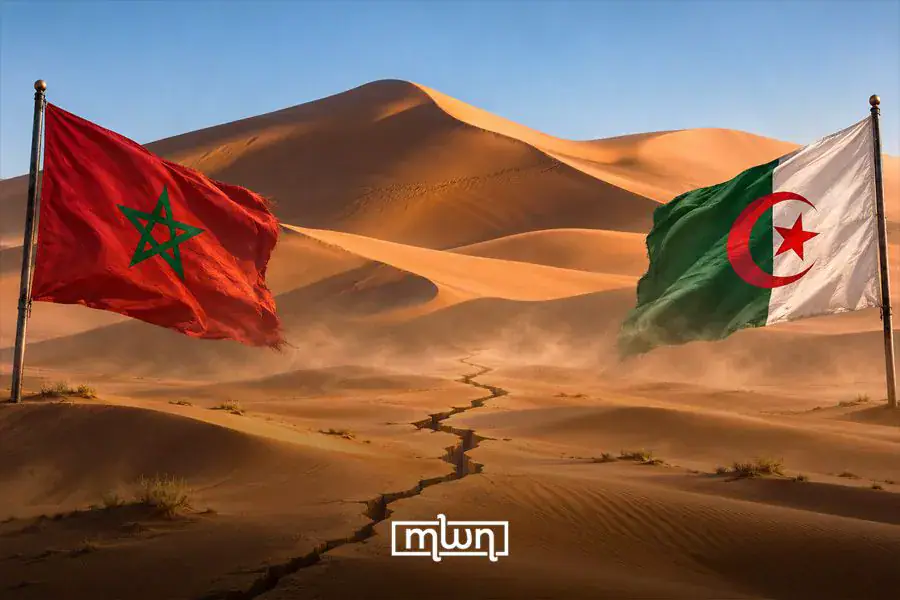
The story of Ammi Abdelkader, a man expelled from Algeria in 1975, highlights the human impact of the Western Sahara conflict. He was one of over 350,000 people uprooted from their homes, a consequence of escalating tensions between Morocco and Algeria. The expulsion, which began on December 8, 1975, resulted in 45,000 Moroccan families being separated, with livelihoods and futures disrupted. This event has left a lasting impact on those affected, with memories of homes, relationships, and expected futures that could not be restored.
More than half a century later, the Western Sahara conflict remains unresolved. On October 30, 2026, the UN Security Council failed to renew the mandate of the UN Mission for the Referendum in Western Sahara (MINURSO). Russia vetoed an American-sponsored proposal, while a competing Russian proposal failed to secure sufficient support. The mission's mandate expired, and on November 1, Secretary-General António Guterres announced the end of peacekeeping operations and the beginning of an orderly withdrawal. This development has significant implications for the region.
The end of the MINURSO mission marks a diplomatic turning point for Morocco, which views it as an opportunity to move beyond a framework that has endured for 35 years without producing a political settlement. The Moroccan Royal Cabinet reflected on this shift in a statement. However, Algeria and the Polisario Front, which advocates for an independent Sahrawi state, contest the direction of this transition. The UN maintains that self-determination remains unresolved and that diplomacy must continue.
The paradox lies in the fact that institutions created to resolve conflicts can become part of the problem. Organizations develop personnel, budgets, and procedures that acquire a momentum of their own, making it challenging to achieve the original objective. This is not necessarily due to bureaucratic self-interest but rather the complexity of the problems being addressed. Institutions can prevent violence, even if they cannot produce peace, and their routines can make the management of non-resolution administratively durable.
The UN's involvement in Western Sahara has raised questions about the role of institutions in conflict resolution. For 35 years, the mission performed functions, including monitoring a ceasefire and maintaining an international presence, but the referendum on the territory's political future never materialized. The mission's endurance has made the absence of change appear less exceptional, and its continuity has been counted in renewed mandates.
The Western Sahara conflict emerged from the unfinished history of decolonization. Morocco regards the territory as its Southern Provinces, while the UN refers to it as Western Sahara. The Polisario Front, founded in 1973, pursued Sahrawi independence with support from Libya and later Algeria. The International Court of Justice acknowledged historical ties between the Moroccan sultan and some tribes but concluded that these did not establish territorial sovereignty sufficient to displace the principle of self-determination.
The dispute remains unresolved, with Morocco emphasizing territorial reintegration and the Polisario insisting on Sahrawi self-determination. The situation highlights the challenges of conflict resolution and the role of institutions in managing conflicts. As the MINURSO mission withdraws, the international community must continue to engage in diplomacy to find a solution to the Western Sahara conflict.
Key points
- Institutions created to resolve conflicts can become part of what allows them to endure.
- The UN's role in Western Sahara has been ongoing for 35 years without producing a political settlement.
- The conflict's resolution requires continued diplomacy and engagement from the international community.