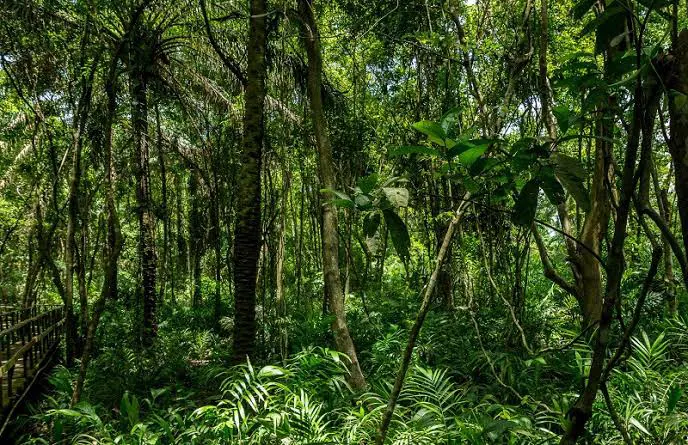
Forests in Nigeria are not just environmental assets, but also economic infrastructure that provides communities with food, fuel, medicines, timber, and livelihoods. However, deforestation and land degradation continue to erode this natural capital, leading to loss of economic opportunities, ecosystem services, and environmental resilience. The World Health Organisation notes that healthy ecosystems provide clean air, fresh water, food, medicines, and climate regulation.
The business case for restoring Nigeria's forests is compelling, with examples from Ethiopia and the Humbo forest restoration project demonstrating that environmental recovery and economic development can reinforce each other. In Ethiopia, a World Bank-supported programme has brought over 2.56 million hectares under sustainable landscape management and generated more than 1.1 million jobs. The Humbo project restored over 2,700 hectares of degraded land, creating carbon benefits and generating income for local communities.
Nigeria can learn from these models and build its own approach to forest restoration, as seen in the Seplat Tree4Life initiative in Edo State. This initiative demonstrates what is possible when corporate investment, government commitment, technical expertise, and community participation come together. Forest restoration becomes a platform for jobs, community engagement, biodiversity protection, and future carbon value.
A well-designed forest economy in Nigeria can support various activities, including nurseries, seed collection, land preparation, planting, forest monitoring, community patrols, agroforestry, beekeeping, sustainable harvesting, ecotourism, research, and digital environmental monitoring. Women and young people in rural communities can participate in this emerging green economy rather than being passive beneficiaries.
Carbon markets offer another layer of opportunity, but must be approached with integrity, requiring additionality, robust baselines, transparent measurement, reporting and verification, strong safeguards, and equitable benefit sharing. This is where Environmental, Social, and Governance (ESG) becomes practical, enabling businesses to strengthen social licence to operate, manage climate risk, protect supply chains, and create measurable environmental and social value.
The United Nations Sustainable Development Goals provide an imperative for forest restoration, with SDG 15 calling for the restoration of degraded forests and land, and SDG 13 demanding urgent climate action. An African proverb says, “The best time to plant a tree was 20 years ago. The second-best time is now,” highlighting the need for immediate action.
Restoring Nigeria's forests should be treated as an investment in jobs, health, climate resilience, community prosperity, and intergenerational wealth. The focus should shift from merely counting trees planted to measuring hectares restored, livelihoods improved, carbon sequestered, biodiversity protected, jobs created, communities empowered, and economic value generated.
Key points
- Restoring Nigeria's forests can create jobs and improve food and water security.
- A well-designed forest economy can support various activities, including nurseries, seed collection, and ecotourism.
- Carbon markets offer an opportunity for Nigeria, but must be approached with integrity.