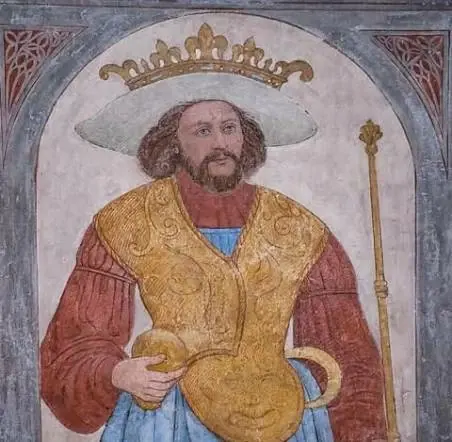
In a small Danish town called Jelling, two ancient runic stones tell the story of King Harald Blåtand, also known as Harold Bluetooth, who ruled Denmark in the 10th century. The king's nickname, which translates to "blue tooth" in English, is believed to refer to a blue or damaged tooth. This nickname has become synonymous with a technology that allows devices from different manufacturers to connect wirelessly.
The story of King Harald Blåtand was brought to the attention of engineers at companies such as Toshiba, IBM, Nokia, Intel, and Ericsson in the late 1990s. They were working on developing a new technology that would enable devices from different brands to connect to each other. An American engineer at Intel, Jim Kardach, was inspired by the king's story after reading a book about Viking history.
Kardach was struck by the fact that King Harald Blåtand had united Denmark and Norway, and he saw a parallel between this achievement and the ability of the new technology to unite devices from different manufacturers. The name "Bluetooth" was chosen as a codename for the project, and it eventually became the official name of the technology.
The use of the name "Bluetooth" was not without controversy, however. Some public relations officials were concerned that the name might be associated with poor dental hygiene, and they suggested alternative names that were more descriptive but less memorable. In the end, the name "Bluetooth" was retained, and it has become one of the most recognizable technology brands in the world.
The Bluetooth logo is also inspired by the runic alphabet used by the Vikings. It combines two runes that correspond to the letters "H" and "B," which are the initials of Harald Blåtand's name in Old Norse. This logo has become ubiquitous and is widely recognized as a symbol of wireless connectivity.
In 2023, Jim Kardach and other founders of the Bluetooth technology visited the Kongernes Jelling museum in Denmark to apologize for using the name of King Harald Blåtand without prior permission. The museum accepted the apology and granted them permission to continue using the name for the next 1,000 years.
Today, Bluetooth technology is used in a wide range of applications, from wireless headphones and speakers to car infotainment systems and medical devices. It has become an essential part of modern life, and its origins can be traced back to the story of King Harald Blåtand, a Viking king who united Denmark and Norway over 1,000 years ago.
Key points
- The name "Bluetooth" was inspired by the nickname of King Harald Blåtand, a Viking king who ruled Denmark in the 10th century.
- The Bluetooth logo is inspired by the runic alphabet used by the Vikings and combines two runes that correspond to the letters "H" and "B."
- The use of the name "Bluetooth" was not without controversy, with some officials concerned that it might be associated with poor dental hygiene.