On September 25, 1977, Steve Biko was buried after being beaten to death by the apartheid state. His death spawned a new language of struggle and influenced a generation through the Black Consciousness Movement (BCM). The movement's impact and the generation that came after it remain a topic of discussion. Biko's legacy continues to be felt, with his ideas on Black Consciousness still relevant today.
The BCM planned celebratory rallies across the country in 1974, with speakers from Frelimo, after the colonial overlord retreated and a Black government came into power. However, the state banned the rallies, leading to a clampdown that culminated in a trial that sent nine top BCM leaders to Robben Island. During this time, Biko was breaking taboos, from apartheid-imposed identities to international allegiances.
Biko was critical of both American capitalism and Russian imperialism, stating that "in being so critical of the economic self-interest in the Third World on the part of American capitalism, I at the same time have no illusions about Russia." His views on international allegiances were seen as a challenge to the South African Communist Party (SACP), which responded by labeling him a "liberal" and an idealist.
The SACP's publication, The African Communist, railed against Biko, stating that he was insufficiently anti-capitalist and lacked an understanding of mass struggle. Biko was also accused of being a CIA spy, and the BCM was labeled as the Third Force, furthering "imperialist interests." These labels made BCM activists targets for beatings and assassinations in the 1980s.
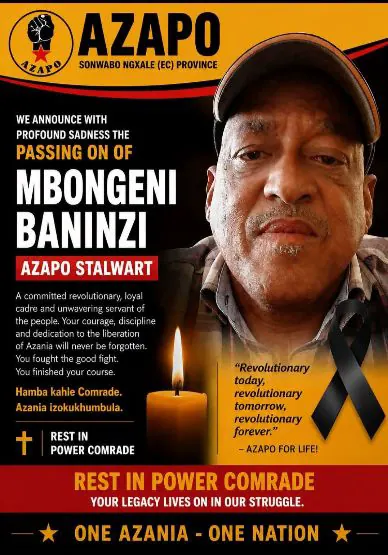
Mbongeni Baninzi, a BCM activist, was harassed by SACP comrades who saw him as "problematic." The author recalls witnessing Baninzi being beaten by SACP goons in Waainek Prison in 1987. Rumors swirled that the Cradock Four, a group of anti-apartheid activists, had died at the hands of BCM, which was used as a convenient weapon to terrorize BCM and other leftist groupings.
The ANC/SACP were worried that the rebellion of the 1980s was running beyond their organizational control, and thus, they policed the boundaries of resistance. Olivia Forsyth, a Rhodes University activist, was accused of being an apartheid spy, and labeling and ostracism became common tactics. The path to negotiation would be prepared by slandering, marginalizing, and even killing those who did not conform to the "line" from Lusaka via Leningrad.
Joe Slovo, head of the SACP, wrote a mea culpa in 1990, acknowledging that communists had become blinded and behaved like Stalinists towards comrades who raised doubts about the "purity" of Stalin's brand of socialism. The author notes that this behavior was not just a matter of words, but had real-life consequences, including the use of ice-picks and tipping off the regime to problematic individuals.
Key points
- Biko's Black Consciousness Movement influenced a generation and spawned a new language of struggle.
- The SACP and ANC policed the boundaries of resistance, using labeling and ostracism to control the narrative.
- Biko's legacy continues to be felt, with his ideas on Black Consciousness still relevant today.