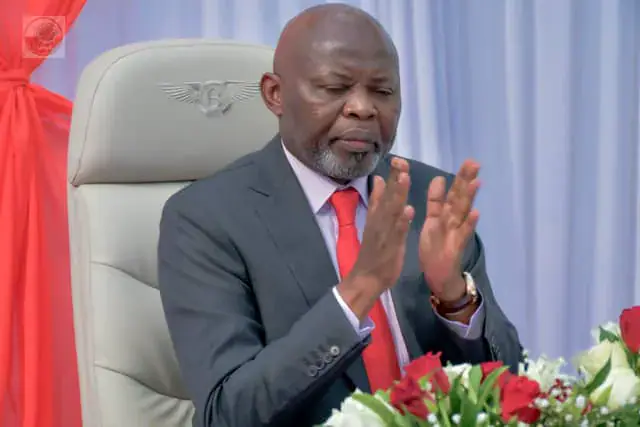
Eleven senior members of the Union for the Congolese Nation (UNC) have publicly distanced themselves from recent comments made by party leader Vital Kamerhe regarding the conflict in Eastern Democratic Republic of Congo and state military spending. In a statement released on Wednesday, November 25, these officials, part of the "Current of Conservatives," stated that Kamerhe's remarks on November 20 in Kinshasa do not represent the party. They reaffirmed their support for President Félix Tshisekedi and urged Kamerhe to retract his statements.
The controversy stems from Kamerhe's media appearance, where he questioned the continuation of the war in Eastern Congo and called for greater transparency in military expenditures. The Current of Conservatives argue that such matters should be discussed within party and presidential majority circles, not publicly. They believe that criticizing the military hierarchy could weaken national cohesion and the morale of forces fighting armed groups in the East. Signatories to the statement include national deputies Jean Baudouin Mayo Mambeke, Gaborian Mboma Kumeza, and Michel Moto Muhima.
The UNC leadership has rejected the legitimacy of the group that issued the statement, claiming that there is no such structure as the "Collective of Conservatives and Co-Founders of the Union for the Congolese Nation" within the party. In a message on its social media account, the party stated that any actions or positions attributed to this collective do not represent any official party structure or its national leadership. This controversy highlights internal divisions within the party led by Vital Kamerhe, as security issues remain a major topic of debate in Congolese politics.
The Current of Conservatives emphasizes that, as part of the ruling majority, the UNC must ensure coordinated communication on national security issues. They argue that public criticism of the military can undermine efforts to combat armed groups in the East. The group is urging Kamerhe to reconsider his comments and align with the party's official stance. This internal disagreement comes at a time when the conflict in Eastern Congo continues to pose significant challenges to the government and the population.
Vital Kamerhe's comments have sparked a significant reaction within his party and among political analysts. Some view his remarks as a reflection of growing concerns about the effectiveness of the government's approach to the conflict in the East. Others see it as an indication of internal power struggles within the UNC. The party's response suggests that Kamerhe's views may not have been thoroughly vetted within the party before being made public.
The situation within the UNC reflects broader tensions within the Congolese political landscape. The conflict in Eastern Congo has been a longstanding issue, with various armed groups operating in the region. The government's handling of the situation has faced criticism from different quarters, including some within the ruling party. The UNC's internal debate highlights the challenges of managing a complex and multifaceted security situation.
The controversy is likely to have implications for the UNC and the broader political coalition supporting President Tshisekedi. It remains to be seen how the party will address its internal divisions and present a united front on key issues such as national security. The situation will be closely watched by political observers and the general public, given the significance of the UNC in Congolese politics.
Key points
- The UNC internal conflict highlights divisions over the government's approach to the Eastern Congo conflict.
- Vital Kamerhe's comments sparked a strong reaction from party members.
- The controversy reflects broader challenges in managing the security situation in Eastern Congo.