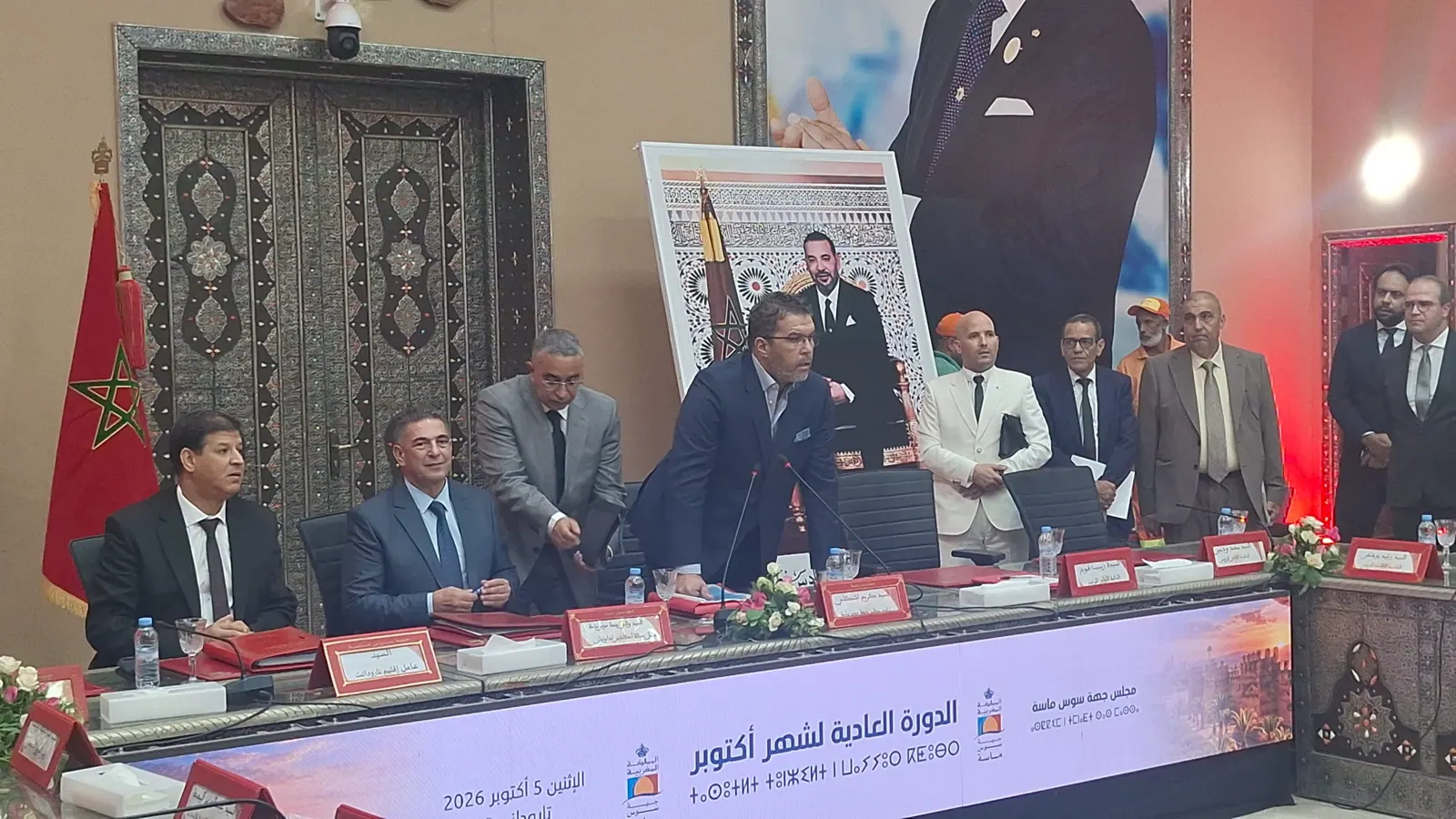
The ordinary October 2026 session of the Souss-Massa regional council, scheduled to take place on October 5 at the Taroudant Initiative House, was unable to convene due to a lack of quorum. A significant number of council members were absent, including representatives from several parties that make up the majority, such as the Authenticity and Modernity Party, the Independence Party, and the Socialist Union.
The absence of these members, as well as some members of the National Rally of Independents and the Progress and Socialism Party, prevented the meeting from achieving the necessary quorum. According to reports, some council members expressed dissatisfaction with the way the session's agenda was prepared, particularly with regards to the inclusion of certain points and agreements without sufficient prior discussion.
The council's president, Karim Achnakli, was forced to open the session in a protocolary manner before announcing that it could not take place due to the lack of quorum. This development highlights internal divisions within the majority that runs the council, with several parties and members participating in the boycott, raising questions about the level of cohesion within the majority.
The failure of the October session to convene takes place in a specific political context, following recent elections and the resulting shifts in the balance of power. This makes the way the council manages its internal conflicts and the ability of its components to maintain cohesion within the majority a key issue in the coming period.
The Souss-Massa region has been experiencing significant developments in recent years, with a focus on economic and social growth. The regional council plays a crucial role in shaping the region's development strategy and policies. However, the current internal divisions may impact the council's ability to effectively address the region's challenges.
The absence of a quorum has significant implications for the region, as it delays the discussion and approval of important projects and agreements. This may have a ripple effect on the region's development plans and the delivery of essential services to its residents.
The situation highlights the need for effective communication and collaboration among council members to overcome internal divisions and ensure the smooth functioning of the regional council. The coming period will be crucial in determining the council's ability to manage its internal conflicts and work towards the region's development goals.
Key points
- The Souss-Massa regional council's failure to convene due to a lack of quorum highlights internal divisions within the majority.
- The absence of council members from several parties, including the Authenticity and Modernity Party and the Independence Party, prevented the meeting from achieving the necessary quorum.
- The situation has significant implications for the region's development plans and the delivery of essential services to its residents.