The security situation in Ituri, Democratic Republic of the Congo, has taken a turn for the worse as the Congolese Revolutionary People's (CRP) movement advances towards Iga-Barrière, a locality just 25km from Bunia. According to local sources, the CRP's progress follows the capture of Lopa and Lindji on November 22. Clashes between the CRP and the Congolese army (FARDC) were reported on November 23, particularly after the FARDC was dislodged from its position on the Tsotso hill.
The violence has resulted in casualties, with two FARDC soldiers and a civilian killed in an ambush on the evening of November 22 near Lopa. The three individuals were traveling on a motorcycle when they were attacked, and the assailants made off with the soldiers' weapons. In a separate incident at Tsotso, the CRP launched an attack on an FARDC position, leaving several soldiers reportedly injured and evacuated to Bunia, while their position was set on fire.
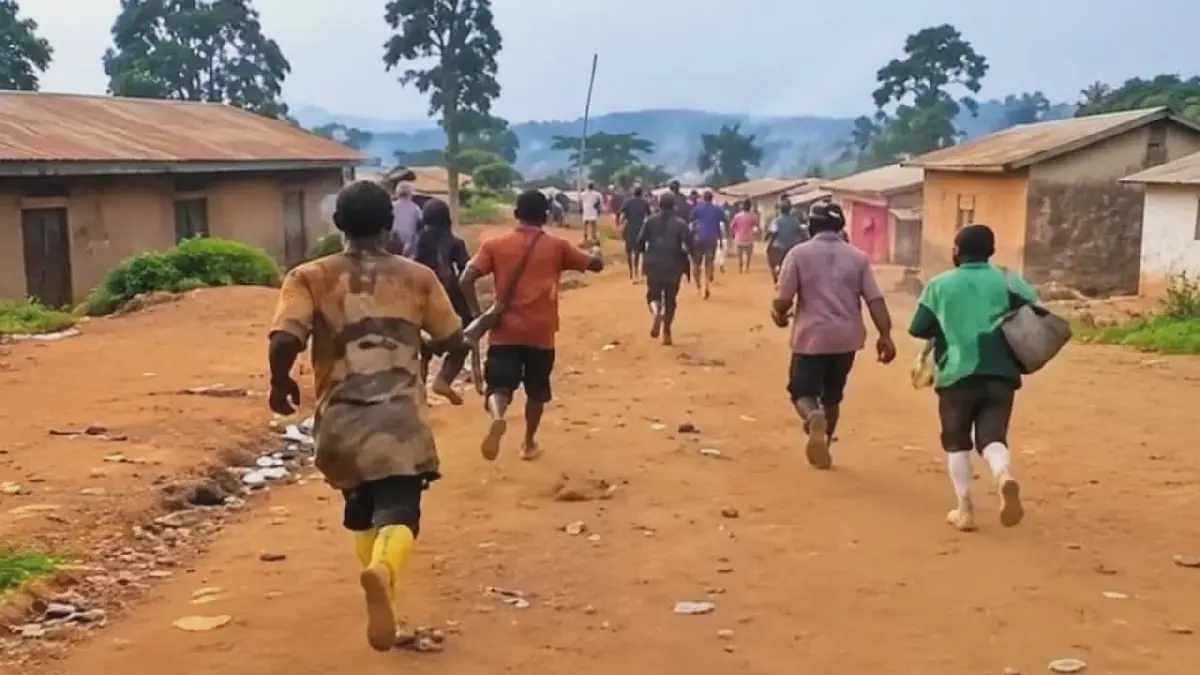
The economic activities in the affected areas have been severely disrupted, with commercial activities grinding to a halt in Lopa, Lindji, and Iga-Barrière on November 23. Several businesses kept their doors closed due to fears of further attacks, and traffic on National Route 27 (RN27) has been disrupted, with multiple vehicles stranded at Pimbo and the entrance to Bunia. As the security situation deteriorates, residents of these localities have begun to flee towards Bunia.
In response to the escalating violence, the United Nations has temporarily restricted the movement of its personnel on the Iga-Barrière-Lopa-Fataki axis, suspending non-essential travel and postponing field missions. The MONUSCO peacekeeping mission has increased its patrols in the affected areas to help protect civilians. Meanwhile, the FARDC claims to have repelled the CRP fighters towards the outskirts of the affected localities.
The recent surge in violence comes as peace initiatives were underway. On October 9, 2026, Thomas Lubanga, leader of the CRP, met with Ugandan President Yoweri Museveni in Entebbe, in the presence of Congolese officials, including Major General Gaby Kasongo Mulumba, the military governor of Ituri. Following the meeting, the CRP reaffirmed its commitment to a unilateral ceasefire on October 10, aimed at facilitating further dialogue.
However, the clashes in recent days have put this fragile peace process to the test. On November 20, MONUSCO escorted approximately 380 displaced civilians between Fataki and the Savo plain site, following their flight from clashes between the FARDC and CRP fighters. At this stage, there is no official confirmation that the CRP has gained total and lasting control of Iga-Barrière.
The situation remains fluid, with civilians bearing the brunt of the consequences of the clashes. The MONUSCO and humanitarian organizations continue to monitor the situation, and efforts to restore peace and stability in the region are ongoing. The people of Ituri remain anxious, hoping for a swift resolution to the conflict and a return to normal life.
Key points
- The CRP's advance towards Iga-Barrière has led to clashes with the FARDC, causing casualties and displacement of civilians.
- The United Nations and MONUSCO have taken measures to restrict movement and enhance security in the affected areas.
- The recent violence has put the CRP's unilateral ceasefire commitment to the test, amid ongoing peace initiatives.