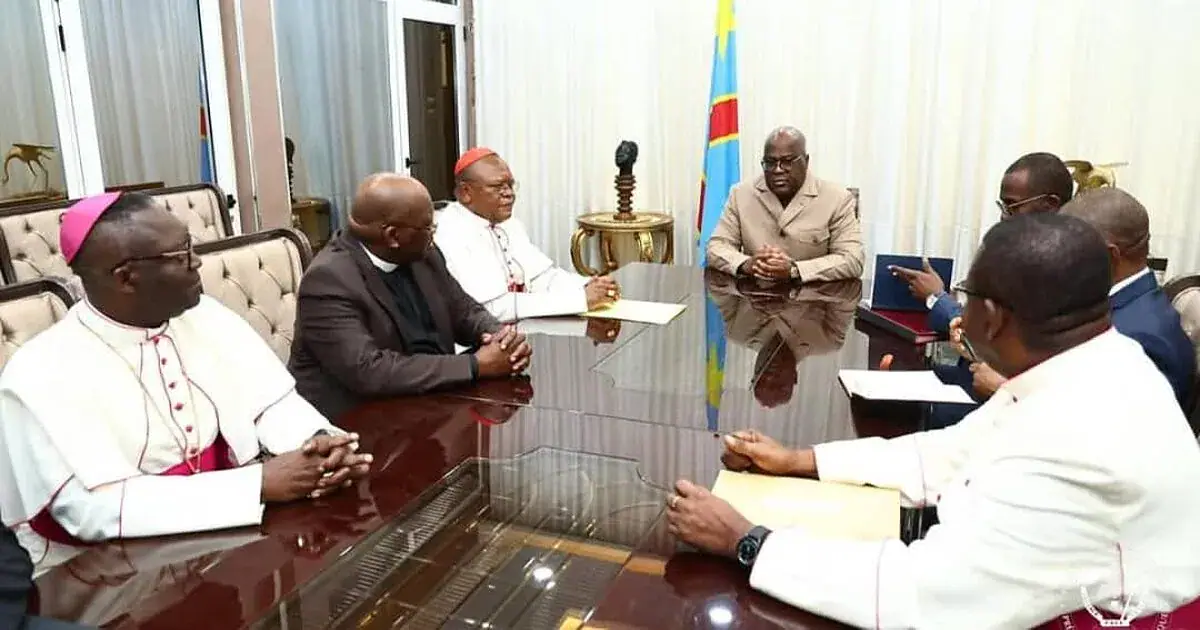
The Catholic Church in the Democratic Republic of the Congo is facing increased tensions with the government, with recent incidents including the banning of a eucharistic celebration in Kinshasa and alleged intimidation of church officials in Lubumbashi. Cardinal Fridolin Ambongo has spoken out against these actions, expressing solidarity with the bishops and faithful of Lubumbashi and denouncing attempts to silence the church. This latest development has heightened concerns about the relationship between the church and the government.
The church's opposition to a proposed referendum law has also become a point of contention, with the church arguing that it could lead to changes to the constitution. The government has defended its position, but the church remains vigilant, seeing the issue as a potential threat to the country's democratic institutions. With the church playing a significant role in Congolese society, its stance on this issue is likely to have a major impact on the country's politics.
Cardinal Ambongo's comments have been seen as a strong rebuke to the government, with the cardinal stating that the church will not be intimidated or silenced. He emphasized that the church's mission is not just spiritual but also social and moral, and that it will continue to speak out on issues affecting the nation. The church's determination to assert its independence and speak truth to power has raised concerns about potential clashes with the government.
The tensions between the church and government have sparked debate about the role of the church in Congolese society and the limits of government power. The church has long been a influential voice in the country, and its stance on key issues has helped shape public opinion. However, the government's attempts to restrict the church's activities have raised concerns about the erosion of civil liberties and the rule of law.
The proposed referendum law has become a focal point in the tensions between the church and government, with the church arguing that it could undermine the country's democratic institutions. The government has argued that the law is necessary to allow for changes to the constitution, but the church remains opposed to the move. This disagreement has highlighted the deep-seated divisions between the church and government.
The Catholic Church in the DR Congo has a long history of involvement in politics and social issues, and its stance on key issues has often put it at odds with the government. However, the current tensions appear to be more pronounced than in the past, with both sides dug in and unwilling to compromise. The church's determination to assert its independence and speak out on issues affecting the nation has raised concerns about potential clashes with the government.
As the situation continues to unfold, it remains to be seen how the tensions between the church and government will play out. However, one thing is clear: the Catholic Church in the DR Congo is not going to back down, and it will continue to speak out on issues affecting the nation, even if it means challenging the government. The church's stance has highlighted the need for greater dialogue and understanding between the church and government.
Key points
- The Catholic Church in the DR Congo is facing increased restrictions and intimidation from the government, prompting Cardinal Fridolin Ambongo to speak out in support of the church's rights and freedoms.