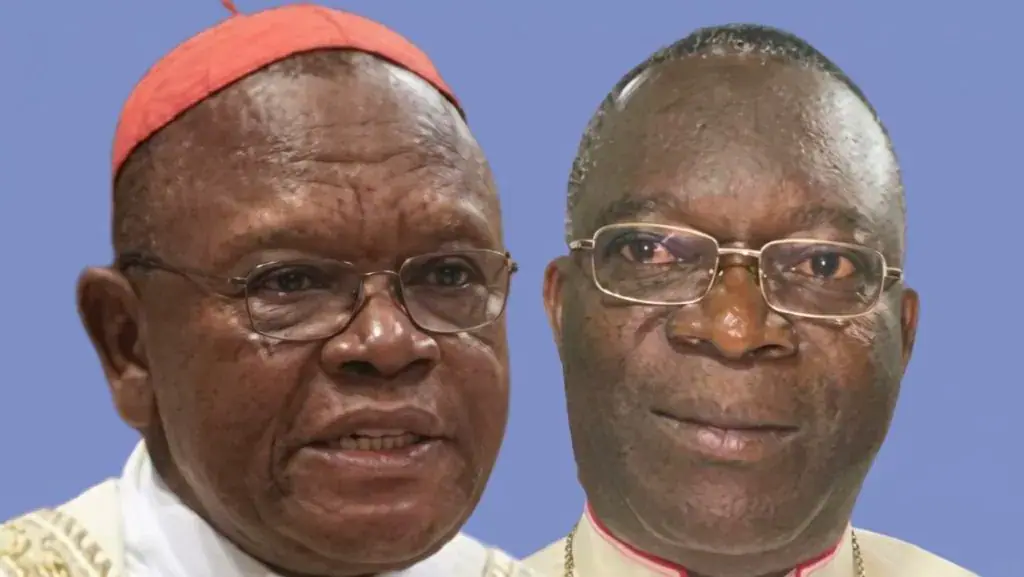
The conflict between the Congolese government and the Catholic Church has intensified, with recent events in Lubumbashi and Kinshasa exacerbating the situation. In Lubumbashi, the archdiocese had planned a peaceful march to demand the execution of a court judgment regarding the demolition of unauthorized constructions on the Grand Seminary's land. However, the mayor, Joyce Tunda Kazadi, prohibited the march, citing previous bans on gatherings in the city.
The archdiocese of Lubumbashi had obtained a court judgment, RF 002, which ordered the demolition of unauthorized constructions on the Grand Seminary's land. The Church claims ownership of the land and demands the enforcement of the court decision. The planned march was intended to pressure the authorities to execute the judgment. Nevertheless, the mayor's ban led to a significant police deployment around the cathedral, preventing the march from taking place.
In Kinshasa, the capital city, Cardinal Fridolin Ambongo was scheduled to celebrate a mass for young Catholics at the Tata Raphaël stadium on November 22. However, the authorities prohibited the event at the last minute, citing no official notification or clear explanation for the ban. The mass was part of the 41st World Youth Day celebrations. The Archdiocese of Kinshasa denounced the decision, stating that the necessary administrative procedures had been completed, and the ban was communicated only after 10 PM on the eve of the event.
Cardinal Ambongo expressed his disappointment and frustration with the government's decision, describing it as a provocation. He emphasized that the ban denied thousands of young Catholics their spiritual gathering and undermined the celebration of the Diocesan Youth Day. The cardinal also highlighted the constitutional right to freedom of religion and worship, guaranteed by the Congolese Constitution.
The recent incidents demonstrate the growing rift between the Catholic Church and the Congolese government. The Church asserts that it had obtained the necessary permits and security guarantees from the Ministry of Interior. The last-minute ban has been seen as unjustified, especially given the extensive preparations and the large number of young people involved.
Despite the setbacks, Cardinal Ambongo used the occasion to address the youth, urging them not to remain indifferent to the problems facing their country. He condemned the ongoing violence in eastern Democratic Republic of Congo, which has resulted in loss of life and displacement of populations. The cardinal encouraged young people to take an active role in addressing these challenges rather than simply observing them.
The tensions between the Congolese authorities and the Catholic Church reflect a deeper struggle for freedom of expression and assembly in the country. The Church's advocacy for human rights and social justice has often put it at odds with the government. As the situation continues to unfold, it remains to be seen how the authorities will respond to the Church's demands and how the relationship between the two will evolve.
Key points
- The Congolese government has banned two Catholic Church events in Lubumbashi and Kinshasa, citing concerns over public gatherings and security.
- The Catholic Church has accused the government of applying a double standard in managing public gatherings, allowing the ruling party to hold rallies while restricting Church events.
- Cardinal Fridolin Ambongo has denounced the government's actions as provocative and emphasized the importance of freedom of religion and worship in the country.