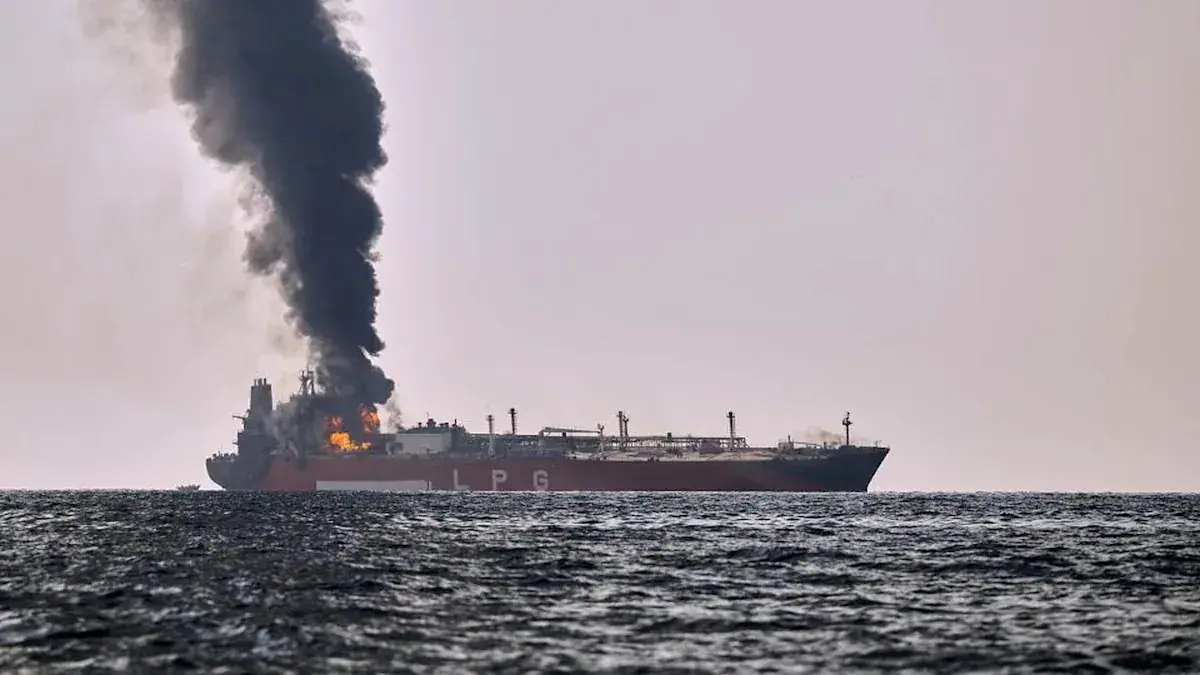
Tensions between Iran, the United States, and Israel have escalated after Iran's Revolutionary Guard seized two oil tankers in the strategic Hormuz Strait. The incident has raised concerns about the security of oil supplies and the potential for a wider conflict. According to reports, the tankers were carrying petroleum products when they were intercepted by Iranian forces. The seizure comes as the region's security is already on edge due to ongoing military clashes.
Iran's Revolutionary Guard has stated that the tankers had entered a restricted area, prompting the seizure. The incident has been condemned by Western powers, with the US and Israel viewing it as a provocative move by Iran. The Hormuz Strait is a critical waterway for global oil supplies, with around 20% of the world's oil passing through it. Any disruption to oil supplies in the region could have significant economic implications.
The seizure of the oil tankers has sparked fears of a wider conflict in the region. US President Donald Trump has been urged by Israeli Prime Minister Benjamin Netanyahu to take action against Iran. However, Trump has yet to make a decision on the matter, with reports suggesting that he is not eager to launch another military operation in the region. The situation remains volatile, with all parties involved walking a delicate balance.
In response to the rising tensions, Iran has announced plans to boost its military capabilities. The country has launched a program to train one million volunteers in military skills, with the aim of enhancing its defenses. The move is seen as a show of strength by Iran, which has been subject to significant economic pressure from US sanctions. The Iranian military has also praised the role of the Basij militia in defending the country's security.
Despite the escalating tensions, oil prices have edged lower. Brent crude oil fell to $92.29 per barrel, while US West Texas Intermediate crude oil traded at $83.26 per barrel. However, the situation remains fragile, and any further escalation could send oil prices soaring. The impact on the global economy could be significant, with higher oil prices affecting inflation and economic growth.
The situation has also sparked concerns in the US, with Democratic leaders urging caution. Hakeem Jeffries, the Democratic leader in the US House of Representatives, has stated that halting a war with Iran will be a top priority for the new Congress. Jeffries has warned that a conflict with Iran would drive up oil prices, affecting American consumers and the broader economy.
The international community remains on high alert, with concerns about the security of the region and the potential for a wider conflict. The Hormuz Strait is a critical waterway, and any disruption to oil supplies could have far-reaching consequences. Diplomatic efforts are underway to ease tensions, but the situation remains volatile, with all parties involved on high alert.
Key points
- Iran's Revolutionary Guard seized two oil tankers in the Hormuz Strait, sparking fears of a wider conflict.
- The incident has raised concerns about the security of oil supplies and the potential for a wider conflict.
- Iran has announced plans to boost its military capabilities, including training one million volunteers in military skills.