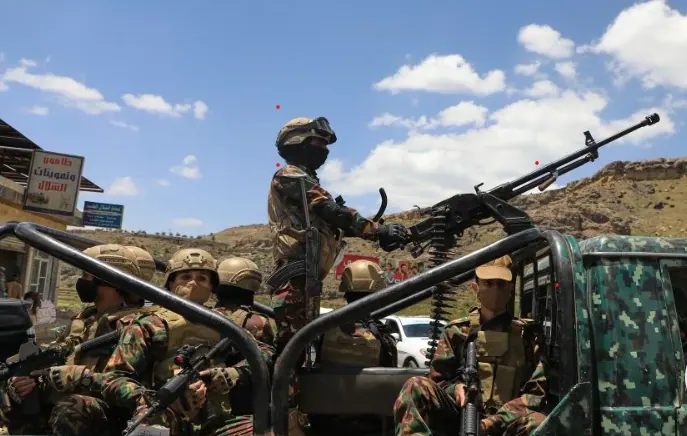
As the diplomatic summit opens, intensified fighting in Yemen and growing friction between Washington and Tehran have heightened regional tensions. A sudden Houthi offensive in Yemen has shifted regional dynamics, with the Iran-backed group seizing vital territory, including a strategic Red Sea island and coastal zones near the Bab al-Mandab Strait. This maritime chokepoint is essential for global energy shipments and international commerce.
Officials in Washington and Gulf capitals fear the movement aims to cement long-term control over the shipping lane. Despite expanded American intelligence and targeting assistance, Riyadh has faced setbacks on the battlefield. The Gulf and American officials are increasingly doubtful Riyadh can reverse the Houthi gains on its own. The military campaign escalated when Saudi Arabia accused the group of targeting Mecca, and the movement claimed it shot down a Saudi F-15 fighter jet.
Drone and missile strikes subsequently hit sensitive sites in Riyadh alongside an Aramco oil installation in Yanbu, heightening fears that Yemen has become a primary theater for Iran-backed regional confrontation. In response to the deteriorating security landscape, American diplomatic missions have urged citizens across the region to exercise extreme caution. The State Department issued a formal advisory stating that the conflict "has the potential to escalate rapidly."
The US Embassy in Saudi Arabia implemented travel restrictions for government personnel visiting Taif and Yanbu without special clearance. These precautions reflect mounting fears of retaliatory strikes targeting American assets, regional partners, and commercial infrastructure. Washington Weighs Fresh Responses to Tehran, with Iran's central military command announcing it obtained intelligence regarding potential military actions by the United States and its regional allies.
In a statement released through the Tasnim News Agency, Tehran cautioned that any new offensive would provoke sustained strikes against American bases throughout the region. The regime added that nations aiding such operations would face direct consequences. Publicly reported US strikes on Iran have remained absent for over two weeks. President Donald Trump signaled that critical decisions regarding Iran loom large.
Iranian President Masoud Pezeshkian is scheduled to attend the UN General Assembly after the White House approved travel clearance for core members of the Iranian delegation. Regional diplomacy in New York will focus heavily on maritime security, energy stability, and the conflicts in Yemen and Iran. Saudi Arabia's delegation is led by Foreign Minister Prince Faisal bin Farhan, alongside senior representatives from Qatar, the United Arab Emirates, Kuwait, Oman, and Bahrain.
As multilateral delegations navigate competing strategic interests in Manhattan, international observers emphasize that lasting regional stability requires bridging military deterrence with inclusive diplomatic frameworks. Balancing freedom of navigation with sovereign security concerns remains paramount to preventing a wider humanitarian and economic crisis. The UN General Assembly provides a critical platform for world leaders to address these pressing issues.
Key points
- The Houthi group's seizure of strategic Red Sea island and coastal zones near the Bab al-Mandab Strait has heightened regional tensions and raised concerns about the potential for a broader conflict.
- The US and its regional allies are weighing fresh responses to Tehran, with President Donald Trump signaling that critical decisions regarding Iran loom large.
- The UN General Assembly provides a critical platform for world leaders to address pressing issues, including maritime security, energy stability, and the conflicts in Yemen and Iran.