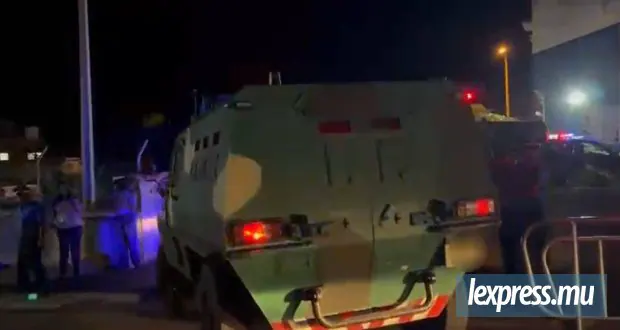
A tense situation is unfolding in Camp-Levieux, Mauritius, where residents have been protesting for several hours over the ongoing water crisis. The demonstrations have turned violent, with protesters hurling stones and Molotov cocktails at police officers. In response, the Mauritian police have deployed additional reinforcements from the Special Mobile Force (SMF) to the area, equipped with shields. An armored vehicle has also been brought in to help restore order.
The water crisis affecting Camp-Levieux and surrounding areas, including Mare-aux-Vacoas, has left approximately 150,000 residents without access to adequate water supplies. According to recent reports, the region is facing a severe shortage of 56,000 cubic meters of water. The situation has sparked widespread frustration and anger among residents, who are demanding immediate action from authorities to address the crisis.
The protests in Camp-Levieux are part of a larger wave of demonstrations and unrest across Mauritius, as citizens express their discontent with the government's handling of the water crisis. In Phoenix, a recent statement by Khushal Lobine, a member of the opposition, criticized the government's response to the crisis, calling for greater accountability. The situation remains volatile, with residents and authorities locked in a standoff.
Efforts to de-escalate the situation are underway, with two members of the Forces Vives, a coalition of civil society groups, being solicited to help calm tensions and facilitate dialogue between residents and authorities. However, the deployment of additional police reinforcements and an armored vehicle suggests that the situation remains precarious.
The water crisis in Mauritius has far-reaching implications for the island nation's infrastructure and economy. With the situation showing no signs of improving, residents are growing increasingly frustrated, and the government faces mounting pressure to find a solution. The international community is watching closely, as Mauritius seeks to address the crisis and restore stability to the region.
The situation in Camp-Levieux has sparked concerns about public safety and human rights. The use of force by police and the deployment of an armored vehicle have raised questions about the government's approach to handling the protests. As the situation continues to unfold, human rights groups and international observers are monitoring developments closely.
The Mauritian government faces a significant challenge in addressing the water crisis and restoring public trust. With protests and demonstrations expected to continue, authorities must balance the need to maintain order with the need to address the underlying issues driving the crisis. The coming days and weeks will be crucial in determining the course of events in Mauritius.
Key points
- The water crisis in Camp-Levieux and surrounding areas has left approximately 150,000 residents without access to adequate water supplies.
- The protests in Camp-Levieux are part of a larger wave of demonstrations and unrest across Mauritius.
- Efforts to de-escalate the situation are underway, with two members of the Forces Vives being solicited to help calm tensions.