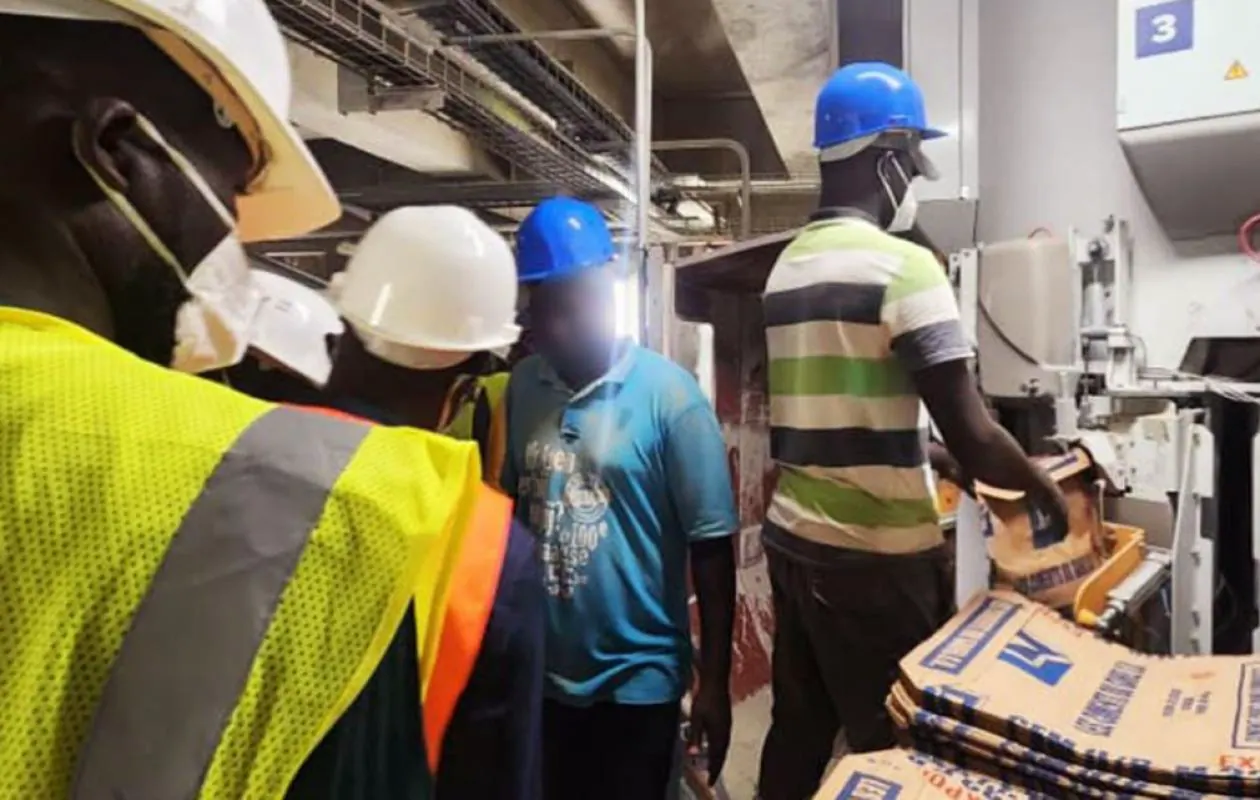
The situation at Ciments du Sahel, a cement plant located in Kirène, near Diass, Senegal, remains tense following the brief detention of several workers by the Diass gendarmerie on October 8, 2026, at around 10 pm. The workers were released shortly after. This incident is part of a larger context of social unrest at the plant.
The current tensions have their roots in a long history of labor disputes. In September and October 2011, the plant experienced significant confrontations and worker arrests. Recently, the Syndicat des travailleurs des industries du Sénégal (SYNTIS) won the first union elections at the plant in August 2025. Since then, union representatives have been pressing for improved working conditions.
The SYNTIS union has issued ultimatums and filed a strike notice with the plant's management, demanding the establishment of a genuine consultation framework, regularization of daily workers, and provision of housing allowances and risk premiums. Despite conciliation sessions at the Thiès Regional Labor and Social Security Inspection, no concrete progress has been made.
In response to the lack of progress, the SYNTIS decided to halt production starting October 7, 2026. The union's demands focus on better working conditions and were presented to the General Management to justify the strike notice filed on September 7, 2026. The union has given the management an ultimatum to come up with concrete proposals.
If the deadline expires without significant progress, the union has threatened to initiate a total and unlimited production shutdown across the entire site. The workers' delegates emphasize that their struggle is not against the plant but for its sustainability and the dignity of its workers, who contribute to the market and should be decently compensated.
The Ciments du Sahel plant plays a crucial role in Senegal's economy, particularly in the construction sector. The ongoing labor disputes have raised concerns about the potential impact on the plant's operations and the country's infrastructure development projects that rely on cement supply.
The situation at Ciments du Sahel remains volatile, with workers and management yet to find a resolution to the current impasse. The intervention of external mediators or government authorities may be necessary to prevent further escalation and find a peaceful solution to the labor disputes.
Key points
- Workers at Ciments du Sahel in Senegal are demanding better working conditions, including regularization of daily workers and provision of housing allowances and risk premiums.
- The labor disputes have led to a halt in production and threaten a total and unlimited shutdown if demands are not met.
- The situation has historical precedents, with significant confrontations and worker arrests occurring in 2011.