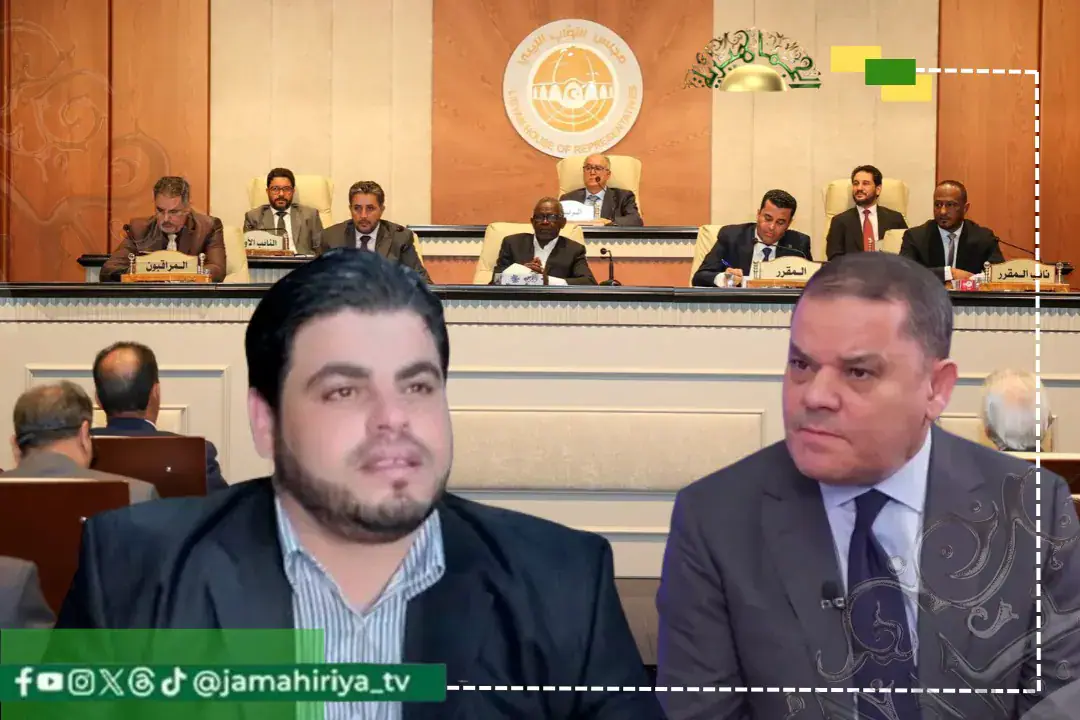
Libya's ongoing political tensions have raised concerns about the country's transition process. According to political analyst Abdullah Al-Dibani, the current rift between the government of Prime Minister Abdul Hamid Al-Dbeiba and the parliament dates back to disagreements over the executive authority's powers and the mechanisms for ending the transitional phase. These tensions have significant implications for the country's institutions and its people.
The parliament has insisted on exercising its oversight, financial, and legal roles, particularly in monitoring vital economic issues such as the unified budget and payroll. Additionally, the parliament is holding the leadership of the Central Bank of Libya accountable for the country's financial and economic situation. Al-Dibani noted that these tensions could negatively impact the relationships between Libya's institutions and slow down efforts to unify the country's sovereign and executive institutions.
Al-Dibani emphasized that the current disagreement should not be viewed as a closed crisis or a definitive rift between the two institutions. Instead, it represents a new chapter in the struggle for control over the transitional phase and the future of power in Libya. He warned that continued conflicting interests and a lack of commitment to the law could deepen the country's political division.
On November 16, 2026, a session of the parliament was scheduled to take place in the city of Az-Zintan but was postponed due to the closure of the city's airport. A force affiliated with the Fourth Brigade entered the airport and prevented planes carrying parliament members from landing without prior permission. This incident coincided with local protests and security movements, ultimately preventing the parliament members from arriving and halting the municipal council's negotiations to evacuate the airport.
Al-Dibani stressed that the parliament, as the elected legislative authority, bears constitutional and oversight responsibilities towards the citizens. He argued that questioning its actions or restricting its sessions in Libyan cities contradicts its right to exercise its legislative and oversight roles across the country. The analyst called for prioritizing national interests, respecting the legal competencies of each institution, and engaging in serious dialogue to unify the country's institutions.
The ongoing tensions have raised concerns about the potential consequences for Libya's transition process. Al-Dibani warned that if the current situation persists, it may lead to further divisions and hinder the country's progress towards stability and democracy. He emphasized the need for a peaceful resolution to the crisis, urging all parties to prioritize the country's interests and work towards a unified solution.
The situation in Libya remains complex, with various factions and institutions vying for power and influence. Al-Dibani's comments highlight the need for a concerted effort to address the country's challenges and work towards a more stable and democratic future. The international community is closely watching the developments in Libya, and it remains to be seen how the situation will unfold in the coming weeks and months.
Key points
- Tensions between Libya's government and parliament may slow down efforts to unify the country's institutions.