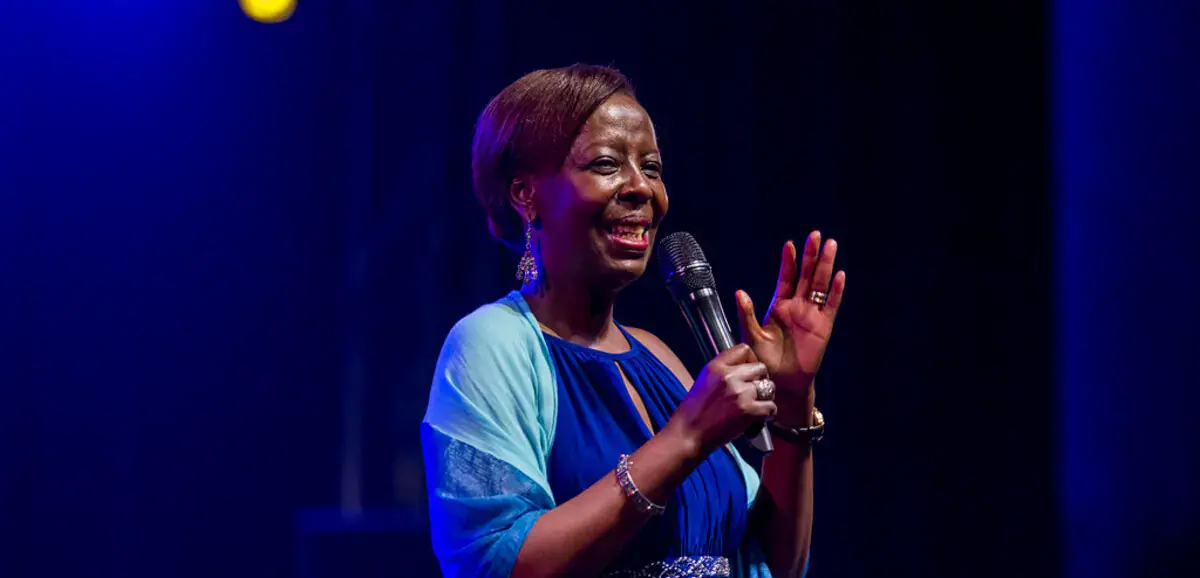
The Francophonie summit is set to begin in Phnom Penh, Cambodia, with four candidates vying for the position of secretary-general. Louise Mushikiwabo, the incumbent secretary-general from Rwanda, is seeking a third term in office. She faces competition from Juliana Lumumba of the Democratic Republic of Congo (DRC), Coumba Ba of Mauritania, and Dacian Ciolos of Romania. The election process is expected to be contentious, with the DRC opposing Mushikiwabo's re-election.
The DRC has threatened to leave the Organisation Internationale de la Francophonie (OIF) if Mushikiwabo is re-elected. Kinshasa accuses Kigali of supporting the M23 armed group, which is active in the eastern DRC. The DRC's withdrawal would be a significant blow to the OIF, as it is the second-largest French-speaking country in the world with 57.3 million speakers. The OIF has already faced challenges with the departure of Burkina Faso, Mali, and Niger.
The candidates have presented their visions for the future of the Francophonie. Dacian Ciolos has promised to focus on economic opportunities and has pledged to appoint an African as the organization's second-in-command. Coumba Ba has also positioned herself as a compromise candidate. Meanwhile, Louise Mushikiwabo has highlighted her experience and network of supporters. The traditional consensus-based approach to selecting the secretary-general may not be possible this year, with 53 member states potentially resorting to a simple majority vote.
The French and Canadian governments, which are major contributors to the OIF, have not officially backed any candidate and have called for preserving the organization's unity. The choice of secretary-general is typically made by consensus, but a 2022 provision allows for a majority vote if necessary. The possibility of postponing the election has been raised, but it is not part of the regulations. None of the four candidates have announced their withdrawal.
The tensions between the DRC and Rwanda have significant implications for the Francophonie. The organization's credibility and effectiveness depend on its ability to navigate complex geopolitical issues. A smooth transition of leadership is crucial to maintaining the Francophonie's relevance and influence. The summit in Cambodia will provide an opportunity for member states to engage in discussions and find a solution.
The election of the secretary-general is not the only challenge facing the Francophonie. The organization must also address the needs of its member states, particularly in areas such as economic development, education, and cultural exchange. The Francophonie has a critical role to play in promoting peace, stability, and cooperation among its member states. The outcome of the summit will be closely watched by observers and stakeholders.
The summit will also provide a platform for discussions on other pressing issues, including the situation in the Sahel region and the fight against terrorism. The Francophonie has a unique role to play in promoting dialogue and cooperation among its member states. The organization's ability to adapt to changing circumstances and challenges will be crucial to its continued relevance and effectiveness.
Key points
- The Francophonie summit is taking place in Cambodia with four candidates vying for the position of secretary-general.
- The DRC has threatened to leave the OIF if Louise Mushikiwabo is re-elected due to her alleged support for the M23 armed group.
- The election process may involve a simple majority vote if a consensus cannot be reached.