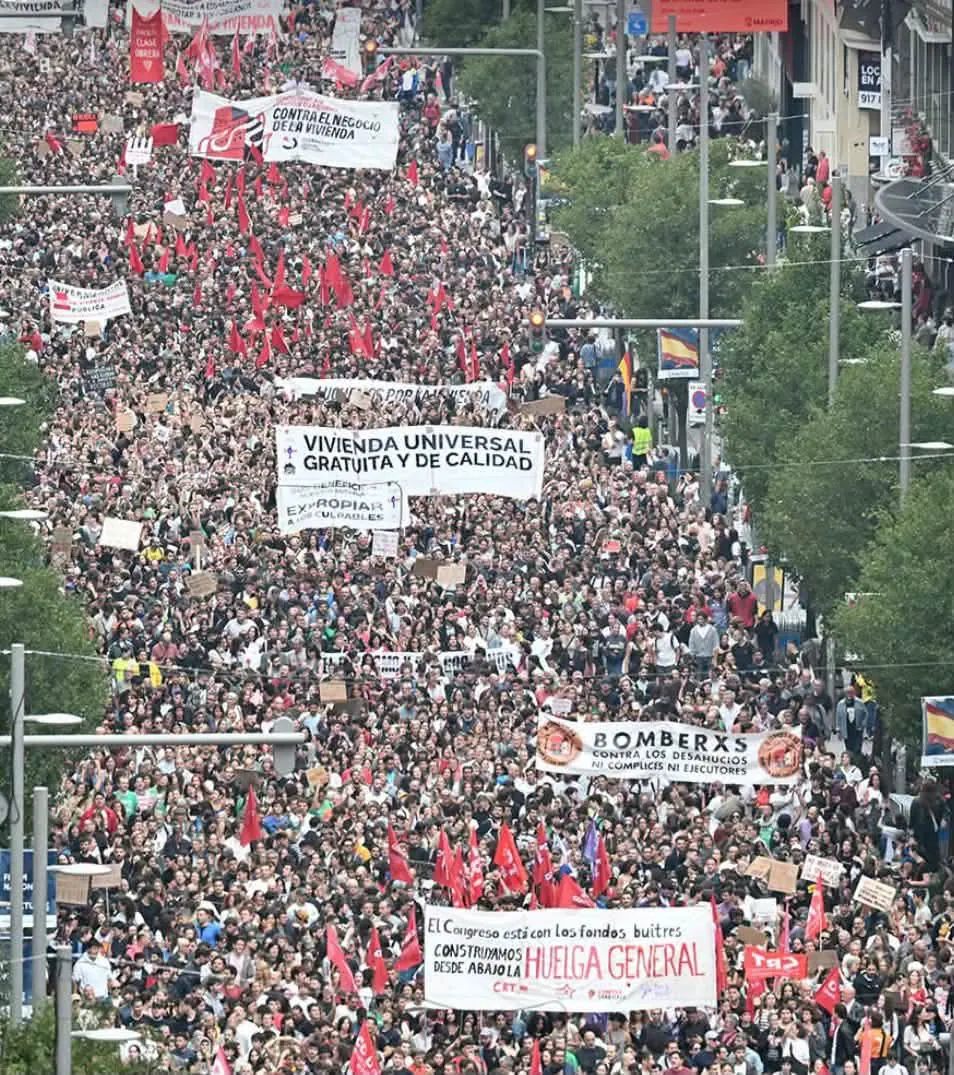
Tens of thousands of people took to the streets in Spain on October 3, 2026, to protest the country's worsening housing crisis. The protests, which were held in the capital city of Madrid and several other cities, were sparked by the government's failure to address the issue. According to the authorities, around 70,000 people participated in the Madrid protest, while the organizers claimed that nearly half a million people joined in, waving slogans calling for a general strike.
The protests were a response to the Spanish parliament's rejection of two bills proposed by the government of Prime Minister Pedro Sanchez aimed at addressing the housing crisis. The bills' defeat was seen as a significant setback for the socialist government and emboldened protesters to take to the streets. The housing crisis in Spain has been ongoing for years, with the Central Bank estimating a shortage of around 700,000 housing units.
The protests were sparked by a recent incident in which an elderly woman was evicted from her home in Madrid, which has become a symbol of the struggles faced by citizens in the country. The incident triggered a wave of protests that have been ongoing for around ten days. The protesters are demanding action from the government to address the housing crisis, which has left many people struggling to find affordable accommodation.
According to Valeria Raco, spokesperson for the tenants' union that organized the protests, the demonstrations reflect a new and different energy on the streets, which is capable of achieving tangible steps to address the crisis. The protests were marked by chants and slogans calling for action on the housing crisis, and many participants expressed their frustration with the government's inaction on the issue.
The housing crisis in Spain has been exacerbated by a shortage of affordable housing, which has driven up rents and made it difficult for people to find places to live. The crisis has affected many people, including low-income families, young people, and the elderly. The protests reflect a growing sense of frustration and anger among citizens who feel that the government is not doing enough to address the issue.
The protests were peaceful, with participants calling for the government to take action to address the housing crisis. The government has faced criticism for its handling of the issue, with many accusing it of not doing enough to address the shortage of affordable housing. The protests are a significant challenge for the government, which is facing pressure to take action to address the crisis.
The protests in Spain are a reminder of the challenges faced by many countries in addressing housing crises. The issue is a complex one, requiring a multifaceted approach that involves government intervention, private sector participation, and community engagement. The protests in Spain are a call to action for the government to take concrete steps to address the housing crisis and provide affordable housing for all citizens.
Key points
- The protests were sparked by the Spanish parliament's rejection of two bills proposed by the government aimed at addressing the housing crisis.
- The housing crisis in Spain has been exacerbated by a shortage of affordable housing, which has driven up rents and made it difficult for people to find places to live.
- The protests reflect a growing sense of frustration and anger among citizens who feel that the government is not doing enough to address the housing crisis.