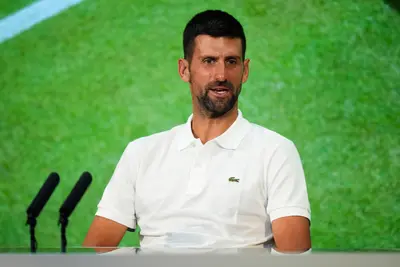
A significant development in tennis has seen the formation of a 12-member player advisory council, comprising top players from around the world, to engage in discussions with the four Grand Slam tournaments. The council, which includes Novak Djokovic, the Serbian tennis star with a record 24 Grand Slam singles titles, and women's No 1 Elena Rybakina, aims to address player concerns and provide a platform for dialogue. This move comes after protests at the French Open and Wimbledon by players demanding a greater share of tournament revenue and improved player welfare.
The creation of the advisory council was announced by the four Grand Slam tournaments - the US Open, Australian Open, French Open, and Wimbledon - on the eve of the US Open in August. The council will examine all sporting matters relating to the Grand Slam tournaments, including player welfare, remuneration, and prize money. The exact shape of the council was decided after discussions with players, who had been campaigning for more than a year for better treatment. Some stars had cut short their media commitments in the run-up to Roland Garros and Wimbledon to put pressure on the Grand Slam tournament.
The 12-member player panel consists of six male and six female players, selected to represent the diverse interests of the tennis community. In addition to Djokovic and Rybakina, other members include women's No 2 Aryna Sabalenka, American No 3 Jessica Pegula, and Ukrainian Elina Svitolina, ranked 7. On the men's side, German Alexander Zverev, ranked No 2, American Ben Shelton, ranked 4, and Canadian Felix Auger-Aliassime, ranked 5, have volunteered to join Djokovic on the new body.
Notably, some top players, including No 1 Jannik Sinner and Carlos Alcaraz, ranked 3, are absent from the list. Coco Gauff, ranked 4, is the highest-ranked woman missing from the panel. The players had demanded 22% of the Major tournament revenue, compared with around 15% at the start of this year. Since the movement began, the four major tournaments have announced substantial increases in their prize money.
The advisory council will provide a framework for regular dialogue between players, enabling them to raise and discuss issues relating to their wellbeing and remuneration, particularly prize money. The council's formation follows a meeting between the four majors at the Laver Cup exhibition team event in London, where they used the occasion to meet with the player panel. The move is seen as a positive step towards addressing player concerns and improving the overall tennis experience.
The player panel will play a crucial role in shaping the future of tennis, with a focus on improving player welfare and increasing revenue. The council's discussions will likely have far-reaching implications for the sport, with potential changes to prize money, pensions, and player support. As the tennis community continues to evolve, the advisory council's work will be closely watched by players, officials, and fans alike.
The formation of the advisory council marks a significant milestone in the ongoing dialogue between players and the Grand Slam tournaments. With Novak Djokovic and Elena Rybakina leading the charge, the player panel is well-positioned to effect change and drive progress in the sport. As the council begins its work, tennis fans can expect to see a more collaborative and player-centric approach to the sport's governance.
Key points
- The advisory council will examine all sporting matters relating to the Grand Slam tournaments, including player welfare, remuneration, and prize money.
- The player panel consists of 12 members, including six male and six female players, selected to represent the diverse interests of the tennis community.
- The council's formation follows protests at the French Open and Wimbledon by players demanding a greater share of tournament revenue and improved player welfare.