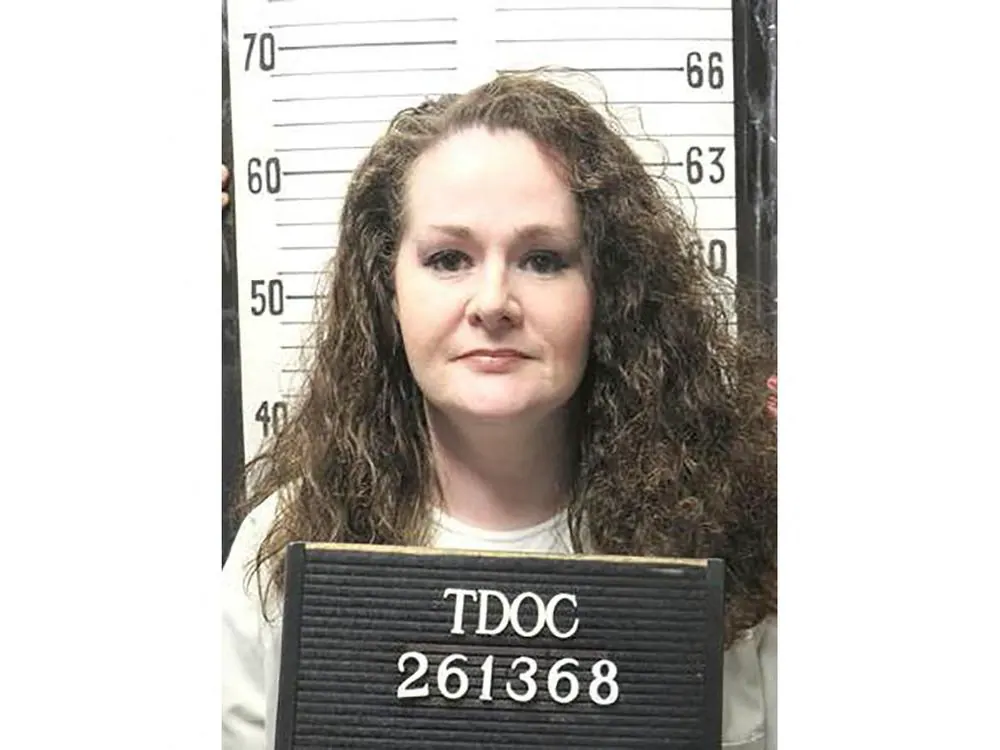
Christa Pike, a 50-year-old woman from Tennessee, was taken to hospital on Thursday after her execution by lethal injection appeared to fail. Her lawyers confirmed that the execution, which was scheduled for 10:00 am at the Riverbend Maximum Security Institution, did not proceed as planned. Witnesses reported that Pike was breathing despite the injections intended to kill her. The US Supreme Court had cleared the way for her execution just hours earlier.
Pike was sentenced to death for a murder she committed when she was 18 years old. The killing took place at a job training camp for young people, where Pike and her boyfriend beat and killed 19-year-old Colleen Slemmer. The case gained national attention due to the brutal nature of the crime, with Slemmer's body found with a pentagram carved into her chest. Pike's lawyers had argued that she should be granted clemency due to her young age and mental health issues at the time of the killing.
The execution procedure involved two injections of pentobarbital, but it is unclear what went wrong. Investigative journalist John North, who witnessed the execution, said it appeared that the process did not go as planned. An ambulance was seen leaving the site with its lights flashing, but it is unclear if Pike was transported in it. The Tennessee Department of Correction has not publicly confirmed the outcome of the execution or provided any information on Pike's condition.
Pike's lawyers released a statement saying that the state of Tennessee had once again failed to carry out a lawful execution. They also stated that Pike was being treated at a nearby hospital, but they had not been informed of her condition. The US Supreme Court had ruled that the execution could proceed, despite objections from liberal justices Sonia Sotomayor, Elena Kagan, and Ketanji Brown Jackson.
The case has sparked debate over capital punishment for young criminals and the use of lethal injection. Pike's lawyers argued that her history as a victim of sexual assault, post-traumatic stress disorder, and a blood condition meant that a lethal injection would cause "needless suffering." Independent UN rights experts had urged the US government and Tennessee authorities to halt the execution and commute her death sentence.
The execution would have marked the first time a woman had been executed in Tennessee in 200 years. It would also have been the 19th execution of a woman in the United States since 1976, according to the Death Penalty Information Center. Pike's case has raised concerns about the use of capital punishment, particularly for those with mental health issues or a history of trauma.
Tennessee Governor Bill Lee had said he would not intervene in the case, despite Pike's lawyers petitioning for clemency. The US Supreme Court had rejected an application for a stay of execution on Tuesday, paving the way for the lethal injection to proceed. Pike's condition remains unknown, and her lawyers are likely to continue fighting her execution in the courts.
Key points
- The execution of Christa Pike failed due to complications during the lethal injection process.
- Pike's lawyers argue that her mental health issues and history of trauma make her case unsuitable for capital punishment.
- The case has sparked debate over the use of lethal injection and capital punishment for young criminals in the United States.