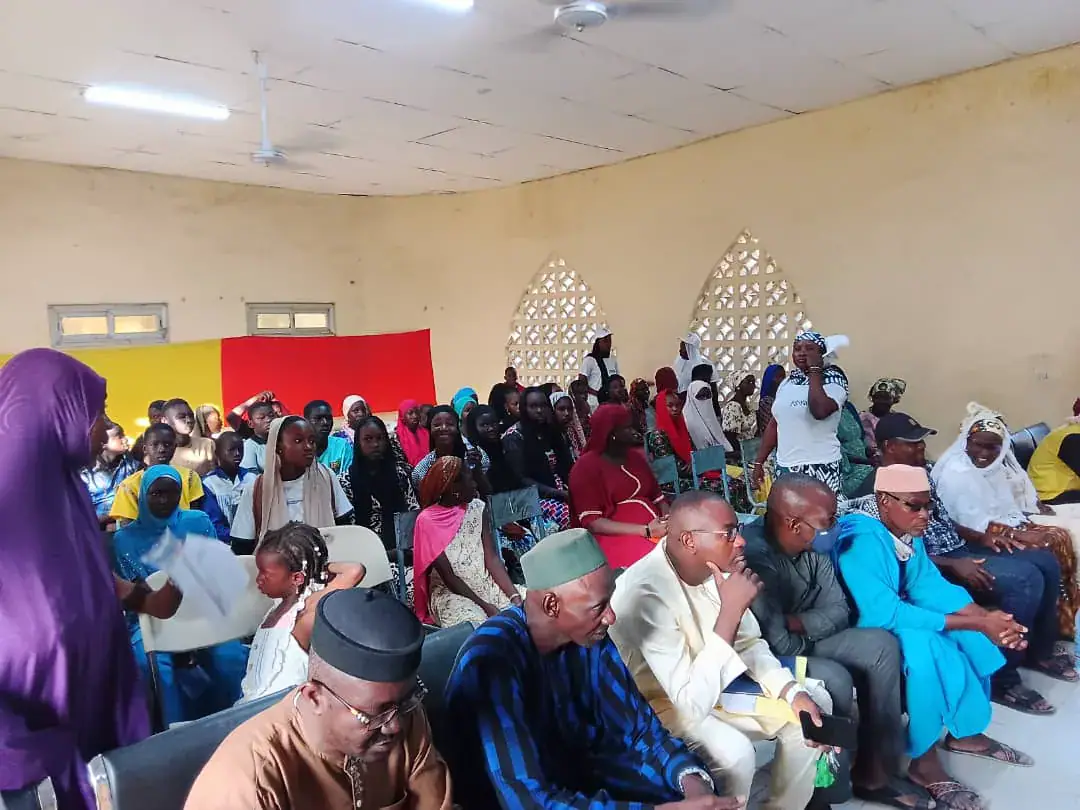
In the town of Tenenkou, Mauritania, a significant conference was organized by young leaders of JIGIYA in partnership with the JIGIYA project. The event, which took place at the local youth center, focused on discussing three critical public health issues: sexually transmitted infections (STIs), early marriage, and family planning. The conference drew a substantial crowd, comprising dozens of participants, mostly young girls and boys, women, and community leaders.
The conference was attended by notable figures, including the second deputy prefect, Ousmane Diamouténé, a police commissioner, the second deputy mayor of the urban commune, Soumaïla Bocar Coulibaly, representatives from defense and security forces, technical services, NGOs, and the entire JIGIYA team. This initiative was part of the activities of the JIGIYA young leaders association, aiming to address these sensitive topics and inform the youth about the risks and consequences associated with them.
The conference featured presentations by Dr. Broulaye Diarra, a physician at Tenenkou's reference health center, and Alpha Traoré, president of the local bureau of the high Islamic council of Tenenkou. The speakers discussed the modes of transmission, signs, consequences, and prevention methods for STIs over a two-hour period. They also highlighted the dangers of early marriage for girls, including school dropout, complications during childbirth, and gender-based violence.
The topic of family planning allowed for the dispelling of misconceptions surrounding contraception. The president of the local Islamic council explained that family planning is not against their values but rather enables birth spacing for the health of the mother and child and better secures the family's future. The lively debates provided a platform for young people to ask questions and express their concerns openly.
At the end of the discussions, the second deputy prefect, Ousmane Diamouténé, commended the speakers for the quality of the debates and praised the initiative for facilitating open discussions with young people, who represent the country's future. He emphasized these issues as significant public health concerns and urged young people to be aware and avoid narcotics, which are causing harm within the youth sphere in Mauritania.
The event concluded with the reading of a Fatiya by the president of the local high Islamic council and a group photo. This marked the end of the awareness campaign on STIs, early marriage, and family planning in Tenenkou, the capital of Macina. The conference demonstrated a collaborative effort to educate and engage young leaders in addressing critical health issues affecting their community.
By bringing together young leaders and community stakeholders, the conference underscored the importance of collective action in tackling sensitive health topics. The discussions highlighted the need for continued education and awareness-raising efforts to mitigate the risks associated with STIs, early marriage, and inadequate family planning.
Key points
- The conference in Tenenkou aimed to educate young leaders about STIs, early marriage, and family planning.
- The event featured presentations by Dr. Broulaye Diarra and Alpha Traoré.
- The initiative was organized by young leaders of JIGIYA in partnership with the JIGIYA project.