Tema, a city located in Ghana, has a rich history dating back to its origins as a Ga fishing and farming settlement known as Torman. The settlement was traditionally associated with the cultivation of a calabash plant, and its name was derived from Torman, commonly interpreted as "town of gourds." The area was home to Ga indigenes whose livelihoods included fishing and farming before plans emerged to establish a deep-water harbour and an industrial township to support Ghana's expanding economy.
In the early 1950s, the Gold Coast government selected Tema for the construction of a new harbour to complement the existing port at Takoradi and support growing trade and industrial activity. Approximately 63 square miles of land were acquired in 1952 from the traditional authorities of Tema, Nungua and Kpone for the development of the harbour and its surrounding township. The Tema Development Corporation (TDC) was established to plan and develop the acquired area, including residential accommodation, industrial and commercial sites, and supporting infrastructure.
The development of Tema formed part of the post-independence vision of Dr Kwame Nkrumah, Ghana's first President, to establish modern infrastructure that would support industrialisation and economic growth. The construction of Tema Harbour began in 1954, and by 1958, the port was sufficiently advanced to receive a cargo vessel. Regular port operations began following its commissioning in 1962. The harbour's development was accompanied by the construction of roads, industrial facilities, and residential communities intended to accommodate workers who would support port operations and the growing industrial sector.
The transformation of Tema brought significant changes to the lives of its original inhabitants. The development required the relocation of residents of the original settlement from the Harbour-Meridian area to Tema Manhean, also known as Tema New Town. The resettlement remains an important part of the town's history and the relationship between the traditional community and the modern city. Nii Amarh Somponu II, the Spokesperson for the Tema Traditional Council and Tema Shipi, noted that Community One occupied an important place in the development of the planned township.
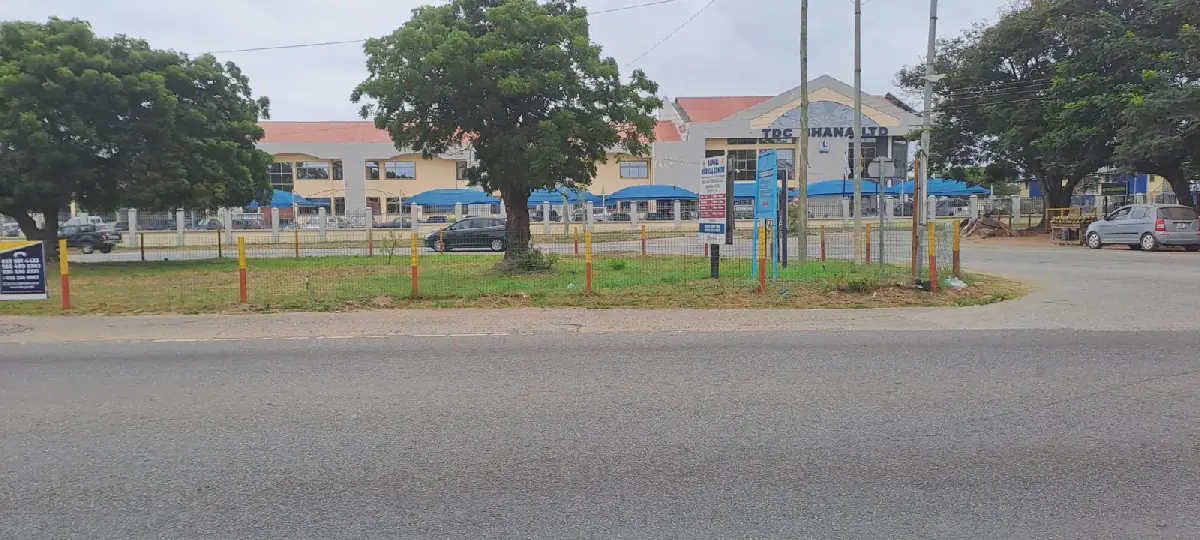
Community One was organised into designated sites, with residential areas and facilities serving different administrative, commercial, and occupational needs. The original plan incorporated housing, markets, schools, recreational areas, and community facilities to support residents' daily activities. Some areas were associated with port workers, seafarers, and government employees, reflecting the close relationship between Tema's residential planning and the development of its harbour and industries. Community One subsequently evolved into an important commercial and transport centre, with markets, educational institutions, public offices, and other facilities serving residents and people from neighbouring communities.
Tema's development continued beyond its initial residential planning. The Ghana Ports and Harbours Authority records that the port began regular operations in 1962 and received its first tanker vessel in June 1963, delivering crude oil through pipelines to the Tema Oil Refinery. Construction of the Tema Shipyard and Dry-dock began in 1964 as part of the infrastructure supporting the country's maritime industry. The port, refinery, shipyard, and other industrial establishments helped establish Tema as an important centre for manufacturing, logistics, shipping, and commercial activity.
Today, Tema remains a major contributor to Ghana's maritime trade and industrial production. The port serves as a key gateway for imports and exports, while its surrounding industrial and logistics zones support employment, manufacturing, and the movement of goods across the country and the wider West African region. However, the development of the modern city has also brought challenges associated with population growth, pressure on infrastructure, and the changing character of its original planned communities.
Key points
- The city of Tema was developed as part of Ghana's post-independence vision to establish modern infrastructure that would support industrialisation and economic growth.
- The development of Tema required the relocation of its original inhabitants and had a significant impact on their lives and the traditional community.
- Tema remains a major contributor to Ghana's maritime trade and industrial production, serving as a key gateway for imports and exports.