The tech industry, once seen as a beacon of innovation and progress, has become a battleground for workers fighting against exploitation and oppression. In recent years, workers in the tech industry have been speaking out against their employers' complicity with oppressive entities such as the US military, Immigration and Customs Enforcement (ICE), and the Israeli occupation of Palestine. This growing movement has led to the emergence of a new generation of tech workers who are determined to challenge the status quo and fight for their rights.
The movement gained momentum in the aftermath of the Great Recession, when tech companies were seen as a way to revitalize the US economy. However, workers soon realized that the industry's rhetoric did not match its actions. Tech companies were producing software for the military, ICE, and police departments, while also perpetuating sexism and racism within their own workplaces. In response, workers launched campaigns to expose the hypocrisy of their employers, including a notable campaign by Google workers against the company's Project Maven, which used AI to analyze military drone images.
The tech industry's oligarchs have responded to the growing worker movement by abandoning their liberal rhetoric and embracing authoritarianism and austerity. After the pandemic, the Federal Reserve raised interest rates to combat inflation, leading to a sharp decline in tech company valuations. In response, companies like Twitter have laid off thousands of workers, imposed return-to-work orders, and accelerated the workload of remaining staff. The takeover of Twitter by Elon Musk is a prime example of this trend, with 80% of staff being laid off and teams focused on human rights, AI ethics, and content moderation being targeted.
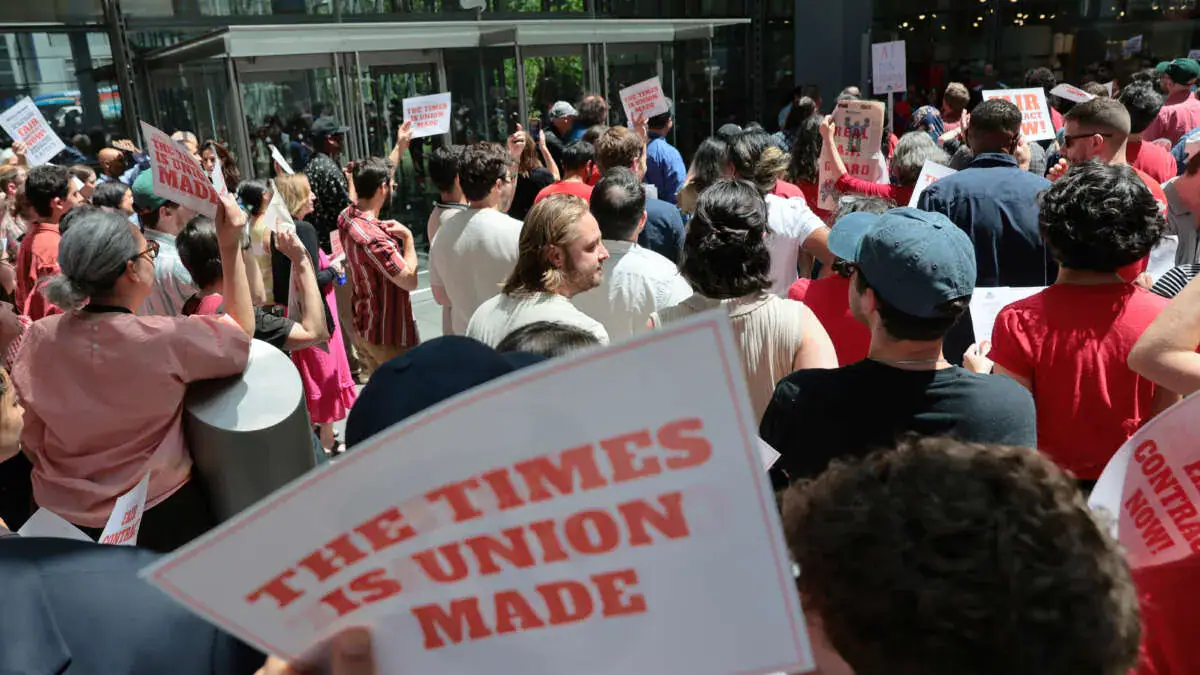
Faced with the new authoritarianism of tech oligarchs, workers have shifted their strategy from using open letters to unionizing to protect their jobs and rights. This approach, known as the "recognition playbook," involves identifying organic leaders, training them to have one-on-one conversations with colleagues, and systematically building a qualified majority for a union. By using this strategy, tech workers have organized several unions at companies like Kickstarter and Le New York Times.
The recognition playbook has been successful in achieving its goals, with workers winning union elections and establishing legally recognized unions. However, this strategy has also required workers to focus on economic issues rather than broader social and political concerns. By prioritizing economic issues, workers have been able to build solidarity and unite a wide section of the workforce behind a campaign for union recognition.
The implications of this movement extend far beyond the tech industry, with potential lessons for the broader labor movement. As workers in other industries face similar challenges and struggles, they may look to the tech industry as a model for organizing and resistance. The authors of a new book, "Against Tech Oligarchy: Workers' Resistance in the Most Powerful Industry in the World," argue that the tech industry's workers have shown that it is possible to challenge the power of oligarchs and fight for a more just and equitable society.
As the movement continues to grow and evolve, it is clear that the tech industry will never be the same. Workers are no longer willing to accept exploitation and oppression; they are demanding better working conditions, greater accountability, and a say in the decisions that affect their lives. The future of the tech industry and the broader labor movement hangs in the balance, as workers continue to push back against the power of oligarchs and fight for a better future.
Key points
- Tech workers are unionizing to protect their jobs and rights in response to authoritarianism and austerity measures imposed by tech oligarchs.