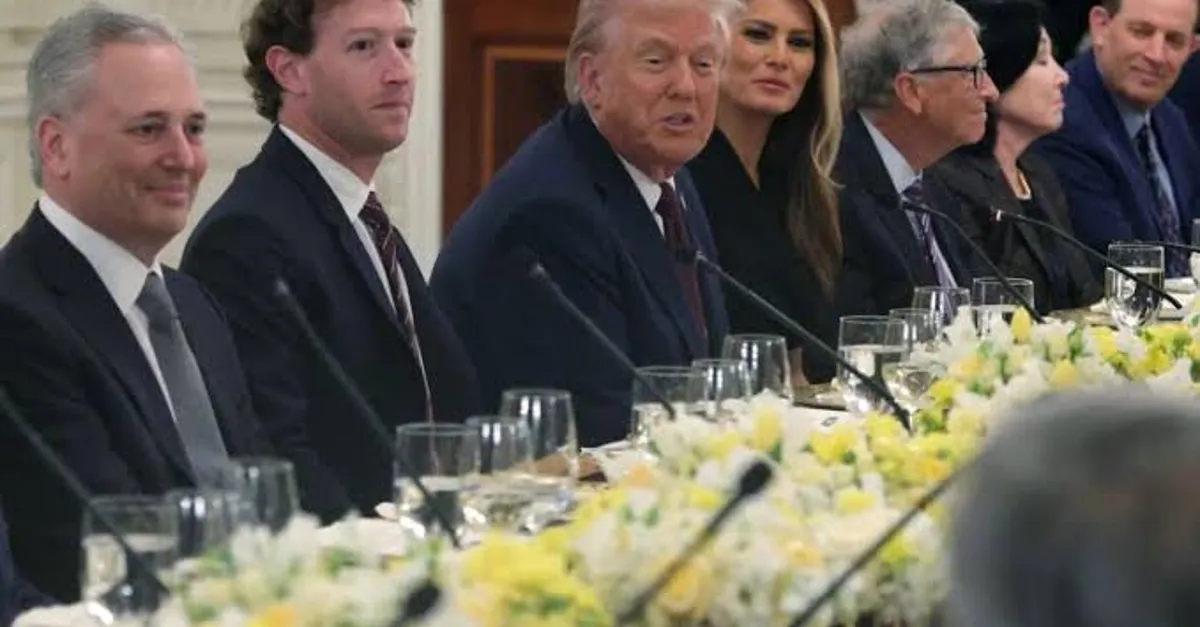
On Wednesday, US President Donald Trump revealed that top tech executives gathered at the White House to discuss AI regulation had signed a non-binding ethical agreement. The deal, dubbed the "White House Agreement," aims to establish guidelines for the rapidly evolving technology. This development comes as Congress increases calls for stricter oversight of the sector. The agreement encourages companies to monitor themselves.
The meeting brought together prominent leaders in the tech industry, including Elon Musk, Jeff Bezos of Amazon, Mark Zuckerberg of Meta, Satya Nadella of Microsoft, Sundar Pichai of Google, Jensen Huang of Nvidia, Dario Amodei of Anthropic, and Greg Brockman of OpenAI. They discussed the need for responsible AI development and regulation. The agreement promotes the implementation of internal controls and multiple layers of oversight.
According to Trump, the agreement will be a crucial step in ensuring that AI technology is developed and used responsibly. He also announced that he would officially rename AI to "intelligent" in government documents. The move aims to emphasize the potential benefits of AI while acknowledging its risks. The agreement does not, however, impose any legally binding requirements on companies.
Mark Zuckerberg noted that the commitment includes "strict internal controls" and multiple layers of scrutiny. He believes the agreement marks a starting point for establishing industry-wide standards. The signatory companies have pledged to prioritize transparency and accountability in their AI development processes. This agreement may influence future regulatory efforts.
The agreement leaves room for potential future legislation or regulatory actions. As the technology continues to evolve, lawmakers and regulators may revisit the issue. The White House meeting demonstrates an effort to balance innovation with responsibility. It highlights the need for collaboration between government, industry, and stakeholders.
The tech leaders acknowledged the significance of AI in shaping the future and its potential impact on society. They emphasized the importance of addressing concerns around AI safety, security, and ethics. By signing the agreement, companies have signaled their commitment to responsible AI development. This move may help build public trust in the technology.
The agreement is a significant step towards establishing guidelines for AI development and use. While it is non-binding, it sets a precedent for industry leaders to prioritize responsible AI development. The White House meeting and agreement demonstrate a willingness to engage in dialogue and cooperation.
Key points
- Tech giants have signed a non-binding agreement to regulate AI development
- The agreement encourages companies to implement internal controls and multiple layers of oversight
- The deal leaves room for potential future legislation or regulatory actions