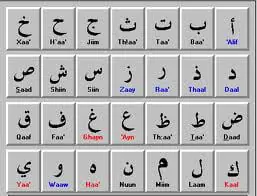
The debate about introducing Arabic language in Ghanaian basic schools has been met with resistance from some individuals who claim that it is an attempt to promote Islam. However, proponents of the move argue that teaching Arabic is not equivalent to teaching Islam, but rather about teaching a language that is spoken by over 400 million people worldwide. Arabic is one of the six official languages of the United Nations and is widely used in commerce and trade across North Africa and the Middle East.
The proponents of teaching Arabic in Ghanaian schools argue that it will give Ghanaian children a competitive advantage in the global economy. They point out that Ghana already teaches French in basic schools, despite not being a Francophone country, in order to provide children with access to neighboring countries. Similarly, teaching Arabic will provide Ghanaian children with access to a whole economic bloc and facilitate trade and commerce with countries where Arabic is spoken.
Arabic has been an integral part of Ghanaian culture for centuries, particularly in the north where it was used for trade and commerce. The language has been used in ancient manuscripts, such as those found in Timbuktu, and facilitated historic trade routes, including those of Salaga and Begho. Proponents of teaching Arabic argue that it is part of Ghana's African heritage and not something foreign.
Many Ghanaian children already attend Arabic schools, known as Madrassa and Makaranta, where they learn Arabic in the afternoons after public school. Integrating Arabic into the basic school system will standardize and regulate the teaching of the language, ensuring quality control. This will help to promote a better understanding of the language and its importance in Ghanaian society.
The confusion between Arabic as a language and Islam as a religion has contributed to the resistance to teaching Arabic in Ghanaian schools. However, proponents argue that language and religion are separate entities and that teaching Arabic does not mean promoting Islam. They point out that teaching English or French does not mean promoting Christianity or Catholicism, respectively.
The introduction of Arabic language in Ghanaian schools is about giving children more tools to survive in the modern world, proponents argue. It is about jobs, trade, diplomacy, and cultural literacy. They believe that Ghana, as a secular state that respects all religions, should not politicize language and should instead focus on providing children with a well-rounded education that prepares them for the global economy.
Key points
- Teaching Arabic in Ghanaian schools is not equivalent to teaching Islam, but rather about teaching a language that is spoken by over 400 million people worldwide.