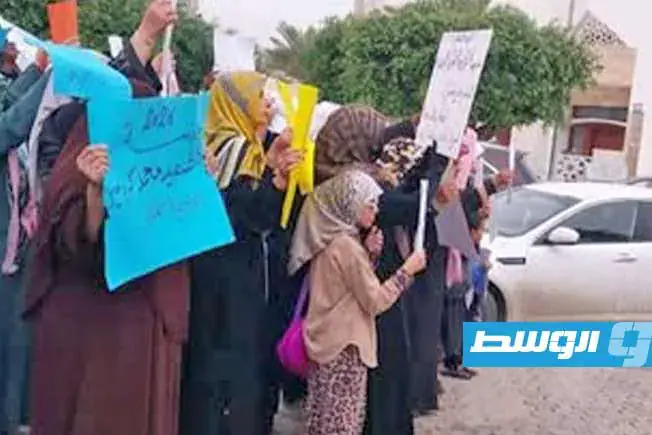
On Sunday, November 15, 2026, teachers in Libya's Zawiya city and Abu Slim municipality in Tripoli staged protests to demand better financial conditions. The protesters, including female teachers, chanted slogans and carried signs calling for the implementation of a unified salary scale and payment of outstanding financial dues. The protests began as teachers started a strike on September 13, 2026, the first day of the new academic year.
The protests in Zawiya and Abu Slim were marked by chants, including "Al-mu'allim qalha haqi walla la" ("The teacher said my right, yes or no") and "Silmiyya silmiyya tul ma huquqi shar'iyya" ("Peaceful, peaceful as long as my rights are legitimate"). Protesters also carried signs that read "Bi-alqanun bi-alqanun.. haqq al-mu'allim ma yahwan" ("By law, by law.. the teacher's right is not diminished") and "Wadbibya ya dhibyba haqi mani masibihi" ("And Dibiba, oh Dibiba, I will not leave my right").
The protests are part of a larger effort by Libyan teachers to demand improved working conditions and payment of outstanding salaries. The teachers' union has been pressing for the implementation of a unified salary scale and payment of outstanding financial dues. The union has also called for the application of comprehensive health insurance for teachers.
The strike and protests have disrupted the academic year, with students and parents affected by the ongoing dispute. The Libyan government has faced criticism for its handling of the crisis, with many accusing it of neglecting the needs of teachers and students.
The protests in Zawiya and Tripoli are the latest in a series of demonstrations by Libyan teachers. Earlier protests were held in Gharyan, where teachers staged a sit-in in front of the education office. The protests have drawn attention to the plight of Libyan teachers, who have been struggling with low salaries and poor working conditions.
The Libyan government has announced plans to address the crisis, but so far, no concrete steps have been taken. The teachers' union has warned that the protests will continue until their demands are met. The situation remains tense, with many students and teachers affected by the ongoing dispute.
The crisis has highlighted the challenges facing the Libyan education system, which has been struggling to recover from years of conflict and instability. The protests have also underscored the need for the Libyan government to prioritize the needs of teachers and students.
Key points
- Libyan teachers are demanding improved financial conditions, implementation of a unified salary scale, and payment of outstanding financial dues.
Reporting sources
- Wasat TV · Wasat TV