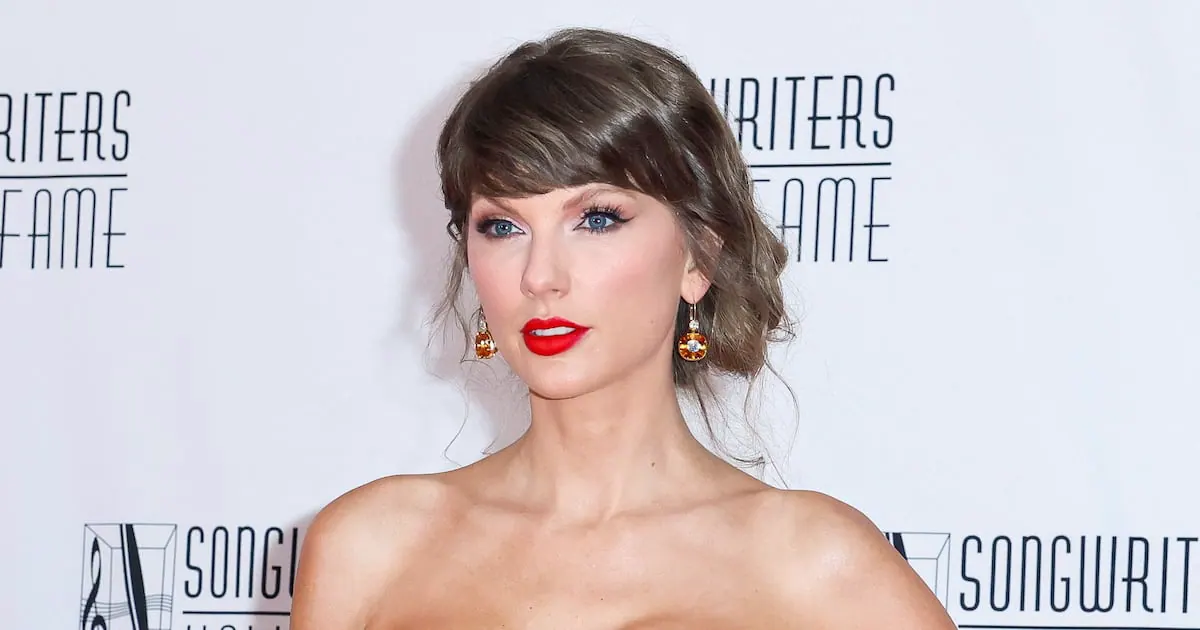
A comprehensive analysis of Taylor Swift's lyrics has uncovered recurring patterns in her use of language, including a fascination with color, opposition, and time. By creating a bespoke digital database, known as the Taylor Lyric Corpus (TaLyCo), researchers have been able to pinpoint these patterns across Swift's 20-year career. The corpus contains 247 songs from her 12 studio albums, as well as extended play releases, charity singles, and non-album singles, totaling 123,553 words. This extensive collection provides a unique insight into Swift's lyrical language and its evolution over time.
One of the key findings of the analysis is Swift's strategic use of color in her lyrics. While she has an entire album devoted to the color red, her most overrepresented color is actually grey. In her new song Pink Clouding, Swift continues her habit of placing grey alongside brighter hues for contrast. This use of color is not limited to Pink Clouding, with examples such as "Did I paint your bluest skies the darkest gray?" from Coney Island and "Gray overpass full of neon names" from Ruin the Friendship. The contrast between grey and brighter colors is a recurring theme in Swift's lyrics.
Swift's lyrics also reveal a fascination with counterfactuality, or the exploration of unrealized scenarios. In her new song Cleveland!, Swift offers a sardonic assessment of herself that borrows heavily from public perception. This absorption and repackaging of the wider world's perspective represents a metaperspective, which recurs in songs such as Shake It Off and Who's Afraid of Little Old Me?. This metaperspective allows Swift to explore different viewpoints and create a sense of dialogue with her audience.
The analysis also highlights Swift's focus on specific body parts and clothing items in her lyrics. Across her four new tracks, she mentions arms, elbows, faces, hearts, lips, and shoulders, as well as a range of clothing items, including cardigans, Eagles T-shirts, and little black dresses. These clothing items are often used as metonyms, entwined with identity formation and a gendered element. Literature scholar Claire Hurley proposes that Swift "locates embodied female knowledge inside clothing," highlighting the significance of these lyrics in understanding Swift's perspective.
Swift's use of modal verbs, such as "would," "should," and "could," is also a notable feature of her lyrics. These verbs are often used to express unrealized scenarios or possibilities, adding to the sense of speculation and exploration in her songs. The analysis suggests that Swift's lyrics are highly detailed and suffused with speculation, making her one of the most distinctive and consistent songwriters of her generation.
Despite the polarized response to Swift's latest Encore tracks, the analysis suggests that she is writing much as she has always done. The use of color, opposition, and time in her lyrics is consistent with her earlier work, and the corpus-based studies provide a unique insight into her creative process. By examining Swift's lyrics through the lens of corpus analysis, researchers can gain a deeper understanding of her artistry and the themes that underlie her music.
The study's findings have implications for our understanding of Swift's songwriting style and its evolution over time. By analyzing her lyrics through the lens of corpus analysis, researchers can identify patterns and themes that may not be immediately apparent. The Taylor Lyric Corpus provides a valuable resource for scholars and fans alike, offering a comprehensive and nuanced understanding of Swift's lyrical language and its significance in the context of her music.
Key points
- Taylor Swift's lyrics reveal a fascination with color, opposition, and time, which are recurring themes throughout her 20-year career.