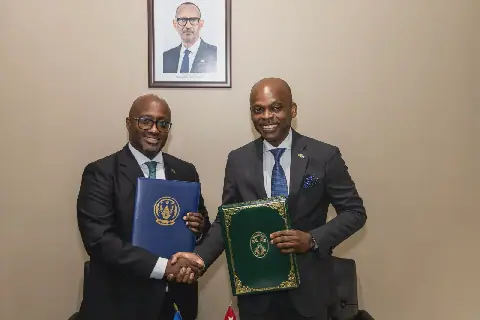
Nigeria's ambitious tax reform agenda may not achieve its objectives unless the government builds taxpayers' confidence and trust in the system. According to Dr. John Nwabueze, Nigeria's first Tax Ombudsman, sustainable revenue growth cannot be achieved through enforcement and legislation alone. He made this statement at the 36th anniversary conference of the Finance Correspondents Association of Nigeria (FICAN) in Lagos.
Dr. Nwabueze, appointed by President Bola Tinubu in November 2025, emphasized that revenue growth and taxpayers' confidence should not be viewed as opposing objectives. He believes that properly administered, they can reinforce one another. The conference was themed "Building Taxpayers' Confidence and Trust in Nigeria's Tax Reform Agenda." Dr. Nwabueze's Chief of Staff, Dr. Peter Iwegbu, represented him at the conference.
The effectiveness of Nigeria's tax reforms will ultimately be determined by taxpayers' experiences with the system, rather than the volume of legislation enacted. Dr. Nwabueze questioned whether a small business owner could easily understand their tax obligations, whether companies could determine the taxes legitimately applicable to them, and whether taxpayers believed they would receive fair treatment when disputes arose.
Nigeria's tax-to-GDP ratio of 8.2 per cent in 2023 is less than half the roughly 16 per cent average recorded across 38 comparable African economies. This highlights the country's historically weak tax and compliance system. Dr. Nwabueze believes that closing the gap requires taxpayers who understand and trust the system, rather than compliance driven primarily by fear of sanctions.
Dr. Nwabueze described taxation as "a contract of responsibility on both sides," emphasizing that citizens and businesses have an obligation to pay lawful taxes, while the government has a responsibility to provide a tax administration that is fair, transparent, accountable, and consistent with the law. The Office of the Tax Ombudsman was created to bridge the trust gap by providing taxpayers with an independent avenue to lodge legitimate complaints and seek redress.
On digitalization, Dr. Nwabueze cautioned that moving tax processes online would not automatically resolve the trust deficit. He noted that technology does not automatically create trust and that digitization can make processes easier without necessarily making them fairer, simpler, or more responsive. He cited the experience of a market trader in Ilorin who faced multiple levies from different officials within a single day.
Dr. Nwabueze emphasized that tax reform must be measured not only by revenue statistics but by what taxpayers experience at the point of payment. The Office of the Tax Ombudsman aims to address these issues and promote a fair and transparent tax system.
Key points
- The Nigerian government must build taxpayers' trust and confidence in the system to achieve its tax reform objectives.
- Nigeria's tax-to-GDP ratio of 8.2 per cent in 2023 is significantly lower than the average of comparable African economies.
- The Office of the Tax Ombudsman was created to provide taxpayers with an independent avenue to lodge legitimate complaints and seek redress.