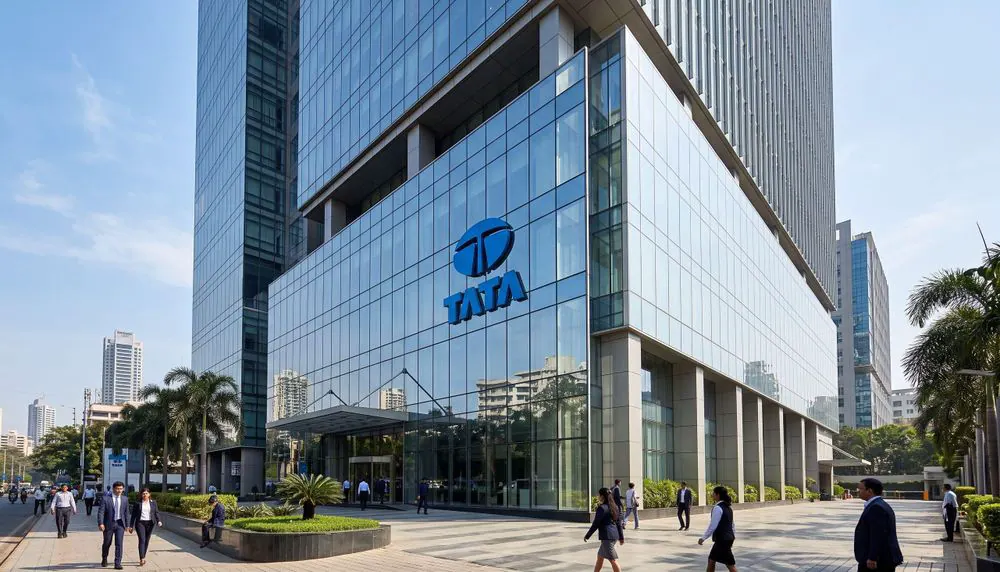
The Tata Group, a multi-billion-dollar Indian conglomerate, has been embroiled in a leadership battle that has exposed the succession challenges facing India's industrial behemoths. Chairman N. Chandrasekaran, who has headed the group for nearly a decade, had initially sought another term but later announced his departure before returning to the role. This saga has highlighted weaknesses in governance and the power struggle between boards and controlling families.
The leadership battle at Tata Group, whose businesses span from Jaguar Land Rover cars to Apple iPhone assembly, has significant consequences beyond shareholders. A growing number of succession dramas in India is shaking global confidence in the country's economy, which relies heavily on corporate giants. Analysts say that the Tata fiasco is not an isolated case, with several Indian companies experiencing leadership exits and botched handovers in recent months.
The roots of the Tata conflict run deep, with tensions intensifying after the death of former patriarch Ratan Tata in 2024. The Tata Trusts, philanthropic entities that control the conglomerate, had raised concerns about losses at some group companies, investment spending, and the possibility of listing Tata Sons. The board of Tata Sons ultimately granted Chandrasekaran another five-year term, despite objections from the Tata Trusts.
India's corporate giants are facing a significant challenge in succession planning, with many ageing billionaires preparing for one of the biggest intergenerational transfers of wealth globally. According to UBS data, $382 billion is expected to be transferred to the next generation, implying a massive shake-up in the way many of these empires will be run. This transition could reshape some of the country's biggest corporate empires and test whether boards are prepared to manage increasingly complex successions.
Experts say that the Tata conflict and other succession crises reveal a failure by boards to prepare for leadership transitions before they become crises. Independent directors are meant to ask uncomfortable questions about succession planning years before it becomes urgent. However, most boards wait for a health scare or a boardroom crisis to put succession on the agenda, which is more akin to crisis management than governance.
The issue is particularly significant in a country where family-controlled businesses account for most economic activity. The Tata Group's annual revenues are roughly equivalent to about five percent of India's GDP, and it has become a key investor in strategic sectors, including semiconductors, batteries, and electronics manufacturing. A prolonged succession fight signals to global capital that governance in India still runs on personality, not process.
Succession planning is under far greater public scrutiny now, with investors understanding that when the baton is passed to the next generation, it changes the trajectory of the company. Indian businesses have not yet cracked the art of succession planning, which is a complex process. The best way to look at it is that succession planning is an art, not a science, and Indian businesses will need to develop this skill to ensure smooth transitions in the future.
Key points
- Tata Group chairman N. Chandrasekaran's departure and return highlights governance challenges in India's corporate giants.
- India's corporate giants face significant challenges in succession planning as ageing billionaires prepare for intergenerational transfers of wealth.
- The Tata conflict and other succession crises reveal a failure by boards to prepare for leadership transitions before they become crises.