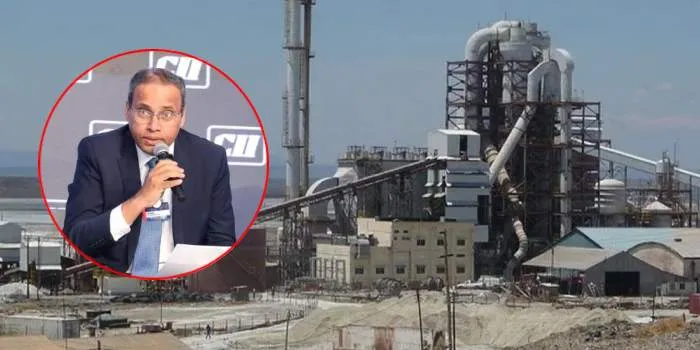
Tata Chemicals Managing Director Ramakrishnan Mukundan announced on October 7 that the company will hold off on any action at Lake Magadi until a joint technical committee completes its review of the licence suspension. The committee, appointed by the Kenyan government, will examine Tata Chemicals' arguments and its decision will guide the company's next move. This development comes after the Kenyan government suspended Tata Chemicals' mining licence due to several concerns.
The suspension of Tata Chemicals' licence was prompted by an audit conducted by the Ministry of Mining, which flagged several issues, including missing royalty payments, environmental compliance issues, and the absence of a valid mining licence for the operation. The government also raised concerns about the outdated framework and insufficient economic benefit to Kenya. President William Ruto subsequently ordered the halt of Tata's operations and indicated that the mineral rights and contract would be re-advertised through a competitive bidding process.
Despite the licence dispute, Tata Chemicals retains a 30-year lease on the Lake Magadi site, which it claims remains in force. The company is a member of the technical committee reviewing the government's concerns, alongside other stakeholders. The committee's review is expected to provide clarity on the future of Tata Chemicals' operations at Lake Magadi. Local unions have warned that the suspension threatens the jobs of over 500 direct employees and thousands of casual labourers who depend on the Magadi plant ecosystem.
President Ruto highlighted that Tata Chemicals has not built any facilities in Kajiado County, underscoring the perceived lack of local development. The existing contract between Tata Chemicals and the Kenyan government spans a century, sparking concerns about the deal's fairness and benefits to the local community. The government's decision to re-advertise the mineral rights and contract through a competitive bidding process is seen as an effort to ensure that Kenya derives greater benefits from its natural resources.
Tata Chemicals has been operating at Lake Magadi for several years, with the site being a significant source of soda ash and other minerals. The company's operations at Lake Magadi have been crucial to Kenya's economy, but the licence dispute has raised questions about the sustainability and social responsibility of the company's activities. The joint technical committee's review is expected to provide a way forward for Tata Chemicals and the Kenyan government to resolve their differences.
The Kenyan government's efforts to review and renegotiate mineral contracts have been part of a broader strategy to ensure that the country's natural resources are exploited in a sustainable and equitable manner. The case of Tata Chemicals and Lake Magadi has highlighted the need for greater transparency and accountability in the mining sector. The outcome of the joint technical committee's review will be closely watched by stakeholders, including local communities, investors, and government agencies.
The suspension of Tata Chemicals' licence has significant implications for Kenya's mining sector and the economy at large. The country's mining industry is a critical sector that contributes to economic growth and development. As the government seeks to maximize benefits from its natural resources, it must balance the interests of investors, local communities, and the environment. The resolution of the Tata Chemicals dispute will provide valuable insights into the government's approach to managing the mining sector.
Key points
- Tata Chemicals will wait for a joint technical committee's review of its licence suspension before taking further steps on its Magadi mining operations.
- The Kenyan government suspended Tata Chemicals' mining licence due to concerns about missing royalty payments, environmental compliance issues, and insufficient economic benefit to Kenya.
- The existing contract between Tata Chemicals and the Kenyan government spans a century, sparking concerns about the deal's fairness and benefits to the local community.