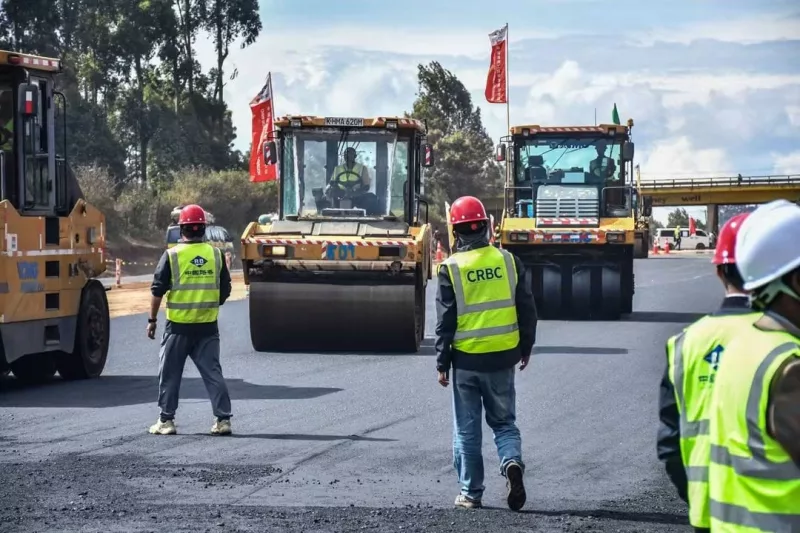
Workers have begun laying tarmac on the Rironi-Naivasha section of the Rironi-Mau Summit highway, marking a significant milestone in the construction of the A8 corridor. The Kenya National Highways Authority (KeNHA) Director General, Luka Kimeli, witnessed the laying of tarmac on the approach road to the Ngarariga Interchange during an inspection of ongoing works. This development comes as the government races to meet its target for opening some sections of the upgraded road to motorists later this month.
The government aims to open the Rironi-Naivasha section to traffic by October 30, allowing motorists to use the newly upgraded road even as construction continues on other parts of the corridor. Roads Cabinet Secretary, Davis Chirchir, announced last month that the section would be completed and opened to traffic within one and a half months. The government plans to first open the upper side of the A8 corridor to traffic before moving to the A8 South section linking Rironi, Mai Mahiu, and Naivasha.
The Rironi-Naivasha section is being upgraded as part of the wider Rironi-Mau Summit highway project, which will transform the existing road infrastructure along the Nairobi-Nakuru route. The corridor has been associated with heavy traffic, particularly around Naivasha, Gilgil, and the escarpment, with delays affecting passengers and the movement of goods. The upgrade aims to improve connectivity, road safety, and traffic flow along one of Kenya's busiest transport corridors.
The laying of tarmac at Ngarariga provides a tangible indication of progress on a project that has been closely watched due to its potential to ease congestion along the Nairobi-Nakuru highway. The project covers the A8 and A8 South corridors, with the Rironi-Naivasha section being upgraded to a dual carriageway. The wider works are intended to increase road capacity and improve the movement of people and cargo between Nairobi, the Rift Valley, and western Kenya.
For motorists, the opening of the Rironi-Naivasha section will provide relief from the congestion and delays experienced along the Nairobi-Nakuru highway. The government has adopted a phased approach to the project, allowing completed sections to be opened to motorists before the entire corridor is finished. The Rironi-Mau Summit corridor is expected to be completed by June 2027.
The project is expected to improve travel efficiency, enhance road safety, and strengthen the movement of goods along the Northern Corridor. The government says completing the corridor will have a significant impact on the economy, particularly in the regions served by the highway. The upgrade will also provide a boost to trade and commerce in the area.
The construction of the Rironi-Mau Summit highway is a key infrastructure project aimed at transforming the transportation network in Kenya. The project has been closely watched by stakeholders, including motorists, businesses, and residents, who are eagerly awaiting its completion. With the laying of tarmac on the Rironi-Naivasha section, the project has moved into an advanced stage, and motorists are set to benefit from the improved road network.
Key points
- The Kenyan government is set to open the Rironi-Naivasha section of the Rironi-Mau Summit highway to traffic by October 30.
- The project aims to improve connectivity, road safety, and traffic flow along one of Kenya's busiest transport corridors.
- The Rironi-Mau Summit corridor is expected to be completed by June 2027.