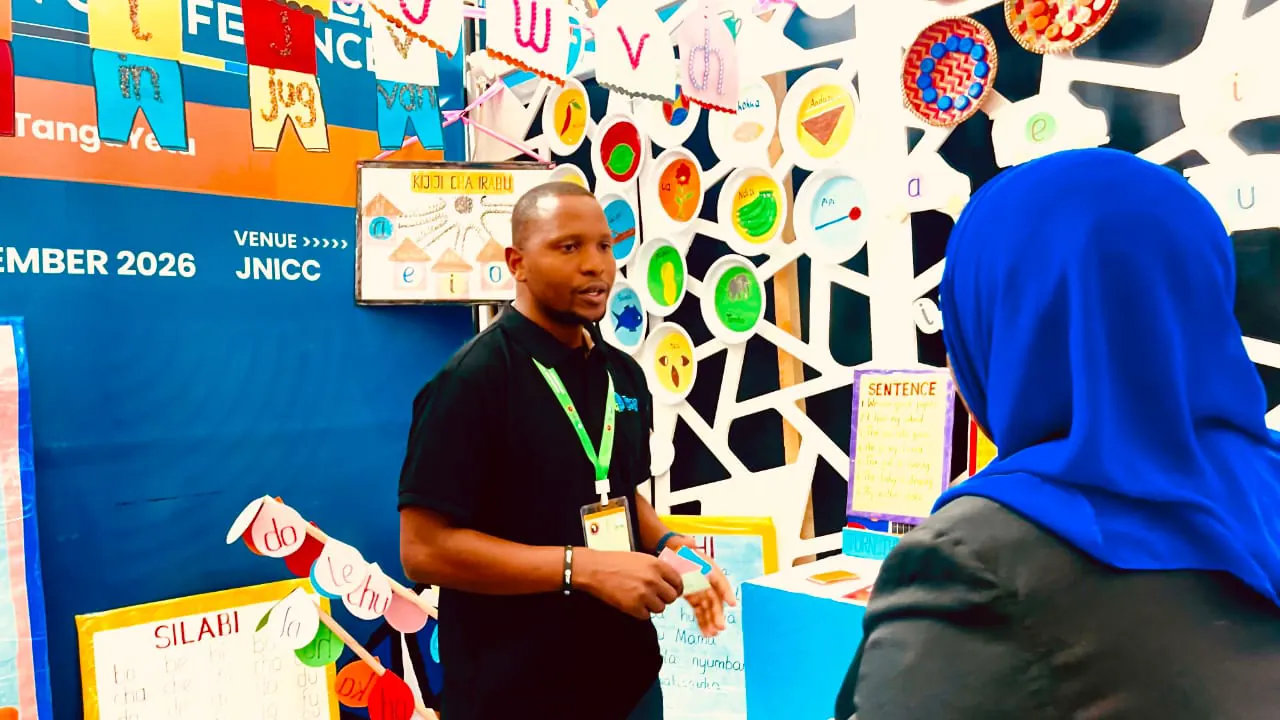
The Teaching at the Right Level (TaRL) approach has shown positive results in helping pupils overcome challenges in reading, writing, and numeracy in primary schools across Tanga Region in Tanzania. This approach groups children according to their actual level of understanding, rather than their age or class. TaRL enables teachers to provide targeted instruction based on each child's learning needs, helping them build essential foundational skills. The approach was discussed at the Sixth African Curriculum Association Conference.
According to TaRL Project Coordinator Alex Sigalla, an assessment conducted during the implementation of the programme in Tanga recorded an increase in the number of children who mastered basic skills after undergoing intervention using the approach. The challenge of basic literacy and numeracy is not unique to Tanzania, but is also evident in various parts of the world. International studies conducted by UNICEF show that more than 40 per cent of children worldwide face challenges in reading, writing, and numeracy.
In Africa, studies cited by Sigalla, including those released by the World Bank in 2022, showed that more than 80 to 90 per cent of children aged between six and 10 in some parts of sub-Saharan Africa faced challenges in these basic skills. In Tanzania, local learning assessments conducted by experts from various institutions, including Uwezo in 2025, showed that out of every 100 children, approximately 60 faced challenges in reading, writing, and numeracy.
The implementation of TaRL in Tanga City involved an initial assessment of about 25,617 children from standard three to standard six. The assessment found that more than 4,200 children were facing challenges in basic literacy and numeracy. However, after the children underwent intervention using the TaRL approach, between 80 and 85 per cent were able to master the basic skills in which they had previously faced difficulties.
The key difference with TaRL is that children are not taught solely according to their class or age, but are placed in groups based on their actual level of understanding. This enables teachers to use teaching approaches that correspond to a child's level, even when the child is in a higher class but still has difficulties with basic skills. Sigalla gave an example of a standard six pupil who still has basic difficulties reading syllables, but may be at a level similar to that of a child in pre-primary or standard one.
TaRL uses games, songs, and participatory activities that make the learner the central participant in the learning process, while the teacher acts as a facilitator. Collaboration among stakeholders, local government authorities, and the Ministry of Education, Science and Technology is important to ensure the sustainability of the approach and enable it to reach more children. A TaRL expert teacher from Changa Primary School in Tanga, Batuli Msuya, said the approach is simple and affordable to implement.
Msuya added that the approach uses teaching and learning materials that can be found in the children's everyday surroundings, making it cost-effective. She called on teachers to prepare themselves to adopt and use the approach creatively in order to help children master basic skills in reading, writing, and numeracy. The TaRL approach has shown promising results in Tanga region and could be a model for other regions in Tanzania and beyond.
Key points
- TaRL approach groups children by understanding level, not age or class.
- Approach shows positive results in improving literacy and numeracy skills.
- TaRL uses games, songs, and participatory activities to engage learners.