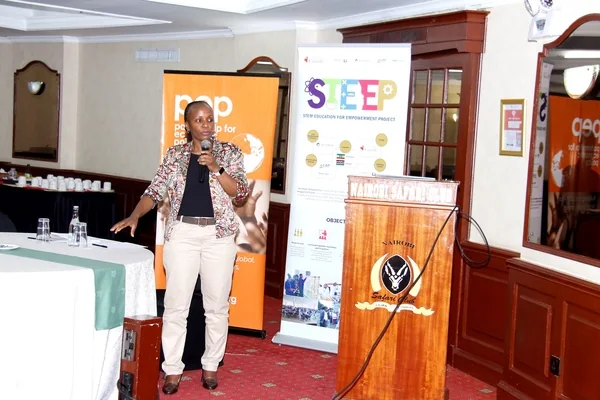
A recent study presented at a Nairobi policy briefing has found that focused technical and STEM training significantly improves job prospects for young Kenyan women. The research, which looked at the STEM Education for Empowerment Project (STEEP), revealed that 63% of participants were employed, compared to 48% of non-selected applicants and 52% of a comparable non-applicant group. This suggests that the programme has a positive impact on employment outcomes for young women in Kenya.
The study also found that employed participants reported monthly earnings that were on average 22% higher than those of non-participants. Econometric analysis attributed a rise of up to 26% in employment likelihood to programme participation relative to one comparison group and 18% relative to the other. These findings highlight the potential of targeted STEM training to improve employment and earnings for young Kenyan women.
STEEP is a four-year initiative that targets out-of-school adolescent girls from vulnerable backgrounds, delivering technical and soft-skill training to prepare them for STEM careers. The programme trained three cohorts of young women between February 2024 and June 2025 across six counties in Kenya, including Kakamega, Kisii, Kisumu, Nyeri, Siaya, and Homa Bay. The curriculum covered market-oriented trades such as food and beverage production, electrical installation, plumbing, and solar photovoltaic work.
Participants in the programme noted that it challenged traditional gender expectations, with many expressing pride in taking on roles historically dominated by men. The programme's focus on empowering young women to pursue careers in STEM fields has helped to narrow the gender gap in these areas. Women currently account for 38% of STEM enrolment in Kenya's technical and vocational education and training institutions.
Despite the positive findings, the study also highlights persistent barriers to employment and success for young women in STEM fields. These include short training periods, lack of formal certification, and costly National Industrial Training Authority exam fees. Some graduates reported experiencing discrimination and harassment in male-dominated workplaces, which can make it difficult for them to succeed in their careers.
Researchers recommend expanding STEEP to additional marginalised counties, strengthening mentorship and life-skill components, and forging stronger employer partnerships for internships linked to jobs. By addressing these challenges and building on the programme's successes, it may be possible to further improve employment and earnings outcomes for young Kenyan women in STEM fields.
The study's findings have important implications for policymakers and practitioners seeking to improve employment and earnings outcomes for young women in Kenya and beyond. By investing in targeted STEM training programmes like STEEP, it may be possible to narrow the gender gap in STEM fields and improve economic opportunities for young women. The programme's success highlights the potential for similar initiatives to have a positive impact on employment and earnings outcomes for young women in other contexts.
Key points
- 63% of participants in the STEM Education for Empowerment Project were employed after completing the programme.
- Employed participants reported monthly earnings that were on average 22% higher than those of non-participants.
- The programme's focus on empowering young women to pursue careers in STEM fields has helped to narrow the gender gap in these areas.