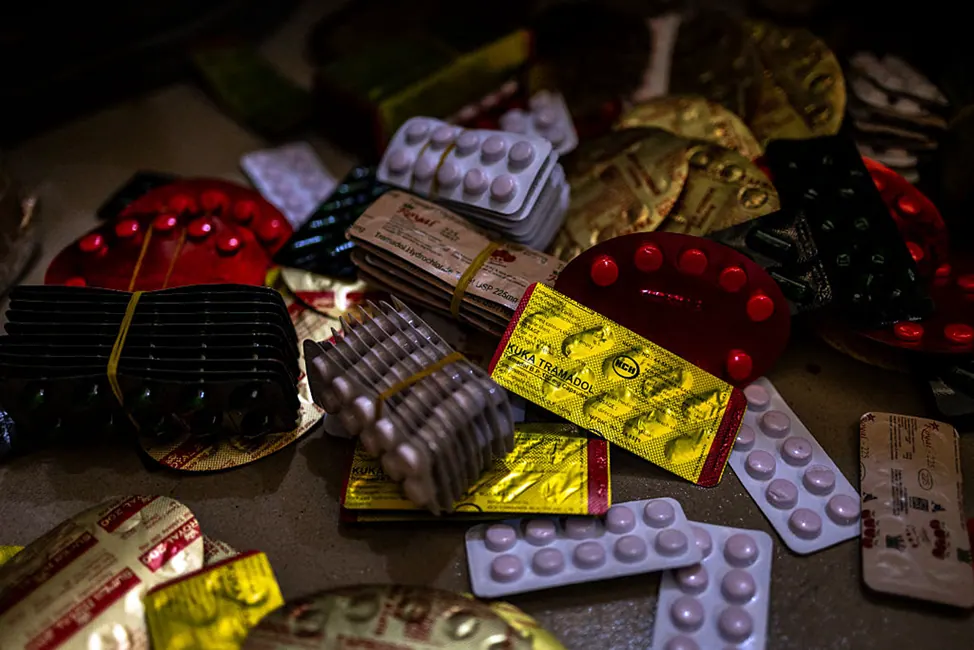
In Mali, particularly in the capital Bamako, a worrying trend of tapentadol abuse has emerged, especially among young people. The medication, designed to treat severe pain, is being diverted for recreational use, often without prescription or in excessive doses. This has led to alarming scenes in public places, with users displaying signs of addiction, such as remaining frozen, somnolent, or unable to sit.
Tapentadol, also known as "bloqué" in Mali, is a potent opioid that affects the brain and nervous system to relieve severe pain. However, its diversion and availability in clandestine circuits have raised concerns among authorities and health professionals. The substance can lead to dependence, loss of consciousness, and respiratory depression, potentially fatal. Amadou Coulibaly, a Sotrama driver, described the situation, stating that he encounters victims daily, particularly in the Grand Marché area.
A significant seizure by the Malian Customs on September 25, 2026, highlighted the scope of the issue. The Brigade mobile d'intervention de Bancoumana discovered 11,259 packs, equivalent to 112,590 tablets, in a Sotrama vehicle in the Mandé region. The Customs authorities made the operation public on October 1. This seizure raises questions about the supply chain and control of pharmaceutical circuits.
The risks associated with tapentadol are substantial, particularly when used without medical supervision or in excess. The substance can cause drowsiness, dizziness, nausea, constipation, confusion, and coordination disorders. Overdose can lead to pupil constriction, loss of consciousness, coma, or respiratory arrest. The danger increases when tapentadol is combined with other substances, such as alcohol, sleep aids, or sedatives.
Health professionals stress that tapentadol, even when used as prescribed, can lead to dependence. The dosage, treatment duration, and prescribed form must be determined by a healthcare professional. The prevention of tapentadol abuse requires stricter control of distribution, public awareness, and orientation of dependent consumers towards adapted care services.
The situation in Mali highlights the need for a comprehensive approach to address the issue of tapentadol abuse. Authorities must work to control the supply chain, raise public awareness, and provide support for those affected. The Malian Customs and health authorities must collaborate to prevent further diversion of this potent opioid.
The public is advised to be cautious and seek medical help if they encounter individuals displaying signs of tapentadol addiction. Health professionals and authorities are working together to address the issue, but a concerted effort from the public and stakeholders is necessary to mitigate the risks associated with tapentadol abuse.
Key points
- Tapentadol abuse poses serious health risks, including dependence, loss of consciousness, and respiratory depression.
- The substance is being diverted for recreational use, often without prescription or in excessive doses.
- Authorities must control the supply chain, raise public awareness, and provide support for those affected to address the issue.