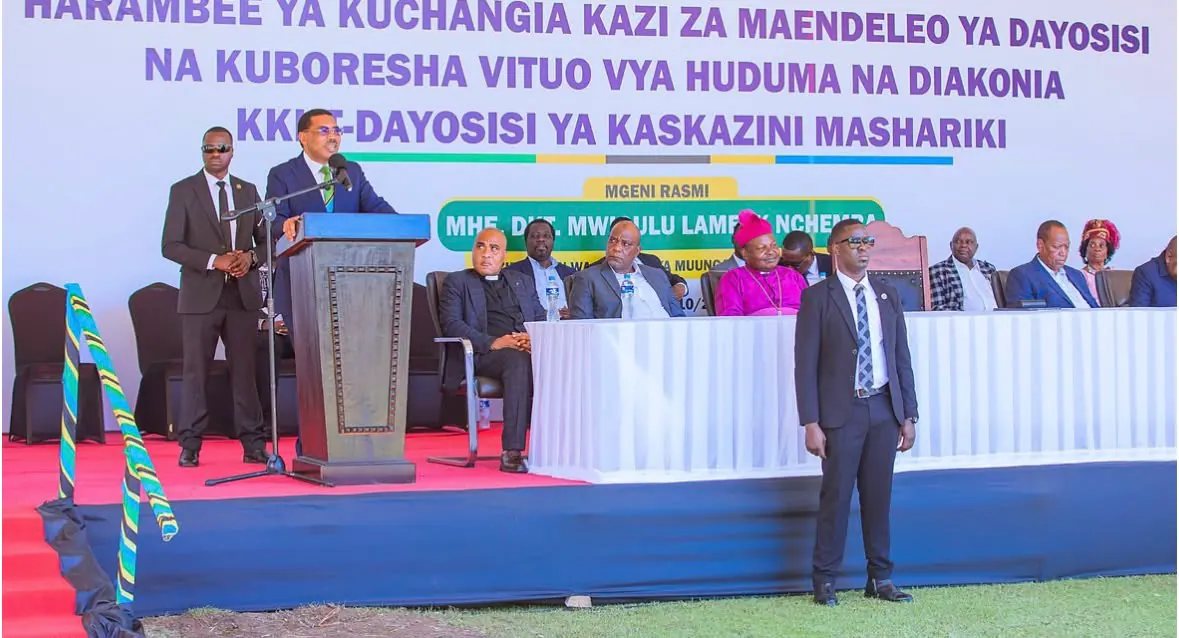
Tanzanian Prime Minister Dr Mwigulu Nchemba has called on citizens to strengthen support for people with disabilities and vulnerable children, emphasizing that caring for them is a shared national responsibility. He made this appeal during a fundraising event in Tanga, aimed at supporting the development and improvement of service and diakonia centres run by the Evangelical Lutheran Church in Tanzania (ELCT) North Eastern Diocese. The event sought to address the needs of vulnerable groups in the region.
Dr Nchemba stressed that responsibilities concerning Tanzanian children living in difficult circumstances and children with special needs should be shouldered by Tanzanians collectively. He noted that declining support from foreign donors should not compromise services for vulnerable groups, urging citizens to ensure that their needs continue to be addressed. The Prime Minister commended the ELCT for providing education, health, and care services to these groups.
The Prime Minister directed community development officers to identify centres serving vulnerable groups and the beneficiaries of such services, while ensuring that the centres are formally registered to improve coordination of support. He also called on local government leaders to directly support people with disabilities who cannot support themselves, instead of issuing them with letters to solicit donations. This approach aims to provide more effective and sustainable support.
Dr Nchemba stated that some people with disabilities require loans to expand income-generating activities, while others need assistance to meet their daily needs. He emphasized that people with disabilities should not be forced to join groups as a condition for accessing loans. The government is reviewing ways to improve support systems for people who are unable to support themselves and those caring for them.
The Prime Minister assured religious institutions that the government will continue to work with them in providing spiritual and social services. He encouraged them to take advantage of amendments to laws governing charitable institutions and tax exemptions. The government has invested in institutions like the Kilimanjaro Christian Medical Centre (KCMC) and pays salaries for workers in some religious institutions.
Earlier, ELCT North Eastern Diocese Bishop Dr Msafiri Mbilu explained that the fundraising campaign aimed to raise 2bn/- to improve infrastructure, equipment, and the environment in which services are provided. The centres face challenges, including ageing buildings, shortages of modern equipment, rising operating costs, and an increasing number of people seeking services. These centres provide critical services to vulnerable groups in the region.
The ELCT North Eastern Diocese operates several centres, including Bumbuli and Kilindi hospitals, eight health centres, Irente Orphanage Centre, Irente Primary School for the Blind, Irente Centre for Children with Intellectual Disabilities and Autism, Korogwe Mental Health Outpatient Clinic, and Lutindi Mental Hospital. These institutions play a vital role in supporting vulnerable groups, and the fundraising effort aims to enhance their capacity to provide services.
Key points
- The Prime Minister emphasized that caring for vulnerable groups is a shared national responsibility.
- The government is working with religious institutions to provide spiritual and social services.
- The fundraising campaign aims to raise 2bn/- to improve infrastructure and services at ELCT centres.