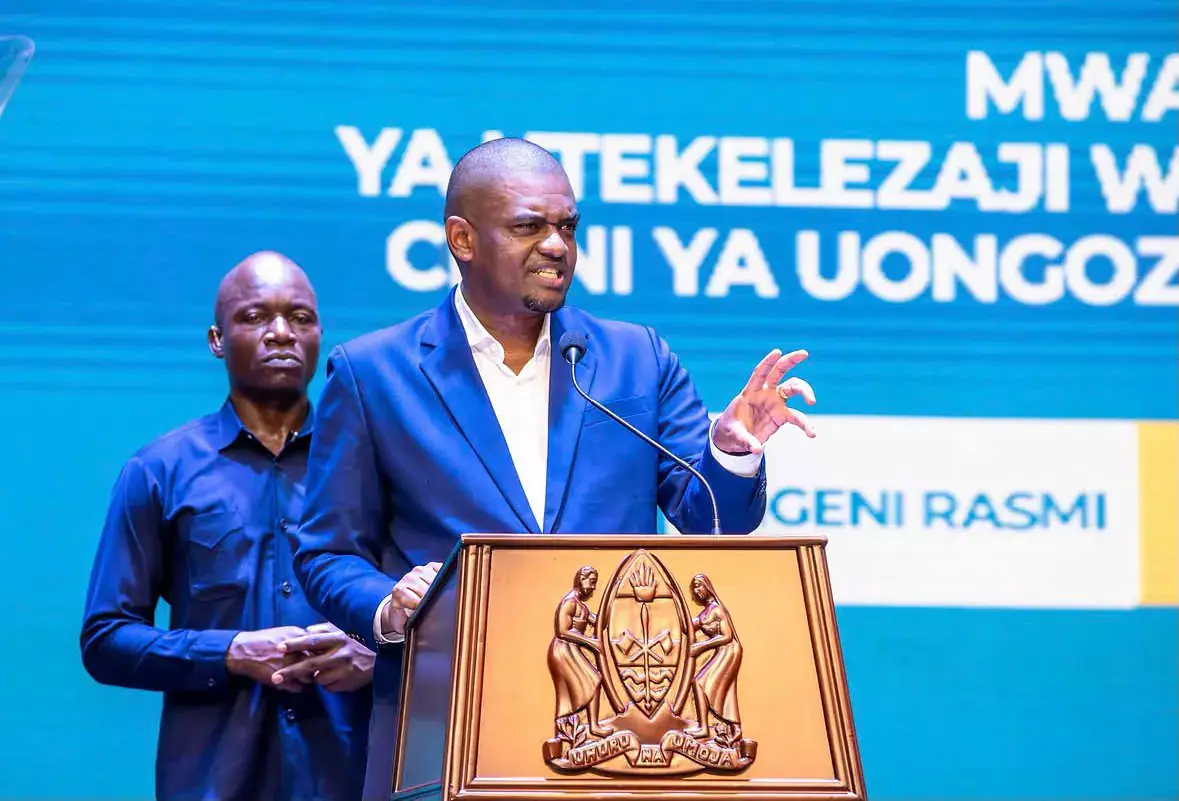
Tanzania's government has warned against favouritism, personal connections, and discrimination in allocating 200bn/- youth empowerment funds. The funds must benefit deserving young people fairly and transparently, according to Vice-President Deogratius Ndejembi. He issued the directive in Dar es Salaam while outlining achievements in the youth development sector during the first year of President Dr Samia Suluhu Hassan's second term in office.
The directive comes amid mounting pressure on the labour market, with approximately 900,000 young people entering the job market annually, while only about 90,000 secure formal employment. The 2022 Population and Housing Census recorded 46.9 million people aged below 35, highlighting the scale of the country's youthful population and the growing demand for employment and economic opportunities. Approximately 850,000 Tanzanians migrate to urban areas annually, further increasing pressure on urban infrastructure, services, and employment opportunities.
Vice-President Ndejembi cautioned against diverting the 200bn/- allocated for youth economic empowerment towards administrative allowances or purchasing vehicles for programme coordinators. The money must directly improve livelihoods and create economic opportunities, particularly for young people, women, and persons with disabilities in rural areas. He called for clear eligibility criteria, transparent selection procedures, and strong accountability mechanisms, including effective monitoring and public disclosure of beneficiaries.
President Samia's decision to place youth affairs under her office was intended to strengthen coordination across sectors and ensure that government investments directly benefit young people. Vice-President Ndejembi also directed institutions implementing strategic projects in energy, transport, mining, agriculture, and industry to deliberately create employment and business opportunities for young people. The success of empowerment programmes should be measured by their economic impact rather than the amount of money disbursed.
On access to education, the government had set aside loans and grants amounting to 820.4bn/- for 256,010 students in the 2026/27 academic year. Efforts are underway to create at least 10,000 internship opportunities through public corporations and another 20,000 through the private sector to help young people acquire practical workplace experience. Vice-President Ndejembi outlined four priority areas for advancing youth development, increasing productivity, and building a competitive economy.
The initiatives should also reach young people outside the formal education system to ensure they are not left behind in accessing skills development and employment opportunities. On economic empowerment, relevant institutions were instructed to facilitate young people's access to capital, production facilities, equipment, technical expertise, and markets. Public institutions were urged to create procurement opportunities for youth-owned enterprises and ensure timely payments for goods and services supplied.
The government is identifying a building in Dar es Salaam to establish a dedicated start-up hub where young innovators and entrepreneurs can access support to develop and commercialise their ideas. The interventions are intended to support implementation of the CCM Election Manifesto 2025–2030 and Dira 2050, while positioning young people as key drivers of economic transformation.
Key points
- The Tanzanian government has allocated 200bn/- for youth empowerment funds, which must be disbursed fairly and transparently.
- Approximately 900,000 young people enter the Tanzanian job market annually, while only about 90,000 secure formal employment.
- The government aims to create at least 30,000 internship opportunities for young people through public corporations and the private sector.