The government of Tanzania, along with civil society organisations and private sector leaders, are urging for greater domestic financing of education. This call to action comes as the country prepares for a significant increase in secondary school enrolment in 2028, known as the double cohort. This phenomenon will occur when pupils completing Standard Six under the revised curriculum and those finishing Standard Seven under the existing system enter Form One simultaneously.
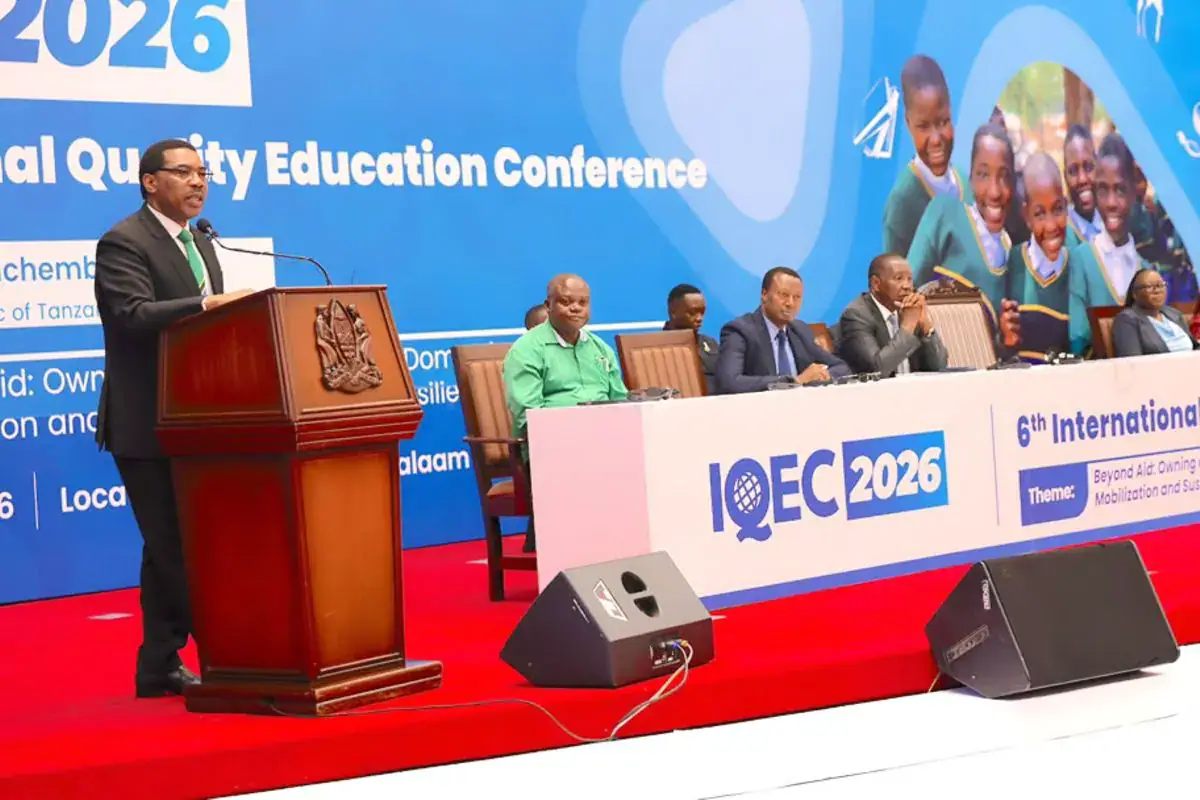
The double cohort will put pressure on Tanzania's secondary school infrastructure, teaching workforce, and learning materials. In response, stakeholders are advocating for a coordinated national response that relies less on foreign aid and mobilises more resources locally. This issue was a key topic at the sixth International Quality Education Conference (IQEC 2026), held in Dar es Salaam under the theme, Beyond Aid: Owning Our Future through Domestic Resource Mobilisation and Sustainable National Resilience.
Participants at the conference emphasised that declining and unpredictable Official Development Assistance (ODA), coupled with competing demands on public finances, make it necessary for Tanzania to strengthen domestic resource mobilisation. They also stressed the need to broaden participation in education financing. Prime Minister Mwigulu Nchemba challenged delegates to move beyond policy declarations and make concrete financial and operational commitments to support education reforms.
The government is pursuing reforms that include extending compulsory basic education to 10 years and introducing two secondary education pathways: general academic education and vocational technical training. Minister for Education, Science and Technology Adolf Mkenda said these reforms are crucial to Tanzania's long-term development ambitions and should not be stalled or reversed. He called on civil society organisations, private sector players, and religious institutions to support the government in financing secondary school construction and technical training.
The expansion of school infrastructure is linked to the government's directive to ensure every village has a secondary school. This will allow pupils to access education closer to their homes. However, meeting the demand for additional classrooms, teachers, and learning materials will require resources beyond those available from the public budget alone. The National Coordinator of the Tanzania Education Network (TEN/MET), Martha Makala, stressed that collaboration is essential in reducing reliance on foreign aid.
Education analyst Joshua Mmari noted that the alignment among government, civil society, and the private sector marks an important shift in Tanzania's approach to financing education. He said non-state actors need to move beyond their traditional roles as observers and critics to become active partners in financing and safeguarding national development priorities. The Ministry of Education's budget stands at about Sh2.38 trillion, and growth in domestic tax revenue offers an opportunity to strengthen public financing.
The challenge will be translating commitments into resources and ensuring that they are directed towards the infrastructure, teachers, and learning facilities needed to accommodate the additional pupils in 2028. The conference called for stronger cooperation among public institutions, businesses, civil society, and communities to support education reforms and make the sector less vulnerable to fluctuations in external funding.
Key points
- The government of Tanzania aims to extend compulsory basic education to 10 years and introduce two secondary education pathways.
- The Ministry of Education's budget stands at about Sh2.38 trillion.
- Stakeholders stress the need for stronger cooperation among public institutions, businesses, civil society, and communities to support education reforms.