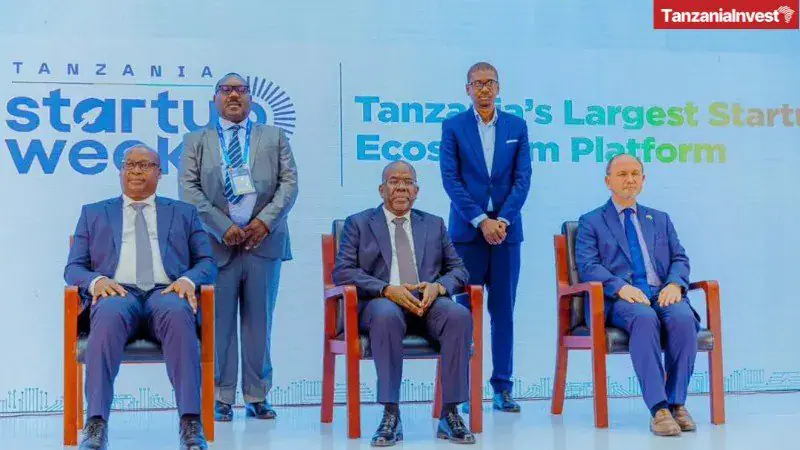
Tanzania's Vice-President, Deogratius Ndejembi, has directed the Ministry of Industry and Trade to develop a dedicated policy to guide startups within six months. The directive was issued at the opening of Tanzania Startup Week 2026, held on 19 October 2026 at the Julius Nyerere International Convention Centre in Dar es Salaam. This move aims to create a favourable environment for startups to grow and develop their ideas. The policy is expected to bring together multiple components to coordinate startups in collaboration with other sectors that host innovative businesses.
The sixth-phase government intends to establish a large centre where startups can meet and develop their ideas. Ndejembi directed the Prime Minister's Office and the Ministry of Industry and Trade to identify a dedicated building to serve as a meeting hub for startups. This centre will provide a platform for startups to network, share ideas, and access resources. The government's support for startups is driven by the recognition that they are one of the fastest-growing areas of the economy.
The Minister for Industry and Trade, Judith Kapinga, said the Ministry has remained a leader in enabling and supporting startups. A dedicated provision for startups is included as item number 7 in the Ministry's 2026/2027 budget. Additionally, the Ministry has established a market intelligence unit aligned with innovative businesses. Kapinga added that the Ministry and its institutions have been at the forefront of assisting young innovators and all traders across the country by putting in place accessible systems.
Tanzania currently has no dedicated law or policy governing startups. While the country has several policies supporting SMEs and entrepreneurship, it lacks a unified startup policy. The legal and regulatory framework presents challenges for startups related to business registration, compliance, taxes, and business closure. A government-commissioned baseline study was carried out to benchmark the country's startup environment against other African nations that have already enacted dedicated startup policies and laws.
The baseline study was conducted by the Ministry of Investment, Industry and Trade together with the Tanzania Startup Association. The study aimed to identify areas for improvement and inform the development of a dedicated startup policy. The findings of the study will help shape the policy and ensure that it addresses the specific needs of startups in Tanzania.
Despite the challenges, the startup sector in Tanzania has shown significant growth. A separate Tanzania Startup Ecosystem Status Report found that jobs created by startups increased by 112,119, a 20.17% rise from 2022. The report highlights the potential of startups to drive economic growth and job creation in the country. However, the sector continues to face funding and regulatory constraints that need to be addressed.
The development of a dedicated startup policy is expected to address some of the challenges faced by startups in Tanzania. The policy will provide a framework for supporting startups and creating a favourable business environment. The government has demonstrated its commitment to supporting startups, and the new policy is expected to be a key milestone in the development of the sector.
Key points
- The Tanzanian government has directed the Ministry of Industry and Trade to develop a dedicated startup policy within six months.
- The policy aims to create a favourable environment for startups to grow and develop their ideas.
- Tanzania's startup sector has shown significant growth, with jobs created by startups increasing by 112,119 in 2022.