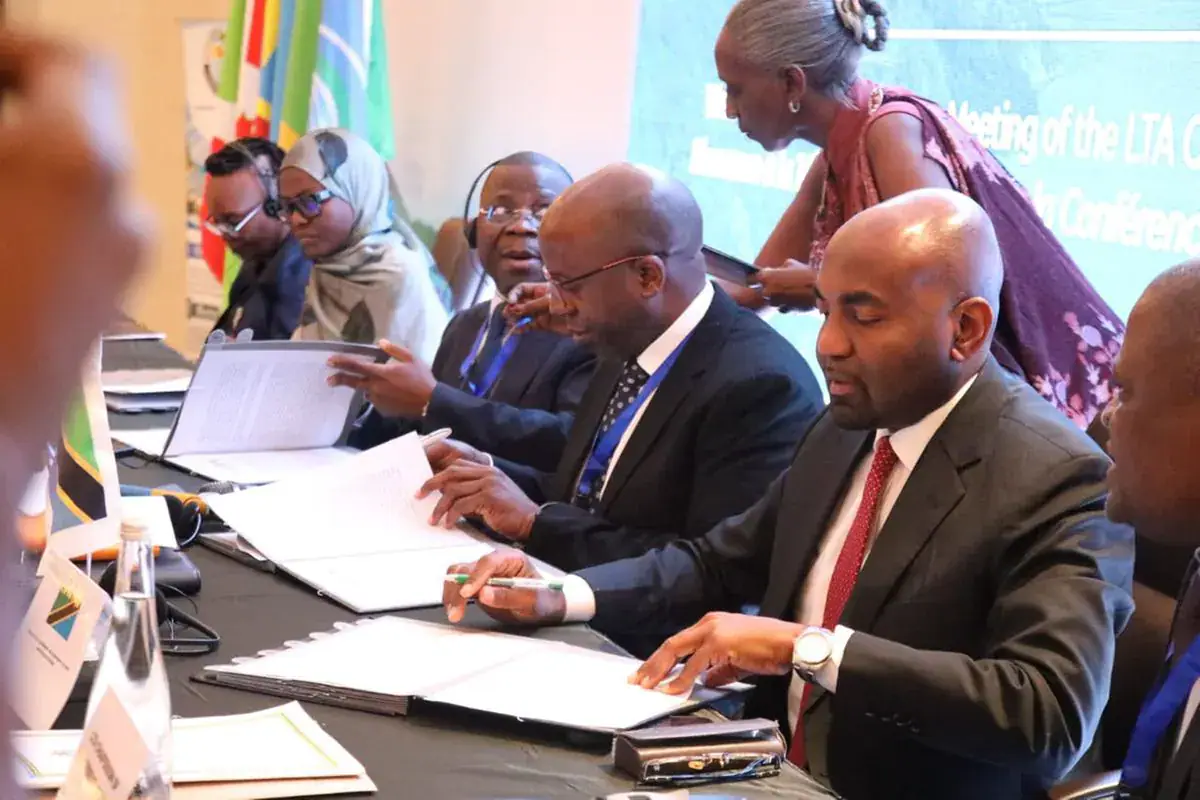
Tanzania has taken on a leading role in efforts to address growing environmental threats facing Lake Tanganyika after being elected chair of the Regional Committee of the Convention on the Sustainable Management of the Environment of the Lake Tanganyika Basin. The election took place on October 30, 2026, during the 14th Ordinary Meeting of the Conference of Ministers of the Lake Tanganyika Authority. This development comes as about two-thirds of the Lake Tanganyika basin lies within Tanzania's territory.
The task is significant as rising water levels, declining fish stocks, and increasingly severe weather events threaten both the lake's ecosystem and the livelihoods it supports. Lake Tanganyika Authority Executive Director Dr. Emma Liwenga highlighted two major challenges requiring urgent attention: the rising water level of Lake Tanganyika and the decline in fish stocks. Floods in 2023 and 2024 affected nearly 289,000 people, damaging infrastructure and disrupting economic activities in communities along the lake.
A regional assessment conducted in 2025 and 2026 estimated pelagic fish biomass at 1,600 tonnes, compared with 3,500 tonnes recorded in 1998, representing a decline of about 62 percent. This assessment, the first to cover the entire lake since 1998, provides updated evidence of the challenges facing fisheries and the communities that depend on them for food and income. Dr. Liwenga suggested possible interventions, including a feasibility study on dredging the Rusizi River, the lake's only outlet into the Congo River system.
Dr. Liwenga proposed combining dredging with channel widening for better hydraulic performance, while watershed management is an important complementary solution for reducing sediment inputs and strengthening long-term resilience. She also called for harmonized vessel registration and licensing, stronger controls on fishing gear, improved sharing of fisheries data, and seasonal fishing closures backed by scientific monitoring and cross-border enforcement.
Tanzania's Minister of State in the Vice-President's Office, Hamad Masauni, emphasized that conservation efforts should deliver economic benefits to communities without damaging the lake's ecosystem. He stressed the need for sustainable economic development and environmentally friendly investment opportunities that contribute to employment creation and increase community incomes. Mr. Masauni called for greater accountability, resource mobilization, and scientific cooperation among the four states.
The impact of climate change on the basin was also raised by the chairperson of the LTA Conference of Ministers, Dr. Douty Chibamba, who pointed to the potential risks associated with the forecast super El Niño. He called for improved sharing of climate information, stronger early warning systems, and better disaster preparedness to help communities respond to extreme weather and possible flooding. Dr. Chibamba emphasized the need for reliable funding to enable the authority to carry out its responsibilities.
Burundi's Ambassador to Tanzania, Léontine Nzeyimana, noted that over 14 million people depend directly or indirectly on the lake basin for their livelihoods, food security, and economic well-being. She cited climate change, extreme weather, unplanned settlements, deforestation, and pollution among the pressures threatening the ecosystem. The DRC Minister of Fisheries and Livestock, Jean Pierre Tshimanga, also called for a coordinated regional approach, stressing that protecting the lake requires commitment from all four riparian states.
Key points
- Tanzania assumes chair of Regional Committee amid environmental threats to Lake Tanganyika
- Rising water levels and declining fish stocks major concerns for Lake Tanganyika Authority
- Conservation efforts must balance economic development with environmental protection