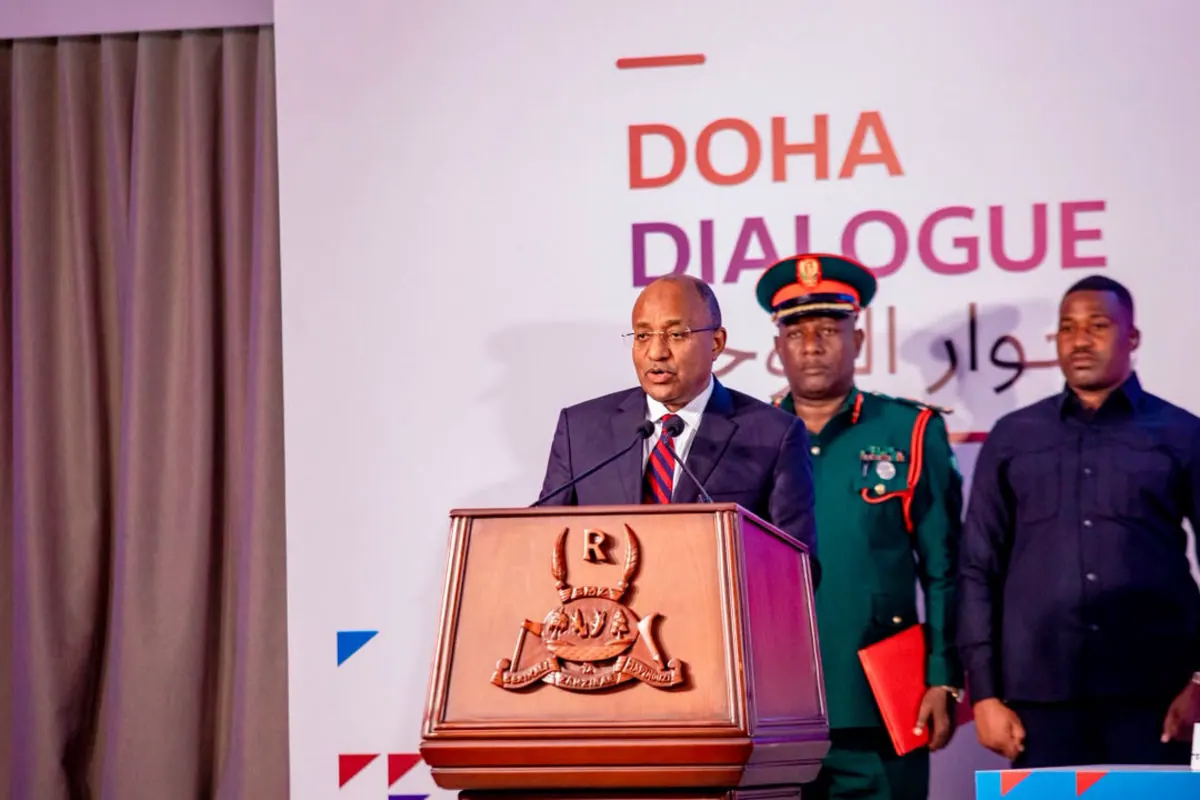
The Doha Dialogue on Labour Mobility concluded in Dar es Salaam on October 6, 2026, marking a significant shift in Tanzania's approach to labour migration. The forum brought together labour ministers from 28 African states and their Gulf Cooperation Council (GCC) counterparts. President Hussein Mwinyi of Zanzibar, representing President Samia Suluhu Hassan, emphasised the need for safe, fair, and mutually beneficial labour mobility. He highlighted the importance of shared responsibility in safeguarding migrant workers' rights and welfare.
The dialogue resulted in resolutions that signal a strategic pivot for Tanzania, focusing on structured, skilled labour mobility with robust social protections. Minister of State in the Prime Minister's Office for Labour, Employment and Youth Development, Deus Sangu, outlined the core resolutions, including a complete transition toward exporting skilled personnel. GCC countries have presented action plans requiring healthcare workers, doctors, nurses, pharmacists, engineers, and technicians. This shift aims to align worker skills with international market needs through targeted, joint training initiatives.
Between 2022 and August 2026, bilateral cooperation secured foreign placements for 15,241 Tanzanians across diverse technical and professional fields. Future bilateral labour agreements will enforce strict mandatory protections, including social security schemes, comprehensive health insurance, and safeguards against unlawful salary deductions. These measures ensure returning workers retain long-term retirement benefits and can seamlessly reintegrate into the local economy.
The resolutions also mandate structural skill-retention mechanisms to benefit Tanzania directly from the advanced expertise and international exposure gained abroad. With youth unemployment standing at 8.1 percent on Mainland Tanzania and 10.9 percent in Zanzibar, regulated external placement is a vital relief strategy. Over 800,000 young graduates enter the labour market annually, making formal domestic job creation a continuous challenge.
Independent labour market analyst Dr Joseph Kitwanga argues that exporting skilled personnel under government-backed guarantees transforms potential brain drain into sustainable brain circulation. When healthcare professionals or engineers work abroad with guaranteed social security and send back remittances, they return with financial capital and advanced technical capacity that directly boosts local industries.
To address long-standing public concerns regarding migrant worker mistreatment, the government has intensified regulatory oversight over private recruitment agencies. Unregistered recruitment advertising has been banned, and agencies are now subjected to mandatory quarterly audits. Four agencies had their licenses revoked after being caught defrauding job seekers or charging unauthorised fees.
The government has also implemented measures to ensure accountability, including a formal 'Departure Day' to brief departing youths on their rights and obligations. The ministry retains copies of all contracts, and embassies abroad receive duplicate files to monitor compliance directly. Chairman of the Tanzania Association of Private Employment Agencies, Abdallah Khalid Mohammed, noted that new technological integration has largely eliminated contract tampering.
Key points
- Tanzania transitions to exporting skilled personnel, away from informal labour export.
- The government has intensified regulatory oversight over private recruitment agencies.
- Regulated external placement provides a vital relief strategy for youth unemployment.