The government of Tanzania has established a legal framework for sharing carbon trading revenue, with a focus on transparency and fairness. The framework allocates 61% of revenue from forest projects to resource owners, 31% to the project proponent, and 8% to the government. This arrangement aims to reduce potential disputes over distribution among investors, the government, and local communities involved in implementing carbon projects.
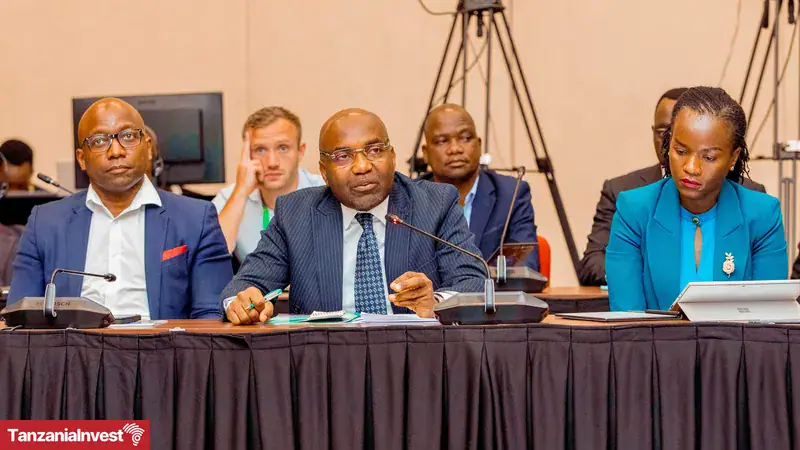
The Minister of State in the Vice President’s Office, Eng. Hamad Yussuf Masauni, announced the revenue-sharing arrangement at a ministerial-level meeting in Kigali, Rwanda. The meeting was held on the sidelines of the Africa Carbon Markets Forum 2026, which concluded on October 15, 2026. Masauni emphasized that the largest share of revenue goes to resource owners, demonstrating the government's commitment to ensuring that local communities benefit from carbon trading.
The revenue-sharing framework is part of Tanzania's efforts to meet its targets under the Paris Agreement, including reducing greenhouse gas emissions by 30% to 35% by 2030. Carbon trading is a key component of these efforts, and the government has established a national carbon registry and a Designated National Authority to oversee project registration and ensure compliance with international standards.
The framework is based on the Environmental Management (Control and Management of Carbon Trading Mechanisms) Regulations, 2022, which provide a legal framework for controlling and managing carbon trading projects. The regulations were amended in 2023 to refine the distribution of costs and benefits among proponents, managing authorities, and local communities.
Tanzania has made significant progress in developing its carbon market, including signing four letters of authorization for carbon credits in August 2026. These credits can be used outside Tanzania, following assessment by the National Committee for the evaluation of carbon projects. The government is inviting external participation in the sector's development, with Masauni stating that Tanzania is ready to work with investors and other countries to advance investment in high-integrity carbon projects.
The government supports cooperation among African countries to build a common carbon market system that reflects the interests of the continent. Masauni stressed that Tanzania wants to see carbon markets working for the benefit of its citizens, while cooperating with African countries to build a common system that protects the interests of the continent.
The National Carbon Trading Guidelines, issued in October 2022, set out procedures and requirements for undertaking carbon trading projects and guidance on cost and benefit-sharing schemes. The guidelines, along with the revenue-sharing framework, demonstrate Tanzania's commitment to ensuring that carbon projects deliver visible results for citizens and contribute to environmental conservation.
Key points
- Tanzania allocates 61% of carbon trading revenue to resource owners, 31% to project proponents, and 8% to the government.
- The revenue-sharing framework aims to reduce disputes over distribution among investors, the government, and local communities.
- Tanzania is open to external participation in the development of its carbon market, with a focus on high-integrity projects.